
Why Marine Inventory Management is the Backbone of Profitable Maritime Operations
Marine inventory management is the systematic control and tracking of parts, equipment, and consumables across vessels and shore facilities. For marine businesses struggling with disconnected systems and manual processes, it’s the difference between profit and chaos.
Quick Answer: What is Marine Inventory Management?
Marine inventory management encompasses:
- Real-time tracking of spare parts across multiple vessels and warehouses
- Automated stock control with min/max levels and reorder alerts
- Integration with maintenance and procurement systems
- Multi-location management for onboard and shoreside inventory
- Cost optimization through demand forecasting and usage analytics
- Compliance tracking for critical spares and hazardous materials
The numbers tell a stark story. Inaccurate inventory data disrupts 70% of maritime operations, creating a cascade of problems that hits your bottom line hard. It’s the emergency air-freighted part that costs five times the normal price. It’s the vessel sitting idle at port waiting for a critical spare. It’s the capital tied up in parts that will never be used.
Without a clear view of what’s in your storeroom, you’re flying blind. You can’t plan effectively, can’t control costs, and can’t guarantee operational readiness.
But here’s the good news: Modern marine inventory management systems can reduce manual data entry by 50% and operational costs by 25%. They transform chaotic spreadsheets and clipboard-based tracking into a centralized command center where every part is accounted for, every location is visible, and every decision is backed by real data.
For marine business owners drowning in unbilled labor and parts, lost paperwork, and technician scheduling nightmares, proper inventory management isn’t just nice to have—it’s the foundation that lets everything else work.
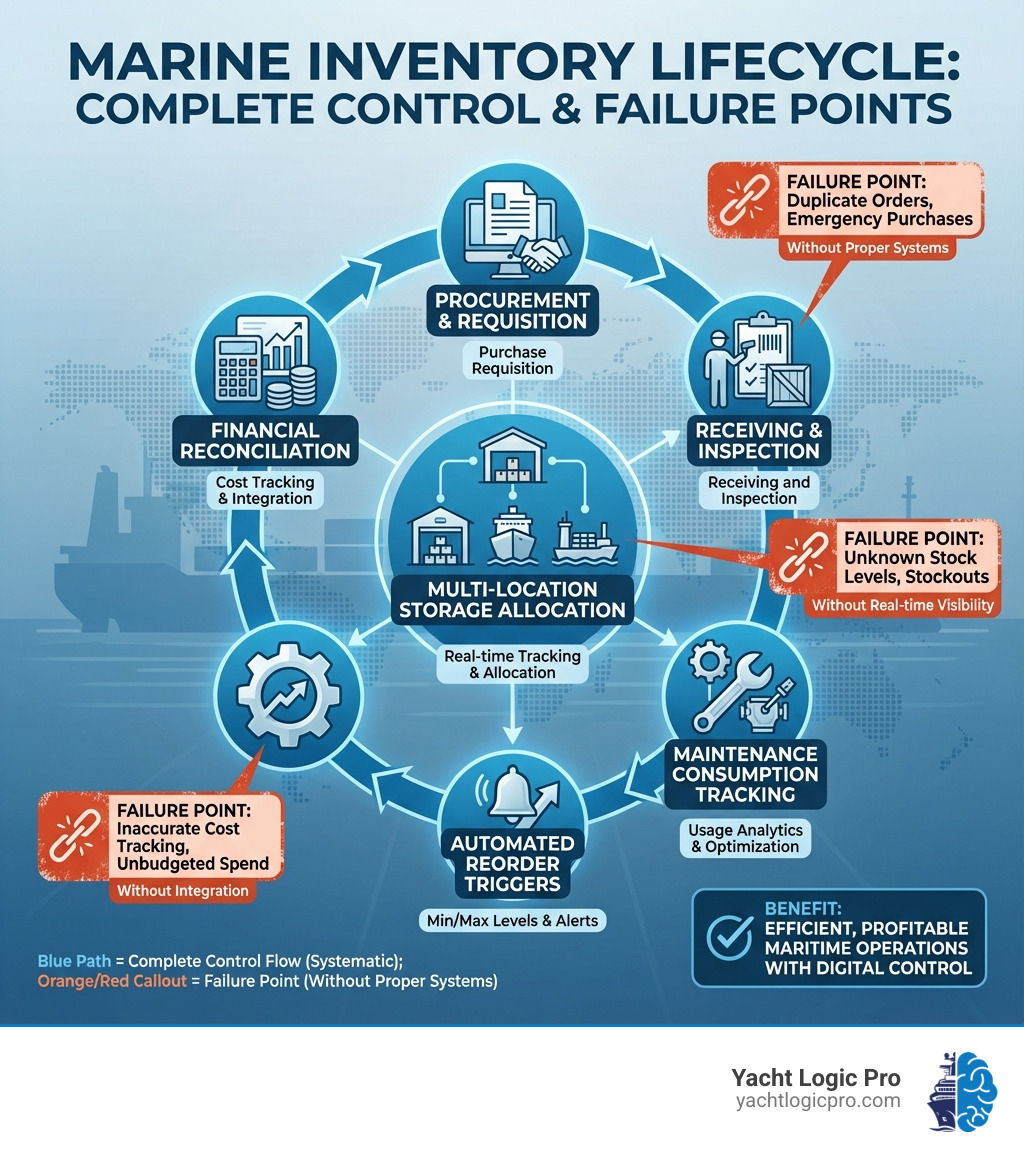
The High Cost of Uncharted Inventory: Common Challenges in the Maritime Industry
Managing maritime inventory without a robust system is like steering a ship without a compass. The unique complexities of marine operations—remote locations, harsh environments, and specialized equipment—amplify challenges far beyond those of land-based businesses.
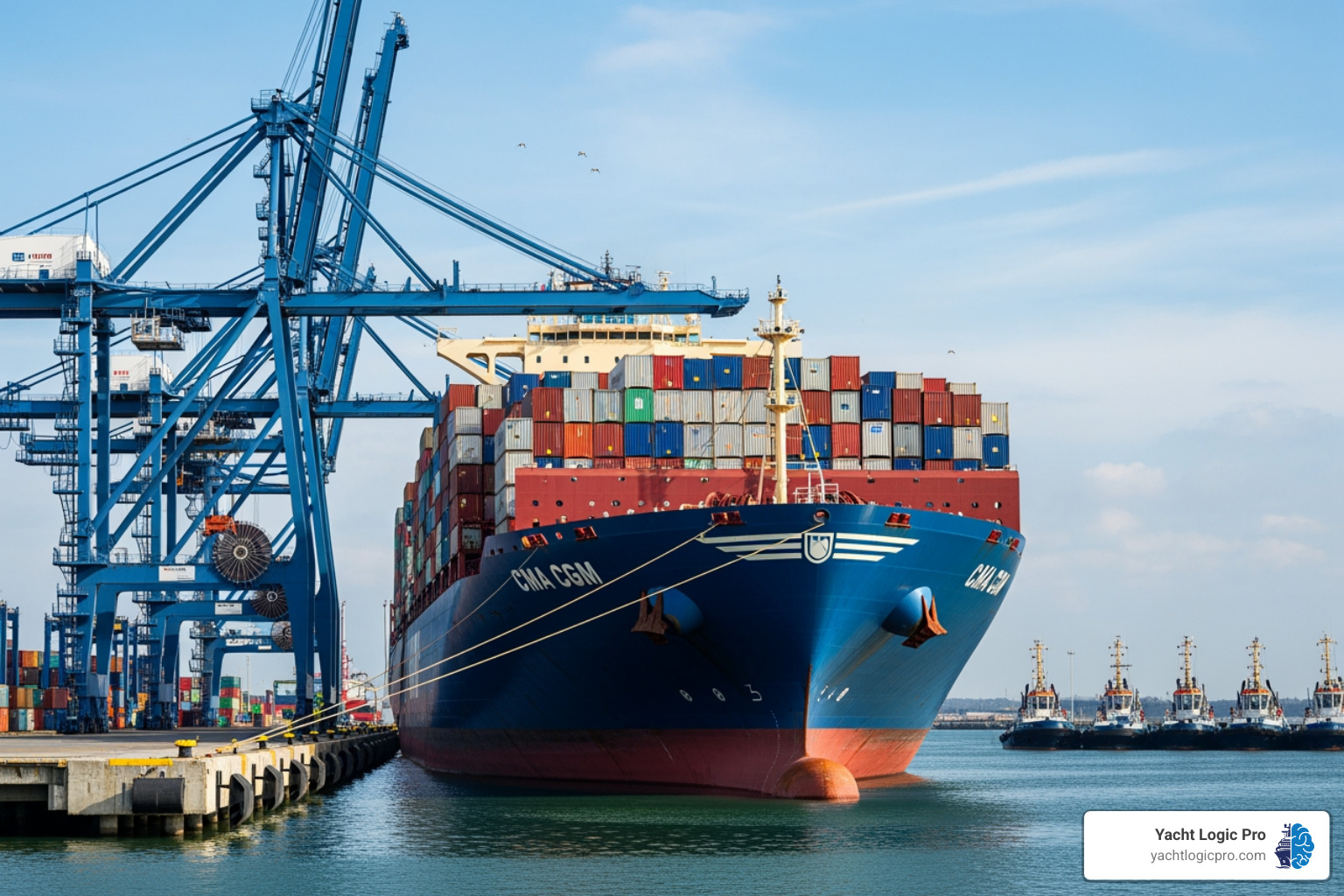
One of the most immediate and painful challenges is the financial drain caused by poor inventory practices. We’re talking about the exorbitant price of an emergency air-freighted part, which can easily cost five times its normal value. Then there’s the operational delay when a vessel sits idle, waiting for a critical spare part to arrive. Every hour a vessel is out of commission translates directly into lost revenue and damaged reputation. This is the true cost of not knowing what’s in your own storeroom.
Here are some of the primary challenges we frequently encounter in managing inventory for marine vessels and operations:
- Overstocking Costs: Overstocking ties up valuable capital, increases storage costs, and risks obsolescence, especially for items with limited shelf lives. It’s capital literally gathering dust.
- Stockout Delays: Running out of a critical component halts operations, leading to costly delays, missed deadlines, and expensive emergency procurements. Inaccurate inventory data disrupts 70% of maritime operations, causing fleet-wide inefficiencies.
- Lack of Visibility: Without a centralized system, it’s hard to know what parts are available and where they are located (onboard, ashore, or in transit). This lack of transparency causes duplicate orders and wasted time.
- Manual Tracking Errors: Relying on clipboards, spreadsheets, and manual data entry is a recipe for chaos. Human error is inevitable, leading to inaccurate counts, misplaced items, and unreliable data. These “hidden costs” of manual tracking can quickly erode profits, as we explore further in our guide on The Hidden Costs of Manual Yacht Maintenance Tracking.
- Multiple Storage Locations: Marine operations often have inventory spread across vessels and multiple shore-side warehouses. Managing this distributed inventory without a unified system is a logistical nightmare.
- Specialized Parts Management: Marine vessels require specialized, expensive parts. Tracking these components, managing their expiration dates, and ensuring their availability for planned or emergency maintenance adds complexity.
- Seasonal Demand Fluctuations: The marine industry sees significant seasonality. Predicting demand is challenging and can lead to overstocking or stockouts if not managed effectively. The unexpected 12% increase in boat sales in 2020 highlights how quickly demand can shift.
- Supplier Reliability and Supply Chain Issues: The global maritime supply chain is vulnerable to disruptions, as seen in 2020-2021. This makes securing parts unpredictable and emphasizes the need for proactive inventory management.
These challenges collectively impact our ability to meet customer demand, control costs, maintain smooth operations, and ensure safety and compliance. It’s clear that the traditional approaches are no longer sufficient in today’s dynamic maritime landscape.
Charting a New Course with Technology: The Role of Marine Inventory Management Software
Fortunately, these daunting challenges are solvable. Purpose-built marine inventory management software offers a guide of hope, changing chaos into clarity and allowing us to stop letting inventory surprises dictate our budget and schedule.
Modern software solutions are designed to address the very core of these problems through automation, real-time data, and intelligent insights. They act as the central nervous system for your entire marine operation, unifying disparate functions and providing a single source of truth for your inventory.
For example, implementing an AI-powered system can significantly reduce manual data entry by 50% and slash operational costs by 25%. This isn’t just about saving money; it’s about freeing up your team from tedious, error-prone tasks so they can focus on what they do best – keeping vessels operational and clients happy. The future of marine service is undeniably data-driven, as we discuss in Why Data-Driven Yacht Service is the Future of the Marine Industry.
By leveraging technology, we gain:
- Automation Benefits: Repetitive tasks like stock updates, reorder alerts, and consumption tracking can be automated, minimizing human error and maximizing efficiency.
- AI in Inventory: Artificial intelligence can analyze historical data, predict future demand, and optimize stock levels, moving us from reactive problem-solving to proactive management.
- Operational Cost Reduction: By preventing overstocking, eliminating emergency freight, and reducing vessel downtime, technology directly contributes to significant cost savings.
- Data-Driven Decisions: With accurate, real-time data at our fingertips, fleet managers and vessel operators can make informed decisions about procurement, maintenance scheduling, and resource allocation.
- Centralized Control: A unified platform brings all inventory data into one place, providing global visibility and centralized control over all parts, across all vessels and shore facilities.
Real-Time Tracking and Data Visibility: Your Fleet’s Command Center
Imagine having a bird’s-eye view of every single part, on every vessel, and in every warehouse, accessible from anywhere in the world. That’s the power of real-time tracking and data visibility in marine inventory management. It transforms your inventory from a scattered collection of assets into a cohesive, transparent system – your fleet’s command center.
This unprecedented visibility means we can:
- Access Inventory from Anywhere: Access inventory and equipment information from shoreside or at sea, ensuring you always know what’s available.
- Distinguish Onboard vs. Shoreside Stock: Clearly differentiate between parts stored on a vessel and those in a shoreside warehouse to optimize replenishment.
- Leverage Mobile Access and Offline Functionality: Modern software offers mobile apps that function online and offline. This is crucial for crews in areas with limited connectivity, allowing them to manage inventory on the go, with data syncing automatically when connection is restored.
- Improve Decision-Making: With accurate and up-to-date information on hand, decisions regarding maintenance, procurement, and resource deployment become swift and strategic. This seamless flow of information from Dock to Dashboard: How Yacht Logic Pro Connects Your Entire Marine Team is invaluable.
- Ensure Real-time Data Synchronization: All changes made, whether on a vessel or ashore, are instantly reflected across the system, eliminating discrepancies and providing a true picture of stock levels at all times.
This level of transparency minimizes unnecessary downtime, reduces the risk of stockouts, and ultimately leads to more efficient and reliable operations.
From Forecasting to Fulfillment: Automating Stock Level Control
The days of guessing how much of a part we need, or worse, realizing we’re out of a critical item mid-voyage, are over. Forecasting and automated alerts are game-changers in marine inventory management, allowing us to anticipate needs rather than react to crises.
Here’s how they revolutionize stock level management:
- Demand Forecasting: By analyzing historical consumption, seasonal trends, and maintenance schedules, advanced software predicts future inventory needs. This optimizes stock levels, avoiding costly overstocking and disruptive shortages.
- Automated Alerts: The system sends notifications when stock reaches predefined minimums, alerting personnel to reorder in time. Alerts can also suggest repurchase amounts based on usage history.
- Min/Max Stock Levels: Set intelligent min/max stock levels for each item. The system triggers an alert when stock falls below the minimum and advises against ordering when it reaches the maximum.
- Preventing Shortages: Proactive alerts and accurate forecasting mean we can order parts well in advance, even for extended voyages, ensuring uninterrupted operations. This helps us avoid the kind of scheduling nightmares discussed in Why Most Marine Service Operations Fail at Scheduling and How to Fix It.
- Preventing Overstocking: By optimizing order quantities based on actual needs, we avoid accumulating excess inventory, saving on storage costs and reducing waste.
- Automated Re-ordering: Some systems can automatically generate draft purchase requisitions when stock hits the reorder point, streamlining procurement.
This proactive approach ensures that the right parts are always available at the right time, contributing significantly to operational efficiency and cost savings.
The Power of Integration in Marine Inventory Management
A truly effective marine inventory management system doesn’t operate in a silo. Its power is amplified exponentially when it seamlessly integrates with other critical maritime systems. Think of it as the difference between a collection of individual instruments and a finely tuned orchestra – the latter produces a much richer, more harmonious result.
Integration is vital because it:
- Unifies Operational View: Connecting inventory with modules like Planned Maintenance Systems (PMS), procurement, and accounting provides a holistic view. For instance, when a part is marked as used in a PMS job, the inventory is automatically updated.
- Eliminates Data Silos: Integration ensures data is entered once and is accessible across all connected platforms, eliminating inconsistencies and errors from duplicated data.
- Streamlines Workflows: Imagine a workflow where a maintenance task triggers a parts request, which checks inventory and initiates a purchase order if needed. This seamless flow reduces manual steps and accelerates processes.
- Improves Accuracy: Automated data transfer between systems drastically reduces the potential for human error.
- Facilitates Procurement: Integration with procurement software means purchase orders can be generated directly from inventory needs, and receiving goods automatically updates stock levels.
- Simplifies Financial Management: Connecting inventory data with accounting systems (like QuickBooks) ensures accurate valuation of inventory, tracks costs, and streamlines financial reporting.
- Supports Fuel Management: Integration with fuel management systems for real-time quantity updates and POS transaction integration helps manage one of the most significant operational costs.
This interconnectedness is a hallmark of Tech That Works at Sea: Why Marine-Specific Software Beats Generic Tools Every Time. It creates a unified, intelligent core for our technical operations, leading to unparalleled efficiency and control.
Key Features to Look For in a Modern System
Choosing the right marine inventory management software is like selecting the perfect tool for a complex job – it needs to be precise, robust, and versatile. A modern system should go far beyond basic tracking, offering a suite of features designed specifically for the unique demands of the maritime industry.
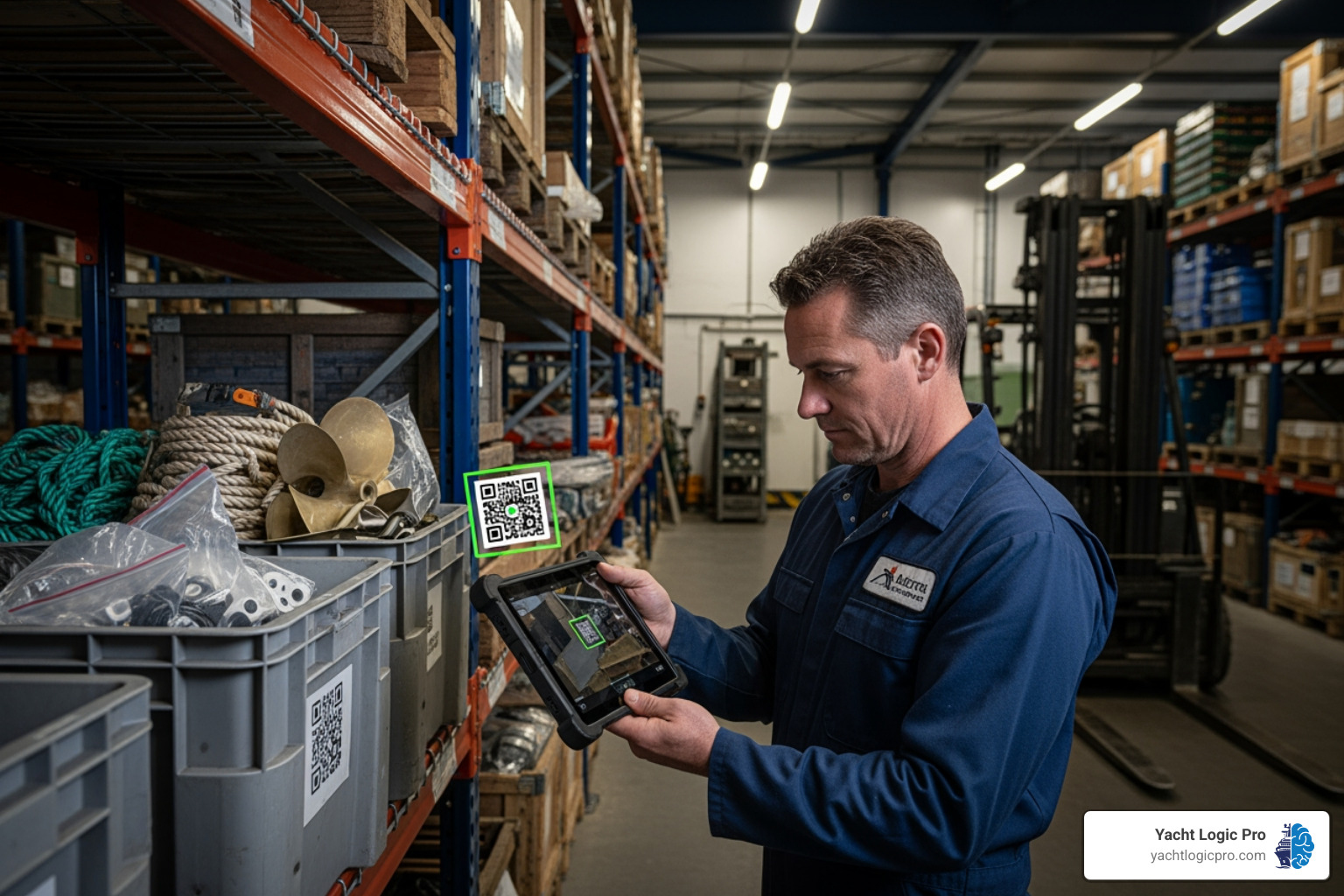
When evaluating software, we recommend looking for these essential features:
- Centralized Database: A single source of truth for all inventory data, accessible across all vessels and shore facilities. This ensures consistency and accuracy.
- Mobile Accessibility: Essential for crews and technicians who need to update inventory, perform stock-takes, or check part availability while onboard or in a remote warehouse. This often includes robust offline functionality that syncs when connectivity is restored.
- Barcode & QR Code Scanning: Speeds up receiving, issuing, and stock-taking processes, drastically reducing manual errors. Technicians can simply scan a part to update its status or find its details.
- Automated Procurement: Features that automatically generate purchase requisitions or orders based on min/max levels, integrate with suppliers, and track order status.
- Reporting & Analytics: Comprehensive reports on stock levels, usage patterns, costs, slow-moving items, and forecasting help us make data-driven decisions.
- Multi-Location Management: The ability to track inventory across various locations, including specific storerooms on a vessel (e.g., Engine Store, Deck Store, Bridge) and multiple shore-side warehouses, down to sub-locations for precise records.
- Component Lifecycle Tracking: For high-value parts, tracking their entire lifespan from procurement to installation, maintenance, and eventual disposal or reconditioning. This includes managing alternative, replacement, and obsolete parts.
- Serial Number Traceability: Crucial for warranty tracking, product recalls, and compliance. The system should track specific items from manufacturer to customer.
- Flexible Pricing Tools: For businesses that sell parts, the ability to set tiered pricing, volume discounts, and customer-specific pricing, along with tracking landed costs.
- Document Management: Storing manuals, specifications, certifications, and safety data sheets alongside inventory items for easy access.
- Integrated Messaging System: For seamless communication and coordination among teams regarding inventory status, orders, and urgent needs.
These features, and more, are what we look for in dedicated marine software. As we outlined in What to Look For in Yacht Service Management Software: A Buyer’s Checklist, a comprehensive solution streamlines operations and maximizes profitability.
Best Practices for Watertight Inventory Control
Implementing a sophisticated marine inventory management system is only half the battle; the other half is establishing robust best practices to ensure its effective use and continuous improvement. Think of it as regularly checking your charts and compass, even with the best navigation system.
These actionable strategies help us maintain accuracy, optimize processes, and ensure that our investment in technology truly pays off. They also contribute to building a strong reputation for reliability and efficiency, fostering How to Create Repeat Business with Better Yacht Service Records.
Conducting Effective Inventory Audits and Cycle Counts
Regular verification of our physical stock against digital records is paramount. This isn’t just about counting; it’s about validating our data and identifying discrepancies early.
- Annual Physical Counts: An annual physical count involves a complete check of every item, usually at the end of the fiscal year. This verifies digital records against physical stock and calculates inventory value, but it often requires halting operations.
- Cycle Counting Benefits: Cycle counting involves counting a small portion of inventory regularly (daily or weekly). This continuous process minimizes disruption, identifies errors faster, and maintains higher accuracy throughout the year.
- Digital Stock-Taking Tools: Modern software leverages mobile devices and QR codes for effortless digital stock-taking. Technicians can use a tablet or smartphone to scan items, update quantities, and generate discrepancy reports instantly. Digital Tools Every Marine Technician Should Be Using in 2025 are essential for this.
- Discrepancy Reporting: A good system will automatically highlight variances between physical counts and system records, allowing for immediate investigation and correction.
- Process for Initial Stock-Take: When first implementing a system, the initial stock-take is a foundational step. Our onboarding teams guide this process, providing tools like bulk uploads from spreadsheets to make it as efficient as possible.
Enhancing Safety and Compliance Through Accurate Marine Inventory Management
Beyond cost savings and efficiency, robust inventory management plays a critical role in ensuring the safety of personnel and compliance with stringent maritime regulations.
- Critical Spares Availability: Identifying and tracking critical spares—those essential for safe operation—is paramount. Ensuring these are always in stock prevents dangerous situations and costly failures.
- Safety Equipment Tracking: Life rafts, fire extinguishers, and other safety gear have inspection and expiration dates. The system should track these details and send alerts for servicing or replacement to maintain compliance.
- Expiration Date Management: For consumables and chemicals, tracking expiration dates is crucial. The system should provide alerts for soon-to-expire items to prevent using ineffective or hazardous materials.
- Inventory of Hazardous Materials (IHM): For compliance with regulations like the Hong Kong Convention or the EU Ship Recycling Regulation, an inventory system is essential for managing the Inventory of Hazardous Materials (IHM) onboard.
- Regulatory Compliance: Accurate inventory records are vital for audits by classification societies and port authorities, demonstrating due diligence and helping avoid fines or restrictions.
- Product Recall Management: With serial number traceability, we can quickly locate affected products during a recall, mitigating risks and ensuring swift action.
- Audit Readiness: By maintaining meticulous digital records, including receipts and audit trails, we are always prepared for inspections, showcasing a commitment to safety.
By integrating these best practices with a powerful marine inventory management system, we not only optimize our bottom line but also uphold the highest standards of safety and regulatory adherence.
Frequently Asked Questions about Marine Inventory Management
We often hear similar questions from marine business owners looking to tame their inventory beast. Here are some of the most common ones, along with our expert answers.
How does software handle parts with multiple supplier numbers or from different manufacturers?
This is a common scenario handled efficiently by modern software. The system uses a unique, internal stock number for every component. To this single ID, you can link multiple supplier and manufacturer part numbers. Attaching photos and specifications helps crew and procurement staff accurately identify the correct part. This approach ensures that regardless of who you’re ordering from, the system understands it’s the same physical item, streamlining procurement and reducing errors.
What is the long-term ROI of investing in a marine inventory system?
Investing in a robust marine inventory management system is not just an expense; it’s a strategic investment with significant long-term returns. While upfront costs might seem considerable, the benefits quickly add up.
The long-term Return on Investment (ROI) comes from:
- Reduced Holding Costs: By optimizing stock levels and preventing overstocking, you reduce the capital tied up in inventory, storage costs, and the risk of obsolescence.
- Minimized Operational Delays: Proactive management and critical spares availability dramatically cut down on vessel downtime due to part shortages, protecting revenue and reputation.
- Lower Emergency Freight Charges: Eliminating the need for urgent, expensive air freight for critical parts can save substantial amounts of money over time.
- Improved Labor Efficiency: Automating tasks like stock-taking, ordering, and consumption tracking frees up valuable crew and shore staff time, allowing them to focus on higher-value activities. Our systems can reduce manual data entry by 50%.
- Increased Asset Value: Proper maintenance enabled by readily available parts helps prolong the life and optimize the performance of your vessels, preserving and even enhancing their asset value.
- Improved Safety and Compliance: Avoiding safety-related incidents due to lack of parts or expired equipment, and ensuring audit readiness, prevents costly fines and potential legal repercussions.
- Overall Operational Cost Reduction: Across the board, we see operational costs reduced by as much as 25% through optimized inventory processes.
This investment transforms your operations from reactive and costly to proactive, efficient, and profitable.
How can software help manage high-value, rotable components sent ashore for service?
High-value, rotable components sent ashore for service present a unique challenge. Modern marine inventory management software handles this with specific tracking mechanisms:
- ‘Off-Vessel Asset’ Status: When a component is removed, its status is changed to ‘Off-Vessel Asset’, indicating it’s not onboard but still part of the fleet’s assets.
- Tracking Location and Condition: The system tags the component with its current location (e.g., ‘At Workshop XYZ’) and condition (e.g., ‘Awaiting Repair’).
- Attaching Service Orders: All service orders, invoices, and documentation can be attached to the component’s record for a complete maintenance history.
- Monitoring Reconditioning Costs: Track costs incurred ashore to understand the component’s true lifecycle cost.
- Maintaining Financial Visibility: The system ensures you never lose financial or operational sight of these valuable spares.
This meticulous tracking ensures high-value assets are managed efficiently, whether they are onboard or in a shore-side facility.
Conclusion: Steering Your Business Toward Greater Profitability
The journey from storeroom chaos to total asset visibility might seem daunting, but with the right tools and best practices, it’s an achievable and incredibly rewarding voyage. Marine inventory management is no longer a peripheral concern; it is the intelligent core of efficient and profitable maritime operations.
By embracing modern technology, we shift from a reactive scramble for parts to a proactive, data-driven approach. We move from costly emergency fixes to planned, efficient maintenance. We transform capital tied up in excess stock into liquid assets ready for new opportunities.
The future of marine service is digital, and a unified platform that automates maintenance, manages technicians, tracks inventory, and syncs finances is essential for service-driven marine businesses. Tools like ours are built by marine pros, for marine pros, to streamline operations, eliminate manual data entry, and ultimately boost your bottom line.
Investing in a robust marine inventory management system means investing in cost savings, operational efficiency, improved safety, and ultimately, a more profitable and resilient marine business. It’s time to take command of your inventory and steer your business toward a prosperous future.
To explore how a unified marine operations platform can transform your business, we invite you to Explore the Features of a Unified Marine Operations Platform.