Why Marine Automation Solutions Are Changing the Maritime Industry
Marine automation solutions are integrated systems that control, monitor, and optimize a vessel’s operations—from propulsion and power management to cargo handling. They reduce manual workload, improve fuel efficiency and safety, and provide real-time data for better decision-making on commercial, military, and recreational vessels.
Quick Overview: What Marine Automation Solutions Deliver
- Operational Efficiency: Automated control of engines, ballast, HVAC, and cargo systems
- Cost Savings: Up to 5% reduction in fuel costs through dynamic trim and power plant optimization
- Improved Safety: 24/7 monitoring, automated alarms, and emergency shutdown systems
- Data-Driven Insights: Real-time performance tracking and predictive maintenance capabilities
- Environmental Compliance: Emission monitoring and energy management for regulatory adherence
- Scalability: Modular systems that grow with your fleet’s needs
The maritime industry is undergoing a technological revolution. The global marine automation market, valued at $10.5 billion in 2022, is projected to reach $18.7 billion by 2030, driven by vessel complexity, stricter environmental regulations, and the need for smarter operations.
For marine business owners, this shift is a major opportunity. Manual processes and disconnected systems are no longer sustainable in an industry moving toward integrated, automated operations. Understanding marine automation is essential for staying competitive, as these systems open up profitability, reduce errors, and provide the real-time visibility needed to run a modern marine business.
I’m Kevin Kates, founder of Yacht Logic Pro. I’ve spent my career helping marine businesses bridge the gap between maritime technology and operational efficiency. I’ve seen how marine automation solutions transform vessel performance and business outcomes when properly implemented and integrated with the right operational tools.
The Anatomy of a Modern Marine Automation System
At its heart, a modern marine automation solution is a sophisticated network—a central nervous system—that brings cohesion and control to a vessel’s complex operations.
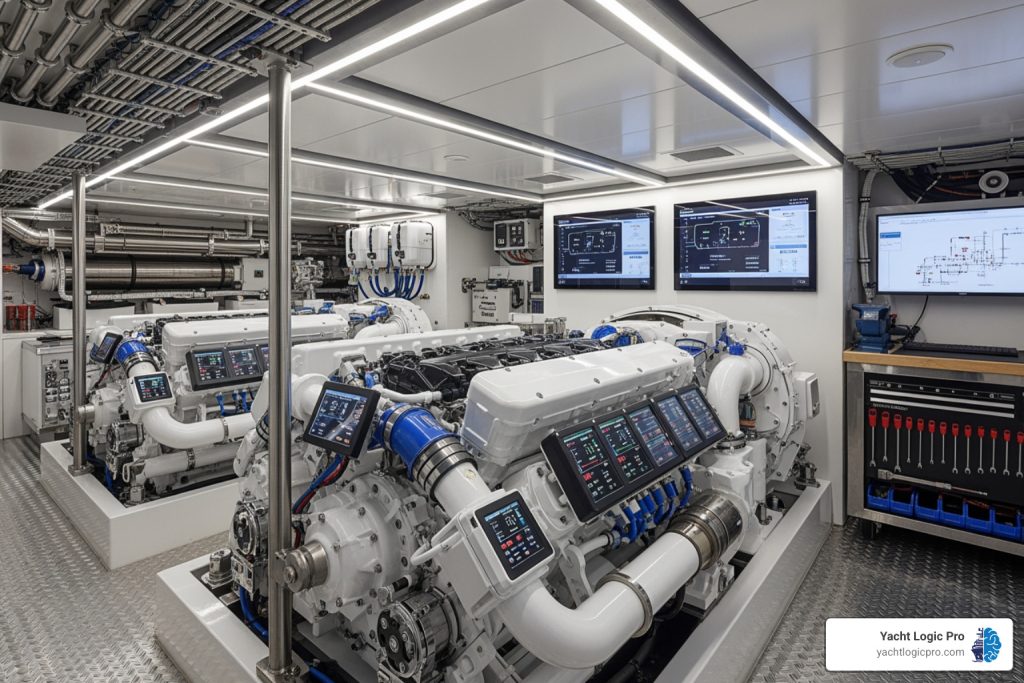
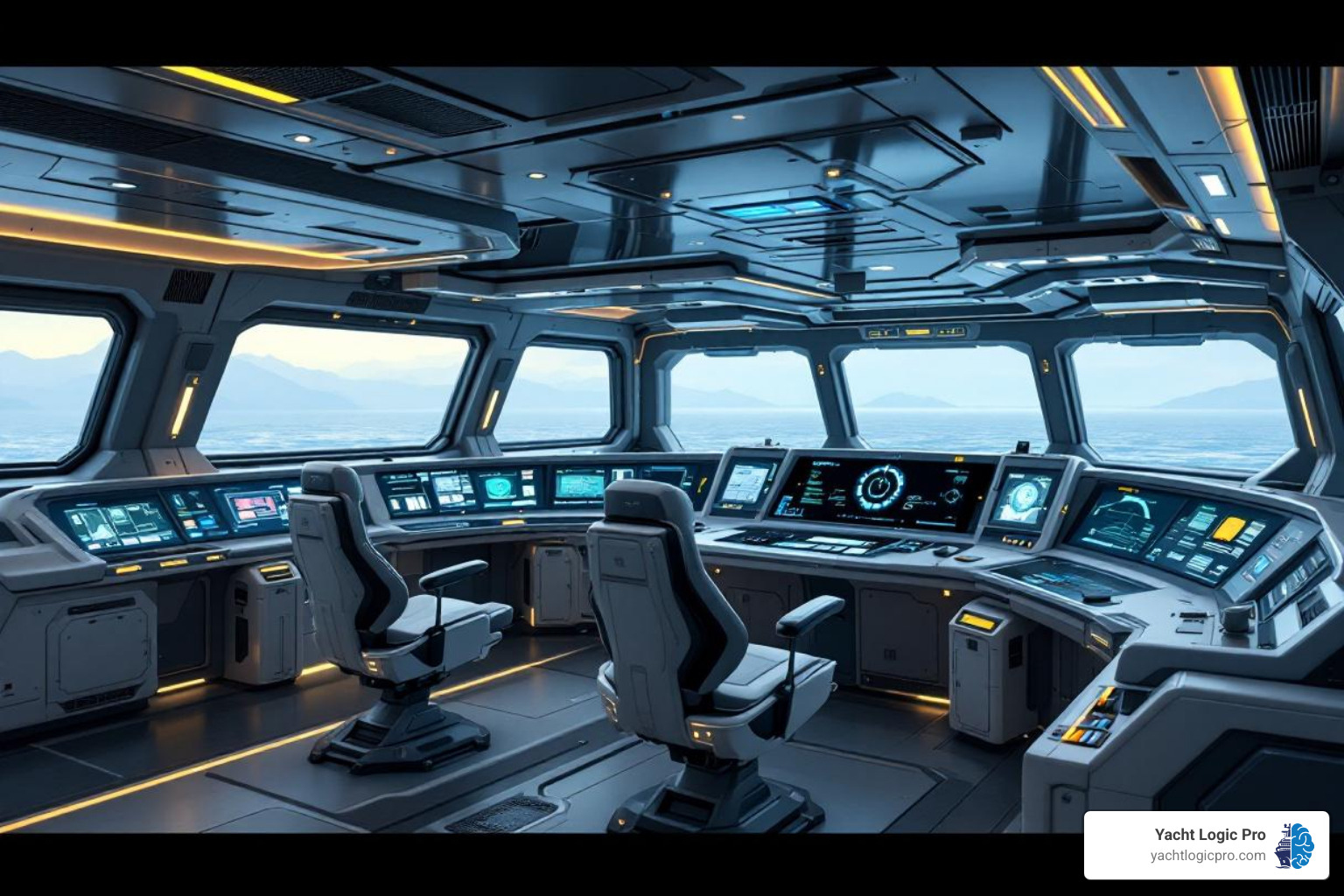
These systems often take the form of an Integrated Automation System (IAS), which acts as a central hub, bringing disparate controls for engines, navigation, and cargo into a unified interface. The architecture often mixes centralized and decentralized control units, ensuring critical systems can function independently for added resilience.
A significant trend is the reliance on Commercially Off-The-Shelf (COTS) hardware, which offers flexibility, easier maintenance, and cost-effective solutions. COTS-based systems are designed with scalability and redundancy in mind, allowing them to grow with a vessel’s needs and maintain operations if a component fails. For instance, providers like Verus and Valmet offer modular, scalable marine automation solutions with robust architectures and high availability to meet future demands.
Key Components of Modern Marine Automation Solutions
These powerful systems are made up of several key components:
- Propulsion Control & Monitoring: The most critical segment, these systems precisely manage engines, thrusters, and propulsion units to optimize performance. Solutions from providers like Rockwell Automation and ABB are engineered for optimal vessel efficiency.
- Alarm & Monitoring Systems (AMS): The ship’s vigilant watchdogs, AMS continuously monitor critical parameters and alert the crew to any deviations, as seen in Emerson’s marine control technologies.
- Ballast & Cargo Control: For commercial vessels, these systems automate the filling, emptying, and transfer of tanks to ensure stability and operational efficiency.
- Power Management Systems (PMS): These systems optimize the generation and distribution of electrical power onboard, ensuring a stable supply while maximizing fuel efficiency. mtu NautIQ Genoline NG is one example that controls on-board power generation.
- Navigation Systems (Autopilots): Modern autopilots are increasingly integrated into broader automation frameworks. Raymarine offers autopilot packs for diverse vessel types, while more advanced systems like the Kongsberg K-Chief provide comprehensive, integrated vessel automation.
- Digital Control Systems for Yachts: Specialized solutions like Raymarine YachtSense Digital Control are changing the onboard experience. These modular systems provide complete command of a vessel’s electrical systems, allowing captains to control everything from mechanical systems to lighting from the helm, with multiple layers of redundancy for reliability.
Core Functionalities and How They Work
With these components, marine automation solutions deliver several core functionalities:
- Vessel-Wide Monitoring: The ability to monitor every aspect of the vessel’s operation from a single interface, with intuitive visual process views for ship engineers.
- Equipment Health Management: These systems analyze performance data to predict potential failures, enabling proactive maintenance. mtu NautIQ Foresight is a prime example, functioning as an Equipment Health Management System to monitor vessel and fleet condition.
- Remote Control Capabilities: Automation enables remote operation of various systems, from basic valve controls to advanced dynamic positioning. Some systems even offer wireless remote-helm control from up to 1000 meters away.
- Emergency Shutdown (ESD) Systems: For critical safety, ESD systems automatically or manually shut down equipment in an emergency to prevent catastrophic failures.
- Automated Reporting: Automation streamlines the generation of reports on fuel consumption, emissions, and performance, which is crucial for regulatory compliance and operational analysis, as seen in Emerson’s Vessel Emission Reporting Solution.
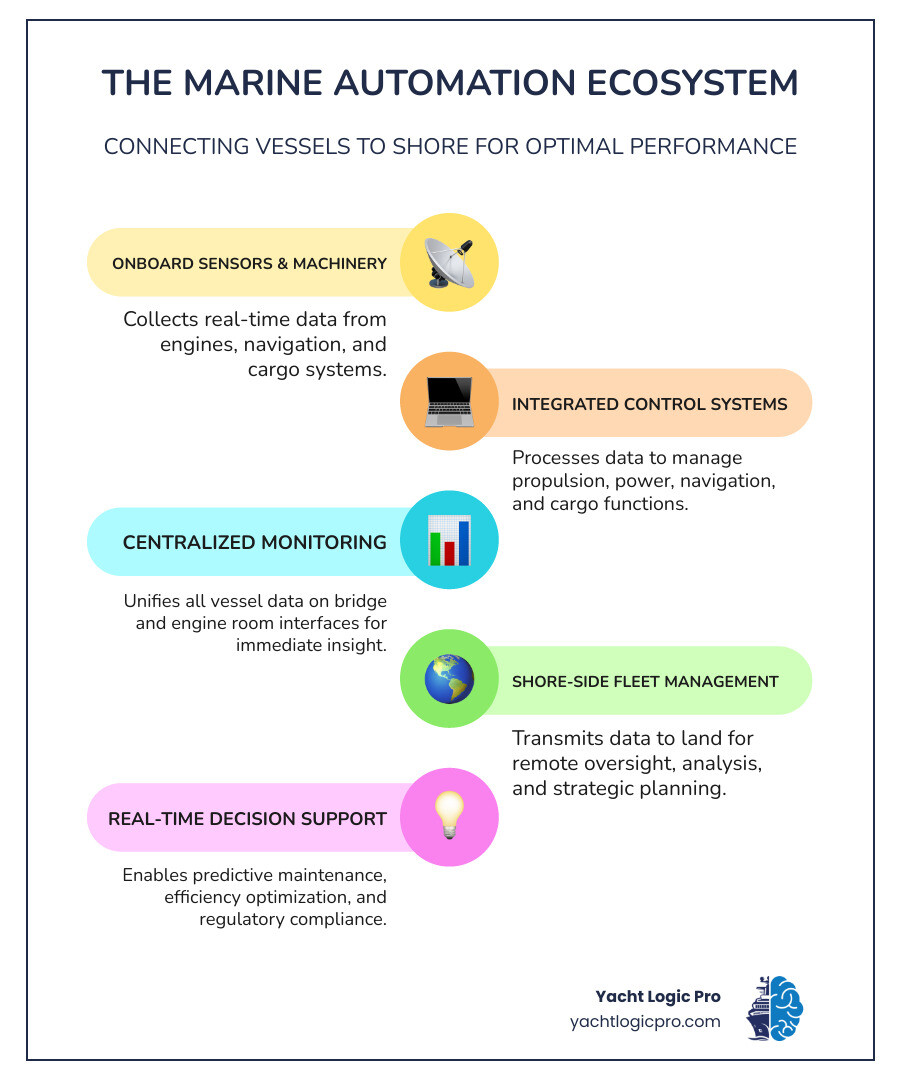
For service-driven marine businesses, this onboard data must connect to operational workflows. Integrating these vessel systems with shore-side management platforms is critical. Just as onboard systems connect vessel components, our software helps connect your entire marine team, from dock to dashboard, ensuring data flows seamlessly to your maintenance, inventory, and financial systems.
The Core Benefits of Marine Automation Solutions
The maritime industry is embracing marine automation solutions for the tangible benefits they deliver, from the engine room to the bottom line.

At a high level, these solutions lead to increased uptime, reduced operational costs, and improved safety. For example, ABB’s OCTOPUS software has demonstrated its ability to increase vessel operation uptime by 35% when combined with robotic maintenance—a game-changer for any operation.
Boosting Efficiency and Slashing Operational Costs
One of the most compelling reasons to invest in automation is its profound impact on efficiency and cost savings.
- Fuel Efficiency: This is a major win, with systems delivering savings of up to 5% on propulsion energy costs through dynamic trim optimization. Solutions from ABB, Valmet, and Emerson all contribute to better fuel management and OPEX savings.
- Optimized Vessel Performance: Beyond fuel, automation ensures all systems run at their peak, improving overall performance across engines, thrusters, and steering.
- Reduced Crew Workload: Automation takes over routine and labor-intensive tasks, freeing up the crew to focus on complex decision-making, maintenance, and safety.
- Predictive Maintenance Scheduling: Instead of reactive repairs, automation systems constantly monitor equipment health. Systems like mtu NautIQ Foresight and ABB’s OCTOPUS provide data for predictive maintenance, which extends asset life and dramatically reduces unplanned downtime. This shift shows why data-driven yacht service is the future of the marine industry.
- Lifecycle Cost Reduction: By extending asset life and reducing maintenance costs, automation offers significant long-term lifecycle cost benefits.
Enhancing Onboard Safety and System Reliability
Safety is non-negotiable, and marine automation solutions are powerful allies in this regard.
- 24/7 Real-Time Monitoring: Automation systems never sleep, continuously monitoring hundreds of parameters across the vessel for improved safety and efficiency.
- Automated Alarms and Alerts: When a parameter deviates from its safe range, the system immediately alerts the crew, allowing for rapid intervention.
- System Redundancy for Critical Functions: To prevent single points of failure, critical systems are designed with built-in redundancy. For example, Raymarine’s YachtSense systems are engineered with three layers of redundancy, ensuring robust reliability.
- Reduced Human Error: By automating routine tasks and providing clear, data-driven insights, automation significantly reduces the likelihood of human error, a leading cause of maritime incidents.
- Improved Crew Comfort and Safety: A well-automated vessel is a safer one. The crew is less fatigued and has better situational awareness, supported by systems that predict potential hazards. The innovative integration of your control & monitoring systems is key to a trusted and efficient operation.
Data, Sustainability, and the Future of Maritime Operations
The maritime industry is sailing into an era where data is as valuable as cargo and sustainability is a guiding star. Marine automation solutions are at the forefront of this change, powering the deep integration of IoT, the emergence of digital twins, and the drive towards decarbonization.
The Power of Data Analytics and Remote Monitoring
The true power of modern marine automation solutions lies in their ability to generate, collect, and analyze vast amounts of operational data.
- IoT Sensors: The foundation of this data revolution is the proliferation of IoT sensors gathering information from every corner of the vessel.
- Fleet Management Portals: This data is securely transferred to shore-side fleet management portals, allowing specialists to perform broader analysis. Platforms from ABB and mtu enable shoreside teams to gain insights and manage global fleets remotely.
- Real-Time Decision Support: With real-time data, crews and onshore teams can make faster, more informed decisions, shifting from reactive to proactive operations.
- Increased Uptime: Remote performance monitoring and predictive maintenance translate directly into increased uptime, with some systems boosting it by as much as 35%.
- Performance KPIs: Automation systems track key performance indicators (KPIs) to measure and improve efficiency, safety, and environmental impact, supporting plans like SEEMP.
For marine technicians, access to this data is revolutionary. It’s why the digital tools every marine technician should be using in 2025 will rely on these integrated data streams for proactive, data-informed maintenance.
Meeting Environmental Regulations and Sustainability Goals
The maritime industry faces increasingly stringent environmental regulations, and marine automation solutions are critical tools for compliance and sustainability.
- Continuous Emission Monitoring (CEM): These systems precisely measure and report emissions, ensuring vessels adhere to strict standards.
- Fuel Consumption Reduction: Automation directly reduces fuel burn through optimized propulsion, dynamic trim, and intelligent power management, lowering both costs and greenhouse gas emissions.
- Energy Management Systems (EMS): These systems optimize energy use across the vessel. ABB’s Power Plant Optimizer, for example, advises on engine use to achieve optimal fuel savings.
- Scrubber and Ballast Water Treatment Control: Automation effectively manages environmental systems like exhaust gas scrubbers and ballast water treatment plants to ensure regulatory compliance.
Meeting these requirements is complex, and solutions like Emerson’s vessel emission reporting solution for future compliance are becoming indispensable.
The Next Wave: AI, IoT, and Autonomous Shipping
The future promises even more transformative changes, driven by AI, IoT, and the goal of autonomous shipping.
- Artificial Intelligence (AI) in Navigation: AI is moving into active control. Systems like mtu NautIQ CoPilot use advanced algorithms and computer vision to improve vessel operations and safety.
- Machine Learning for Predictive Maintenance: ML algorithms analyze vast datasets to identify subtle patterns that indicate impending equipment failure, allowing for hyper-optimized maintenance schedules.
- The Internet of Things (IoT) Connectivity: Pervasive IoT connectivity will create a dense web of data, enabling unprecedented levels of monitoring, control, and optimization.
- Remote and Fully Autonomous Vessels: The ultimate frontier is autonomous shipping. While challenges remain, self-piloting navigation systems are advancing rapidly, promising safer and more efficient shipping.
This isn’t just theory; the future of marine service is digital, and these advanced technologies are paving the way for more competitive and resilient marine businesses.
Implementation: Integrating and Upgrading Your Systems
Integrating sophisticated marine automation solutions, especially on existing fleets, requires careful planning, expertise, and the right partners.
Challenges and Key Considerations
Implementing or upgrading these systems presents several common challenges:
- System Integration Complexity: Bringing together sub-systems from different manufacturers requires deep technical expertise to ensure seamless communication. Providers like Verus specialize in integrating third-party systems using flexible protocols.
- Retrofitting Older Vessels: Integrating new technology into older vessels requires creative engineering and a thorough understanding of legacy systems.
- Cybersecurity Threats: As vessels become more connected, they become potential targets for cyberattacks. Robust cybersecurity measures are a paramount part of any automation strategy.
- Crew Training and Adaptation: The crew must be adequately trained to operate, monitor, and troubleshoot advanced systems. Providers like ABB and Rockwell Automation offer training and global support.
- Scalability for Future Needs: An automation system should be designed for future expansion to adapt to changing regulations and new technologies.
Having a clear checklist is critical, much like using what to look for in yacht service management software: a buyer’s checklist helps you choose the right operational tools.
Specific Marine Automation Solutions for Different Vessels
The right marine automation solution isn’t one-size-fits-all; needs vary by vessel type.
| Feature / Vessel Type | Commercial Vessels | Military Vessels | Yachts |
|---|---|---|---|
| Primary Focus | Efficiency, cost savings, cargo management, regulatory compliance, crew reduction | Performance, reliability, survivability, security, advanced control, rapid response | Comfort, ease of use, digital integration, aesthetic control, personalized experience, remote access |
| Key Automation Areas | Propulsion, cargo, ballast, fuel management, energy management, emission monitoring, navigation, integrated control & monitoring systems | Propulsion, weapon systems, navigation, integrated platform management systems (IPMS), combat systems, damage control, secure communication | Digital switching, lighting, climate control, entertainment, navigation, autopilot, fuel management, remote monitoring, security, AV/IT integration |
| Benefits | Reduced fuel consumption, optimized routes, improved cargo handling, predictive maintenance, compliance with environmental laws, reduced operational headcount | Improved operational performance, extended asset life, reduced crew workload, rapid response to threats, secure data management | Seamless control of onboard systems, improved luxury and convenience, improved safety with remote monitoring, simplified maintenance, customizable interfaces |
| Examples | Valmet DNA (large cruise ships, product carriers), Rockwell Automation systems, Emerson ICMS, ABB OCTOPUS for merchant vessels and heavy lift | Rockwell Automation for military vessels, mtu NautIQ for IPMS, propulsion, and control systems | Raymarine YachtSense, Seaward Automation for pleasure craft, Raymarine Autopilots, mtu NautIQ (specific yacht solutions) |
- Commercial Vessels: The focus is on fuel efficiency, cargo handling, and regulatory compliance. Systems from Valmet, Rockwell, and ABB streamline propulsion, ballast, and cargo operations.
- Military Vessels: Reliability, performance, and survivability are paramount. Automation centers on Integrated Platform Management Systems (IPMS), robust propulsion control, and secure communication, with solutions from providers like Rockwell and mtu.
- Yachts: The goal is seamless control, comfort, and ease of use. Digital switching systems like Raymarine’s YachtSense offer complete command over a yacht’s electrical and luxury systems.
The Role of System Integrators and Technology Providers
Specialized system integrators and technology providers are crucial for delivering effective marine automation solutions.
- Turnkey Solutions: Many providers offer complete, ready-to-deploy systems that cover design, installation, and commissioning.
- Custom Engineering: Experts can engineer solutions that best suit a vessel’s specific operational profile, as seen with ABB’s custom electric propulsion systems.
- Lifecycle Support: Reputable providers offer ongoing support, maintenance, and upgrades throughout the system’s lifecycle.
- Collaboration for Integration: The best outcomes arise from close collaboration between the owner, operators, and technology providers to design better, install faster, and operate more efficiently. This approach is vital for making the most of your automation investment, as this video on how system integration expertise for electric propulsion explains.
Conclusion: Navigating Toward an Automated Future
As we’ve explored, marine automation solutions are no longer a luxury but a necessity for any modern maritime operation. We’ve seen how these integrated systems drive unparalleled efficiency, slash operational costs, and significantly improve safety and reliability onboard. From optimizing fuel consumption by up to 5% to increasing vessel uptime by 35%, the benefits are clear and quantifiable.
The shift towards data-driven operations is irreversible. With IoT sensors, advanced analytics, and remote monitoring, vessels are becoming intelligent hubs, constantly generating insights that empower better decision-making and proactive management. This data-centric approach is also fundamental to meeting increasingly stringent environmental regulations and achieving ambitious sustainability goals. The horizon reveals a future shaped by AI, machine learning, and eventually, autonomous shipping, promising even greater changes.
For any marine business, embracing automation is not just about adopting new technology; it’s about gaining a crucial competitive advantage. It’s about streamlining workflows, reducing human error, and ensuring your operations are future-proof. For service-driven marine businesses, unifying these automated systems with powerful operational software is the final step to maximizing profitability and control. By connecting the rich data from onboard automation with your maintenance, inventory, and financial systems, you eliminate manual data entry, boost efficiency, and gain complete visibility into your operations.
Ready to take the helm of your marine business’s future? We invite you to explore the features that power modern marine businesses and find how integrated solutions can transform your operations.