
Why Digital Work Orders Matter for Marine Operations
Digital work orders are electronic versions of traditional paper work orders that allow marine businesses to create, assign, track, and complete maintenance tasks through software instead of paper forms. Here’s what they do:
- Create and assign tasks instantly from any device to technicians in the field
- Track real-time progress with status updates, photos, and GPS location data
- Automate calculations for labor, parts, and project totals
- Store complete history of all maintenance work in searchable digital records
- Enable electronic signatures for instant approvals and sign-offs
- Generate automatic reports for billing, compliance, and analytics
If it ain’t broke, then don’t fix it. We’ve all heard that line at some point. And as marine business professionals, we know it’s not always great advice.
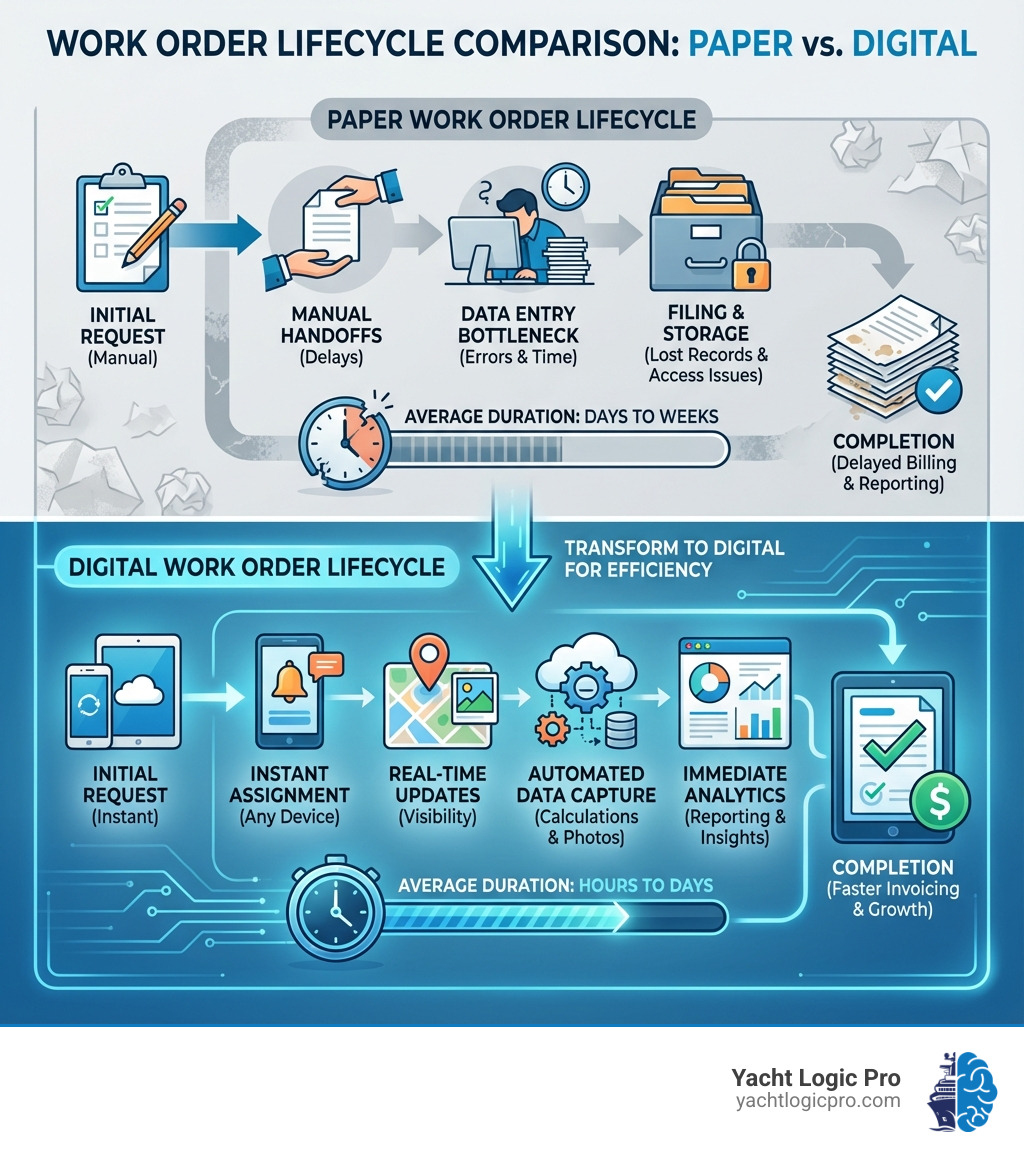
Many marine service operations still rely on paper work orders, spreadsheets, and manual processes. A technician fills out a form on a clipboard. The paperwork travels back to the office. Someone manually enters the data. The work order gets filed in a cabinet—or worse, it gets lost entirely.
This system might feel familiar, but it’s costing you money every single day.
Paper work orders create hidden inefficiencies that add up fast. Lost paperwork means incomplete invoices. Illegible handwriting causes confusion. Manual data entry takes hours. And you’re always looking over someone’s shoulder for the closest thing to real-time updates.
The marine industry is reaching a tipping point. Digital work orders are no longer a nice-to-have feature—they’re becoming the standard for businesses that want to stay competitive and profitable.
The shift from paper to digital isn’t just about replacing clipboards with tablets. It’s about changing how your entire operation runs, from the moment a service request comes in to the final invoice. It’s about capturing every billable hour, tracking every part used, and maintaining complete visibility over your team’s work.
The Problem with Paper: Why Traditional Work Orders Hold You Back
Let’s be honest, paper work orders have been around forever. They’re familiar, they’re tangible, and they don’t require Wi-Fi. But in today’s marine service environment, these perceived “pros” are heavily outweighed by a long list of “cons.” We’ve seen how traditional methods can stifle growth and lead to unnecessary headaches.

Imagine a technician diligently filling out a paper form, only for it to be misplaced, coffee-stained, or rendered illegible by a sudden downpour. It sounds like a bad sitcom, but it’s a daily reality for many. Lost paperwork isn’t just an inconvenience; it can lead to missed billing, forgotten tasks, and frustrated clients.
The inefficiencies pile up:
- Lost Paperwork & Slower Invoicing: That critical work order detailing an engine repair goes missing, and suddenly, we can’t bill for the materials or labor. The result? Long lead times for invoicing and potential late or non-payments. As one client finded, an entire department can be dedicated just to processing paper receipts, causing significant delays. This directly impacts our revenue and cash flow. In fact, digital work orders contribute to 16% fewer incomplete orders, highlighting a major pain point of traditional systems.
- Illegible Handwriting & Increased Errors: Ever tried deciphering a doctor’s handwriting? Now imagine that on a work order detailing complex marine repairs. Illegible entries lead to miscommunications, incorrect parts ordered, and rework. This directly impacts accuracy and can introduce costly errors.
- Communication Delays: With paper, real-time updates are a fantasy. We’re left looking over someone’s shoulder for status updates, making it impossible to respond quickly to urgent issues or keep everyone informed. The work order lifecycle becomes a slow, laborious journey.
- Inefficient Data Entry: Once the paper form makes its way back to the office, someone has to manually input all that information into a computer system. This is a time-consuming, error-prone process that ties up valuable administrative resources. It’s not scalable, and it prevents us from using dashboards and analytics to gain insights into our operations.
- Physical Storage Costs: All that paper needs to go somewhere. Filing cabinets, storage rooms, and off-site archives all come with a cost, both in terms of space and the time it takes to retrieve old records. Retrieving past work orders can feel like searching for a needle in a haystack.
These are just some of the ways traditional paper work orders create The Hidden Costs of Manual Yacht Maintenance Tracking. They hold us back from operating efficiently, providing top-tier service, and ultimately, growing our businesses. It’s time to fix what’s “not broken” by embracing a better way.
The Power of Going Digital: How Digital Work Orders Boost Efficiency
Now that we’ve seen the pitfalls of paper, let’s dive into the transformative power of digital work orders. This isn’t just about moving from paper to screen; it’s about fundamentally improving how we operate, communicate, and grow.
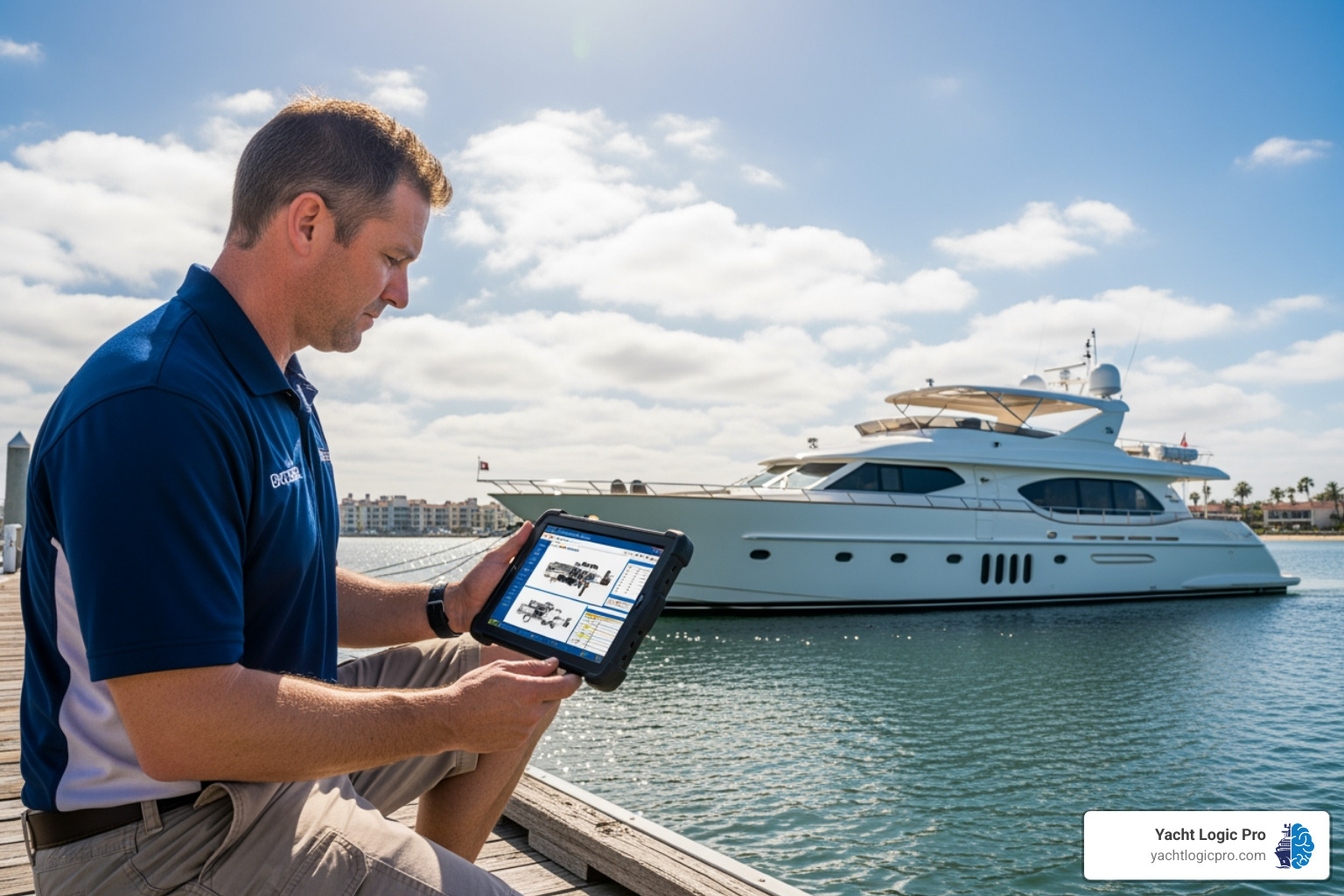
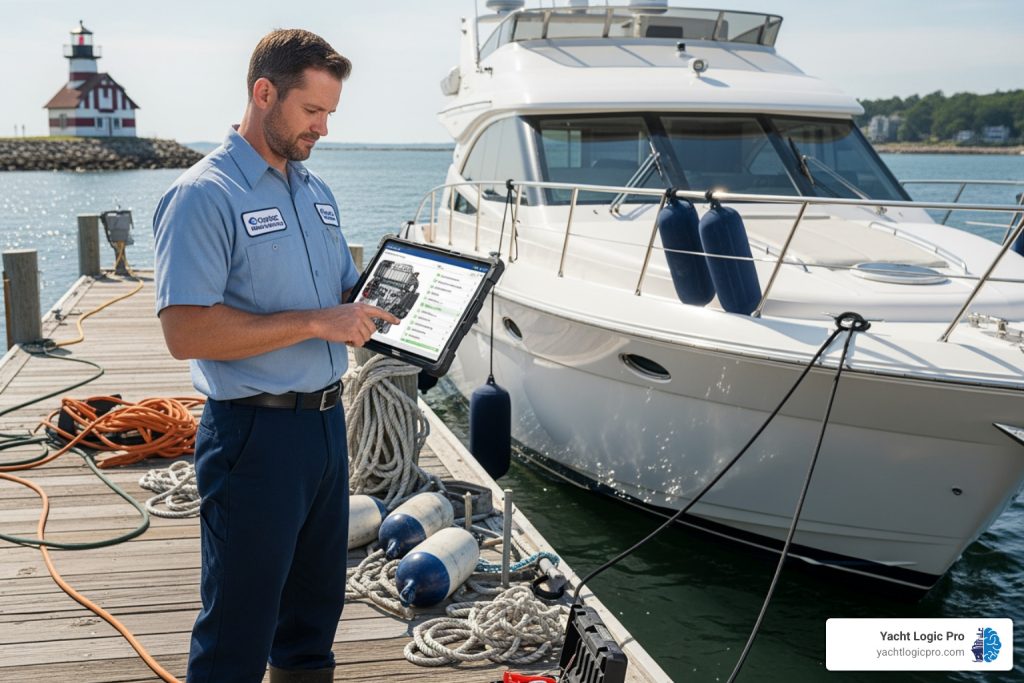
Imagine a marine technician on a dock, tablet in hand, accessing all the information they need, updating job status in real-time, and even capturing photos of the completed work. That’s the power of digital.
Here’s how digital work orders revolutionize efficiency and streamline workflows:
- Streamlined Workflows & Instant Assignment: The moment a work request comes in, it can be instantly converted into a digital work order and assigned to the right technician with all necessary details. This dramatically reduces the work order lifecycle. We’re talking about creating a work order in minutes, not hours or days. This instant communication and assignment capability contributes to a 20% increased daily work order completions.
- Real-time Collaboration & Centralized Communication: Forget phone calls and endless text messages. With digital systems, everyone involved in a job – from the office dispatcher to the field technician – is always up-to-date. Real-time notifications keep us informed of progress, changes, and completion. This efficient exchange of information means less time spent on coordination and more time on actual work.
- Reduced Work Order Lifecycle: By eliminating manual handoffs, data entry, and physical travel of paperwork, the entire process from request to completion to invoicing is drastically sped up. This efficiency allows us to complete more jobs, delight more customers, and collect payments faster. This is how we achieve From First Call to Final Invoice: Streamlining the Yacht Service Workflow.
Improved Accuracy and Accountability
One of the most significant benefits of digital work orders is the inherent improvement in accuracy and accountability. No more guessing games or blaming “lost paperwork.”
- Mandatory Fields & Standardized Templates: Digital forms can be designed with mandatory fields, ensuring that all critical information – customer details, service performed, parts used, labor hours – is captured consistently. We can use drop-down lists for uniformity, eliminating ambiguity and improving bookkeeping. This standardization helps achieve 16% fewer incomplete orders.
- Automated Calculations: Say goodbye to manual math errors. Digital systems can automatically calculate labor costs, part totals, and overall project costs, ensuring accurate billing and reducing disputes.
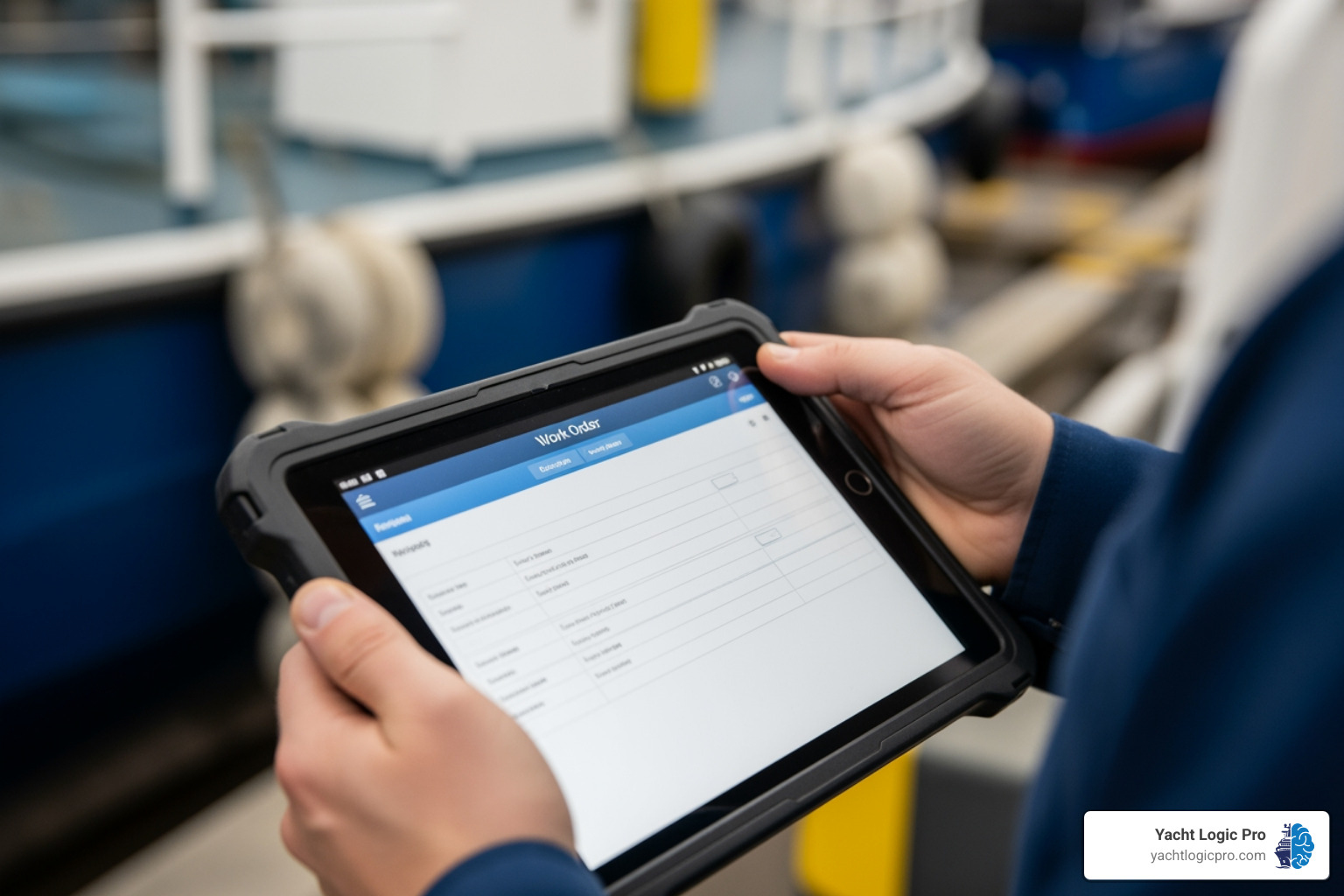
- Digital Signatures: Technicians and clients can sign off on work directly on a tablet or smartphone, providing instant approvals and a verifiable record of completion. This eliminates the need for printing, scanning, or mailing signed documents.
- Time-Stamped Proof & Reduced Errors: Every action, every update, every signature is time-stamped and recorded, creating an unalterable audit trail. This verifiable proof is invaluable for compliance, dispute resolution, and demonstrating a proactive approach to maintenance. It significantly reduces errors that plague paper-based systems.
Improved Team Communication
Effective communication is the lifeblood of any successful marine service operation. Digital work orders act as a central nervous system, connecting our entire team.
- Mobile Access: Our technicians can access all job details, customer history, manuals, and schematics directly from their mobile devices, whether they’re on a yacht, in the workshop, or out at sea. This mobile access means they have the right information at the right time.
- Photo & Video Attachments: A picture is worth a thousand words, especially when diagnosing a complex engine issue or documenting a repair. Technicians can attach photos and even videos directly to the digital work order, providing clear visual context to the office and the client. They can even annotate images to highlight specific areas.
- In-App Messaging & Real-time Notifications: Instead of juggling multiple communication channels, teams can communicate directly within the work order system. Urgent updates, questions, and progress reports can be shared instantly. Automatic notifications ensure that key stakeholders are alerted to status changes or critical issues.
- Centralized Information Hub: All relevant information – customer contacts, asset service history, tasks, parts, and attachments – is stored in one accessible digital location. This eliminates information silos and ensures everyone is working from the same, most up-to-date data. This centralized approach is a cornerstone of The ultimate guide to work order management.
Choosing the Right System: Key Features and Customization
Selecting the right digital work order management system is crucial for open uping these benefits. It’s not a one-size-fits-all solution, but there are core features we should prioritize, especially for marine businesses.
When we look for a system, we’re seeking a robust platform that goes beyond basic task management. Here’s what we consider essential:
- Mobile App with Offline Capabilities: Marine environments aren’t always connected. Technicians need to be able to create, update, and complete digital work orders even when they’re offshore or in a remote boatyard with no signal. The system must sync data seamlessly once connectivity is restored.
- Scheduling and Dispatching Tools: An effective system allows for easy scheduling of tasks, assigning them to the right technician, and providing dispatchers with real-time visibility into team availability and location. This ensures optimal resource allocation.
- Integration with Other Systems (ERP, Accounting): To truly unify operations, our digital work order system must integrate with our existing Enterprise Resource Planning (ERP), Customer Relationship Management (CRM), and accounting software. This ensures data integrity across the organization and eliminates redundant data entry, leading to accurate invoicing and financial syncing. This is a key aspect of What to Look For in Yacht Service Management Software: A Buyer’s Checklist.
How to Customize Digital Work Orders for Your Business
One of the greatest advantages of digital work orders is their flexibility. We’re not stuck with generic forms; we can tailor them to our specific needs.
- Custom Templates: Every marine service business has unique workflows and data requirements. A good system allows us to create unlimited custom templates for different types of jobs – engine service, hull repair, electronics installation, detailing. These templates ensure all necessary details are captured for each specific task.
- User-Defined Fields: Beyond standard fields, we need the ability to add custom fields relevant to our industry, such as vessel make/model, engine hours, specific equipment serial numbers, or unique client preferences. This level of detail ensures comprehensive record-keeping.
- Industry-Specific Workflows: The system should allow us to build out custom workflows that mirror our operational processes. For example, a gas boiler check that turns into a repair needs a flexible workflow that can be updated in real-time, informing other staff members of the change. This configurability means the software adapts to us, not the other way around.
- Scalability for Business Growth: As our business grows, our digital work order system should scale with us. It should handle an increasing volume of work orders, more technicians, and additional service locations without compromising performance or efficiency.
From Data to Decisions: Leveraging Analytics in Digital Work Orders
The real magic of digital work orders lies in the data they collect. This isn’t just about completing tasks; it’s about gathering insights that drive better business decisions.
- GPS Location Tracking: Knowing where our field workers are in real-time not only improves dispatching but also provides valuable data on travel times and efficiency. GEO tagging ensures that every job is accurately linked to its physical location.
- Job Status Dashboards: Managers and owners can view color-coded dashboards that provide an instant overview of all active work orders, their statuses, and technician assignments. This real-time visibility allows for proactive management and quick responses to bottlenecks.
- Performance Analytics: The system should generate detailed reports on key metrics: average resolution times, recurring issues, technician performance, and maintenance spending. This data helps us identify trends, optimize resource allocation, and improve our Standard Operating Procedures (SOPs).
- Historical Data Access: A complete, searchable history of every work order allows us to quickly pull up past repairs, identify frequently breaking down products or installations, and provide detailed service records to clients. This historical data is invaluable for refining workflows and making smarter, data-driven decisions. This is why Why Data-Driven Yacht Service is the Future of the Marine Industry is so critical.
Making the Switch: Implementation and Best Practices
Transitioning to digital work orders is a significant step, but it doesn’t have to be daunting. We understand that change can be met with resistance, but with a thoughtful approach, we can make the switch smooth and successful.
- Addressing Resistance to Change: The “if it ain’t broke, don’t fix it” mentality is often the biggest hurdle. Some team members might be comfortable with paper or feel threatened by new technology. We must communicate the benefits clearly, emphasizing how digital work orders will make their jobs easier, not harder. Highlighting time savings, reduced frustration, and better communication can turn skeptics into advocates.
- Importance of Training: A new system is only as good as the team using it. Comprehensive training is crucial. We need to ensure everyone, from office staff to field technicians, is comfortable and proficient with the software. User-friendly interfaces help minimize the learning curve. This focus on training is part of how How Yacht Logic Pro Helps Marine Businesses Train New Staff Faster.
- Phased Implementation Strategy: Instead of a “big bang” rollout, a phased approach can be more manageable. Start with a pilot group, gather feedback, refine processes, and then gradually expand to the rest of the team. This allows for adjustments and builds confidence.
- Choosing User-Friendly Software: The software itself plays a huge role. An intuitive, easy-to-steer system will be adopted faster and with less friction. Look for platforms designed with the end-user in mind, especially for field technicians who need quick access on the go.
- Calculating ROI vs. Upfront Costs: Yes, there’s an upfront investment in any new software. However, we need to look beyond the initial cost and consider the long-term Return on Investment (ROI). The savings from reduced paperwork, increased efficiency, fewer errors, faster billing, and better data insights will quickly outweigh the initial outlay. In some cases, the cost of losing just a couple of work resources due to inefficiency can equal the cost of implementing a robust digital system. By reducing spending and maximizing accountability, we always stay on schedule and protect our bottom line.
Frequently Asked Questions about Digital Work Orders
We often hear similar questions from marine businesses considering the switch. Let’s address some of the most common ones.
What’s the difference between a work request and a work order?
This is a common point of confusion! A work request is an initial report from anyone (a customer, a crew member, or even a technician) who notices an issue or needs a task performed. It’s essentially a notification that something needs attention.
A work order, on the other hand, is an authorized task. It’s generated by the maintenance department (or management) after a work request has been evaluated, approved, and prioritized. The work order contains all the specific details, instructions, and assignments needed to complete the job. Think of it this way: a work request says, “Hey, there’s a problem.” A work order says, “Go fix this problem, here’s how, and here’s who’s doing it.”
Can digital work orders be used for preventive maintenance?
Absolutely, and they excel at it! While checklists are often used for preventative maintenance, digital work orders can be a direct result of a preventative maintenance schedule. For example, a system can automatically generate a digital work order for a routine engine inspection every 250 hours.
This allows us to:
- Schedule recurring tasks: Automate the creation of work orders for routine maintenance, inspections, and preventative care based on time, usage, or other triggers.
- Manage inspections: Use custom templates within digital work orders for detailed inspection checklists, ensuring consistency and thoroughness.
- Shift from reactive to proactive maintenance: By scheduling and tracking preventative tasks digitally, we can identify and address potential issues before they become costly breakdowns, significantly reducing unplanned downtime.
How secure is the data in a digital work order system?
Data security is paramount, especially when dealing with sensitive client information and critical operational data. Modern digital work order systems are built with robust security measures, far surpassing the security of a paper filing cabinet.
Key security features include:
- Cloud-based Storage: Data is stored securely in the cloud, protected by advanced data centers with redundant systems and physical security. This also ensures accessibility from anywhere, anytime.
- Data Encryption: Information is encrypted both when it’s stored (“at rest”) and when it’s being transmitted (“in transit”), making it unreadable to unauthorized parties.
- User Permissions: Granular user permissions allow us to control exactly who can access, create, edit, or view specific digital work orders or data sets.
- Secure Sign-in (MFA): Multi-factor authentication (MFA) adds an extra layer of security to user logins, protecting against unauthorized access.
- Data Backup and Reliability: Reputable systems implement automatic multi-region replication and backup/restore capabilities, ensuring data integrity and high availability (often with SLAs of up to 99.999% availability).
Conclusion: The Future of Service Management is Digital
The marine industry is evolving, and the businesses that accept digital change will be the ones that thrive. Digital work orders are more than just a technological upgrade; they represent a fundamental shift towards more efficient, accurate, and profitable operations.
We’ve explored the primary disadvantages of traditional paper work orders – the lost paperwork, illegible entries, communication delays, and lack of real-time insights that ultimately cost us time and money.
We’ve then digd into how digital work orders dramatically improve efficiency, streamline workflows, improve communication, and boost accuracy and accountability. From instant assignments and real-time tracking to automated calculations and comprehensive data collection, the benefits are clear and quantifiable.
Choosing the right system means looking for features like robust mobile apps with offline capabilities, powerful scheduling tools, and seamless integration with existing business systems. The ability to customize digital work orders to fit our specific marine industry needs and leverage the collected data for informed decision-making is a game-changer.
While there may be a learning curve and initial investment, the long-term ROI in terms of increased daily work order completions, fewer incomplete orders, and improved revenue is undeniable. The transition moves us from a reactive “fix-it-when-it-breaks” mentality to a proactive, data-driven approach to maintenance and service management.
At Yacht Logic Pro, we believe the future of marine service is digital. Our all-in-one, AI-powered marine maintenance and operations software is designed to automate maintenance, manage technicians, track inventory, and sync finances for service-driven marine businesses. We save you time and boost your profits by unifying operations and eliminating manual data entry.
It’s time to equip your team with the tools they need to succeed in the modern marine industry. Don’t let outdated processes hold you back.