
Why Marine Businesses Need Financial Clarity Now
Marine accounting software is a specialized financial tool for marinas, boatyards, boat builders, and other marine businesses. It helps manage complex operations like job costing, inventory tracking, invoicing, and multi-currency transactions from a single, unified platform.
What marine accounting software does for your business:
- Eliminates manual data entry by connecting service, inventory, and billing in one system
- Provides real-time financial visibility across jobs, vessels, and profit centers
- Automates recurring charges for slips, storage, and maintenance contracts
- Tracks actual vs. budgeted costs at the vessel or project level
- Integrates with accounting systems or provides full general ledger functionality
- Supports multi-currency operations for international businesses
- Generates accurate job costing by capturing labor, parts, and overhead in real time
If you’re running a marine business with spreadsheets or generic accounting software, you’re likely losing money without knowing it. Unbilled labor, parts that never make it onto invoices, and jobs that only look profitable on the surface can drain resources. One marina owner described their change: “We can easily collect money now because it’s all electronic, and customers can send payments after hours without much effort.”
The marine industry has unique challenges that generic accounting platforms weren’t built to handle. You’re managing vessels, not widgets, and tracking projects that span months. You need to know which services are profitable and which are draining your bottom line.
Traditional accounting methods create a reactive cycle where you’re always looking backward. By the time you realize a job went over budget, it’s too late. Specialized marine accounting software changes this equation. It gives you proactive control over your finances, connects every part of your operation, and delivers the real-time data you need to make profitable decisions before problems spiral out of control.
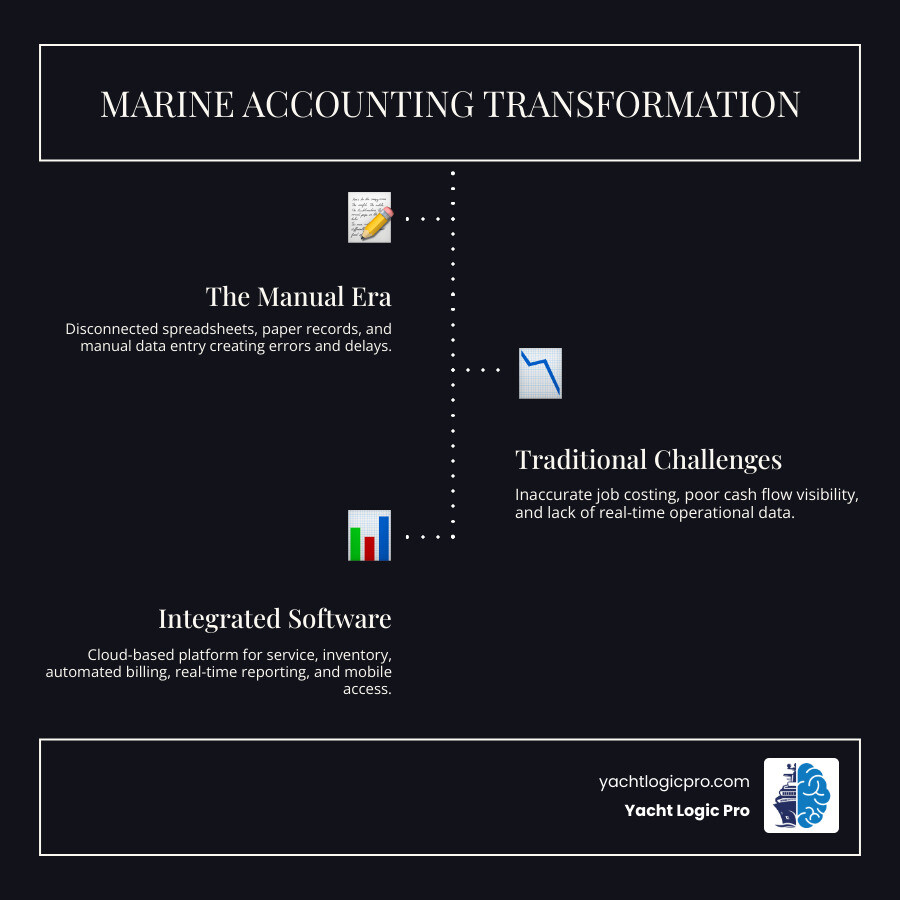
Why Traditional Accounting Runs Aground in the Marine Industry
Let’s face it, the marine industry is complicated. We’re not selling simple products; we’re dealing with intricate service jobs, fluctuating inventory, and high-value assets that require meticulous tracking. When we try to shoehorn these complex operations into traditional accounting methods, things quickly go sideways.
One of the primary challenges is the reliance on disconnected spreadsheets. Trying to track parts, technician hours, and customer invoices across different files is a recipe for disaster. Data gets duplicated, versions get mixed up, and finding a single source of truth becomes nearly impossible. This leads directly to manual data entry, which is tedious and a breeding ground for errors. Every time someone manually types information from a work order into an invoice, there’s a chance for a costly typo or oversight.
This manual approach inevitably leads to inaccurate job costing. How can we know the profitability of a boat repair if we can’t accurately track all associated labor, parts, and overhead in real-time? Without this precision, we’re making decisions in the dark, potentially underpricing services or wasting resources. As we’ve explored in our article on The Hidden Costs of Manual Yacht Maintenance Tracking, these hidden inefficiencies can quickly erode our bottom line.
The absence of real-time data is another critical drawback. Traditional methods leave us constantly looking in the rearview mirror. By the time we compile reports, the financial situation has often changed, rendering the data outdated for proactive decision-making. This directly impacts poor cash flow visibility. Without a clear, up-to-the-minute picture, we can’t anticipate dips, manage expenses effectively, or seize opportunities.
Inefficient invoicing is a common pain point. Generating accurate invoices that reflect all services, parts, and labor can be a time-consuming burden. Delays in invoicing mean delays in payment, directly impacting cash flow. Furthermore, ensuring compliance with various tax regulations and industry-specific requirements can be a nightmare with manual systems, leading to potential compliance issues.
Finally, traditional accounting offers limited reporting. Generic software struggles to provide the granular, marine-specific insights we need, such as the profitability of a specific slip, service, or vessel. This lack of detailed reporting hinders our ability to identify trends, optimize operations, and make informed strategic decisions. It’s like trying to steer in a dense fog with a blurry map.
The Advantages of Specialized Marine Software Over Generic Platforms
When it comes to managing the financial intricacies of a marine business, generic accounting software is often like trying to fit a square peg into a round hole. While popular solutions might handle basic bookkeeping, they simply don’t speak the language of the sea. This is where specialized marine accounting software truly shines, offering distinct advantages that generic platforms can’t match.

The most significant benefit lies in industry-specific modules. Unlike generic software, marine solutions are purpose-built. They come equipped with features custom to our unique needs, such as slip and storage management for marinas, work order and project management for boatyards, or vessel-specific P&L tracking for commercial operators. This custom approach integrates everything from payments to service and repair management.
This specialization extends to project-based accounting, a cornerstone for many marine businesses. Whether it’s a complex refit, a boat build, or a long-term maintenance contract, our projects often span months and involve numerous cost components. Specialized software allows for meticulous tracking of costs against individual projects, rather than just lumping expenses into general categories. This enables accurate vessel-level P&L tracking, giving us a clear picture of the profitability of each asset or project.
Another crucial aspect is full cost absorption. For businesses like seafood processors, understanding the true cost of inventory is complex. Specialized software can address this by ensuring inventory cost reflects the product price plus estimated procurement and production costs. This level of detail is rarely found in generic software, which typically assumes simpler inventory models.
Furthermore, specialized platforms offer end-to-end traceability. In industries like seafood processing, knowing the full history of a product is vital for quality control and compliance. This robust traceability is also critical in service and repair, allowing us to track parts from procurement to installation, ensuring accountability and improving customer trust.
Dedicated marine accounting software leads to optimized profitability. By providing granular data, real-time insights, and integrated workflows, these systems help us identify profitable services, reduce wasted resources, and make smarter pricing decisions. As we discussed in Tech That Works at Sea: Why Marine-Specific Software Beats Generic Tools Every Time, the bespoke nature of these tools means they align perfectly with our operational realities, leading to greater efficiency and financial health.
Key Features to Look for in Your Marine Accounting Software Solution
Choosing the right marine accounting software is a pivotal decision for any marine business. It’s not just about crunching numbers; it’s about finding a system that acts as the central nervous system for your entire operation. Here are the key features we believe are essential for a robust solution.
Integrated Modules for Complete Operational Control
Imagine a world where your service department, parts inventory, sales team, and accounting all speak the same language, sharing data seamlessly. That’s the power of integrated modules. A top-tier marine accounting software should offer:
- Service Management: This is non-negotiable for boatyards and service centers. It should handle everything from estimates and work orders to job tracking, technician scheduling, and mobile time tracking, simplifying the entire repair workflow.
- Inventory Management: Crucial for tracking parts, supplies, and even boats. Look for features like real-time stock tracking, purchase orders, barcode printing, and seamless POS integration for unified inventory control.
- Procurement: Streamlining the purchasing process, from requisition to approval and payment, is key to controlling costs. Integration with procurement modules ensures a complete audit trail and accurate budgeting.
- Point of Sale (POS): For marinas, dealerships, and retail operations, an integrated POS system is essential for efficient sales, payment processing, and inventory updates. It should also provide easy-to-run daily and monthly sales reports.
- Slips and Storage Management: Marinas need dedicated tools for managing slip assignments, reservations, storage, billing, and customer information. The software should offer robust features for managing all types of spaces to optimize revenue and collect payments fast.
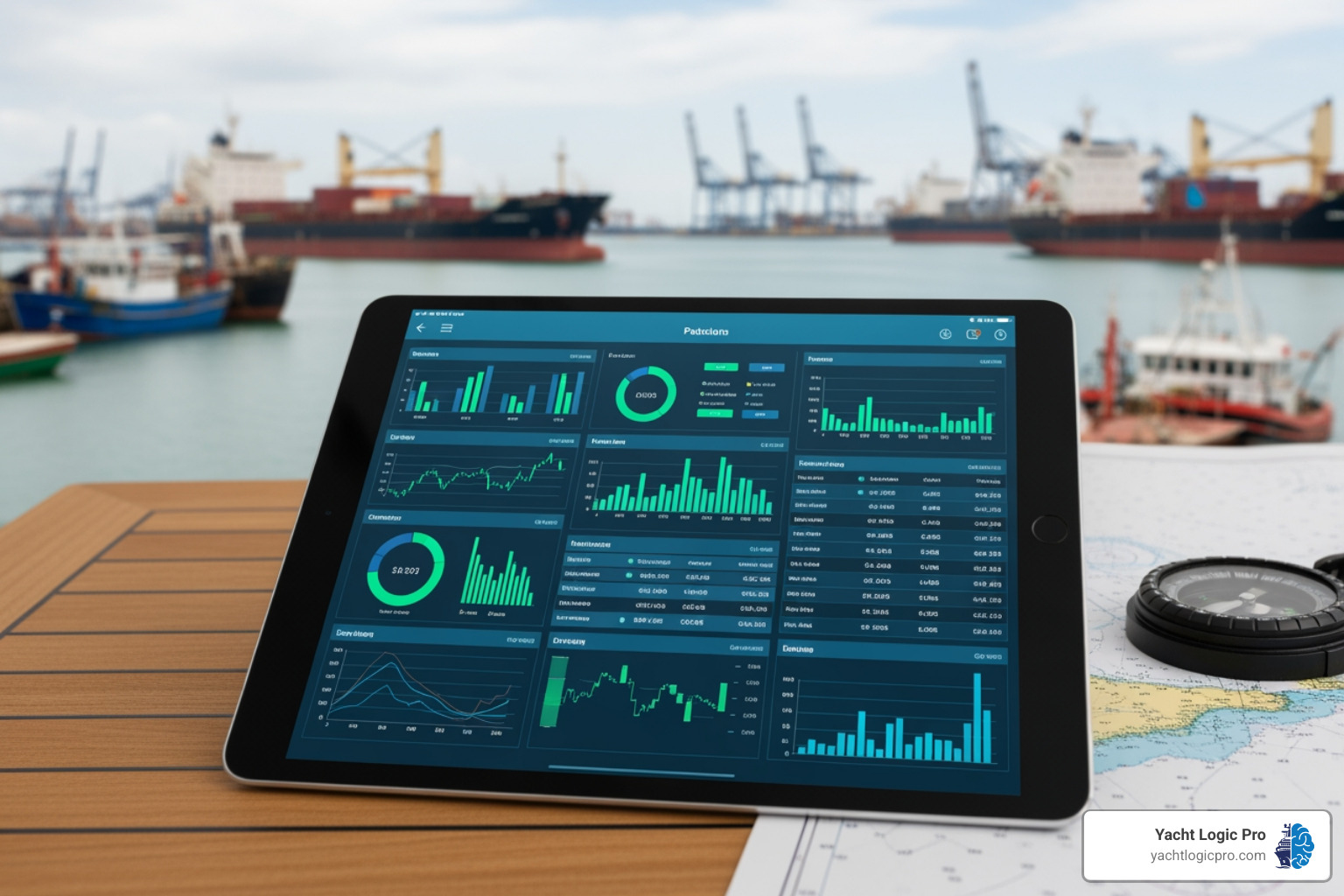
The goal is a unified data environment where every piece of information, from a technician’s time entry to a parts order, flows directly into the accounting system. This eliminates double data entry and ensures accuracy. As we explore in What to Look For in Yacht Service Management Software: A Buyer’s Checklist, and further detailed in From Dock to Dashboard: How Yacht Logic Pro Connects Your Entire Marine Team, having all these functions integrated under one roof is transformative for efficiency and profitability.
Automation and Streamlined Invoicing
Let’s be honest, nobody enjoys invoicing. It’s often manual, error-prone, and a bottleneck for cash flow. Modern marine accounting software leverages automation to turn this chore into a streamlined process.
Key automation features include:
- Automated Recurring Charges: For marinas, this is a game-changer. The software should automatically invoice for slips, moorings, storage, and memberships, providing opportunities to collect revenue with ease.
- 1-Click Auto-Pay: Offering customers the convenience of automatic payments significantly improves cash flow and reduces collection efforts.
- Reduced Entry Errors: By automating the transfer of data from work orders and inventory to invoices, the chance of manual mistakes is drastically cut. This ensures customers receive accurate bills and we get paid correctly.
- Faster Payment Collection: When invoicing is efficient and integrated payment options are available, payments come in quicker. Look for fully integrated in-person chip, contactless, and stored card payment options.
- Electronic Data Interchange (EDI) for Payments: For larger commercial operations, integration with EDI for direct bank transfers can further automate and secure payment processes. As explained on Wikipedia’s EDI page, EDI can facilitate seamless electronic transactions.
This level of automation frees up our team from administrative tasks, allowing them to focus on revenue-generating activities. It also significantly improves cash flow by accelerating the billing and payment cycle, as highlighted in our guide on From First Call to Final Invoice: Streamlining the Yacht Service Workflow.
The Power of Cloud-Based Marine Accounting Software
The days of on-premise servers and software tied to a single computer are fading fast. Cloud-based marine accounting software is the future, offering unparalleled flexibility and security.
The benefits are clear:
- Real-Time Data Access: With cloud solutions, our financial data is always current and accessible from anywhere, at any time. Managers can check reports from home, and technicians can log hours from the dock.
- Remote Accessibility: Whether we’re at the office, on the dock, or traveling, we can access our system via any internet-connected device like a web browser, tablet, or smartphone.
- Improved Data Security: Reputable cloud providers invest heavily in security measures that often surpass what individual businesses can afford. Data is encrypted, protected by firewalls, and regularly audited.
- Disaster Recovery and Automatic Backups: Cloud solutions automatically back up our data, protecting us from hardware failures, natural disasters, or accidental deletions. This ensures business continuity, even during weather events or fires.
- Scalability: As our business grows, cloud software can easily scale with us, adding users or features without major hardware investments. This flexibility is a huge advantage for businesses with seasonal fluctuations or rapid growth.
The shift to cloud-based solutions aligns with modern customer expectations for digital interactions. As we discussed in Your Yacht Clients Expect Digital: Is Your Service Business Ready?, embracing cloud technology isn’t just about internal efficiency; it’s about meeting the demands of a digitally savvy clientele.
Advanced Reporting and Financial Visibility
What gets measured gets managed. In the marine industry, accurate financial reporting is the compass that guides our business to profitability. Marine accounting software excels at changing raw data into actionable intelligence.
Look for features that provide:
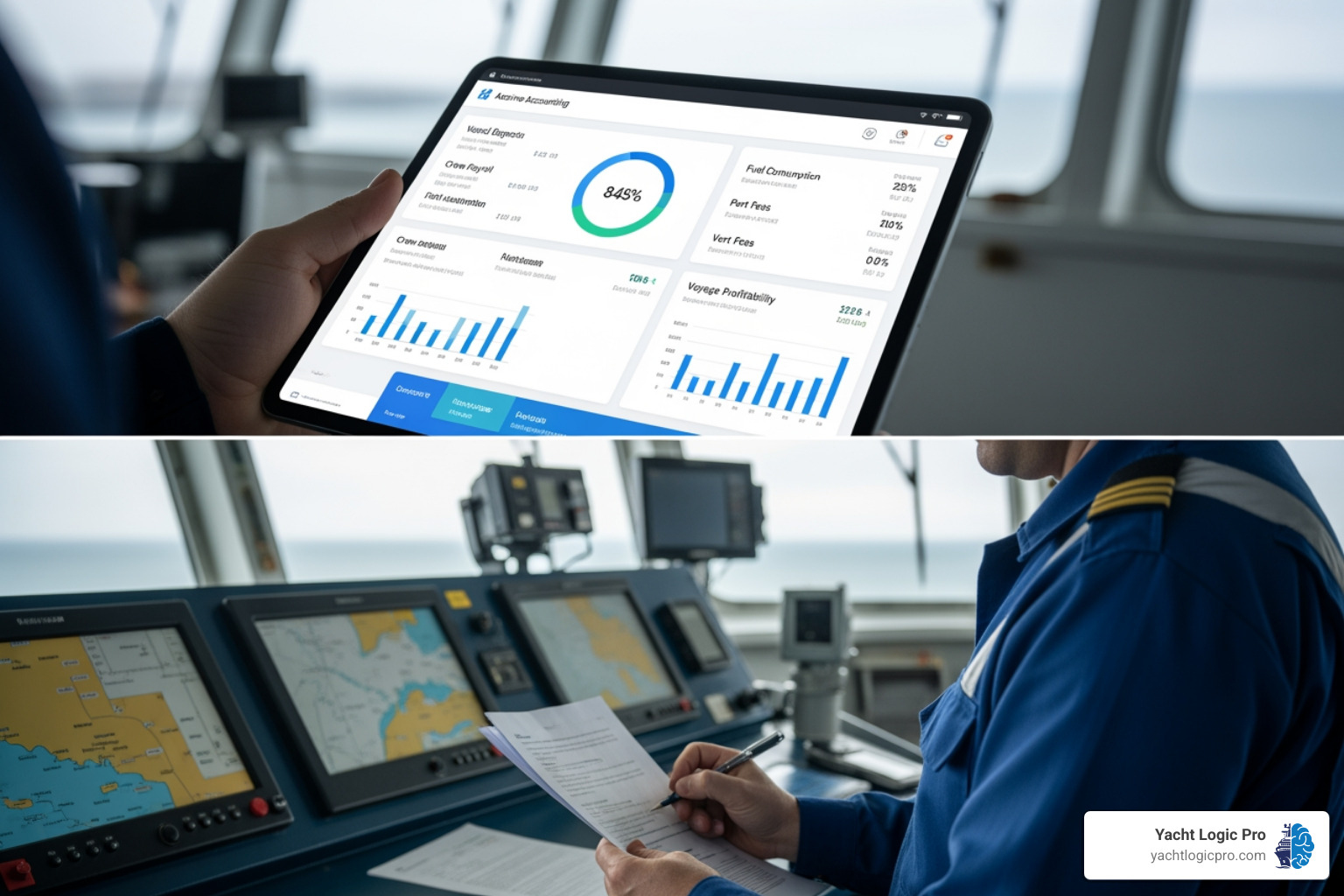
- Customizable Dashboards: A personalized overview of key financial metrics, allowing us to see at a glance what matters most to our role.
- Real-Time Reporting: No more waiting until the end of the month to understand our financial standing. Real-time reports provide up-to-the-minute data on sales, expenses, and profitability across the fleet.
- Budget vs. Actuals Analysis: This is critical for controlling costs. The ability to compare planned expenditures against actual spending, with drill-down capabilities to understand variances, is invaluable. Good software provides a live, accurate view of your fleet’s financial health.
- Profit Center Organization: The ability to organize each department or service as its own profit center allows for granular analysis of performance and custom reports.
- Multi-Company Support: For businesses operating multiple entities, the software should allow for easy management and consolidation of financial data across all companies.
- Multi-Currency Capabilities: Essential for international maritime businesses, this allows for managing transactions, budgets, and reporting in multiple currencies, including real-time exchange rate integration.
This level of financial visibility empowers everyone to make more informed decisions. It helps us identify areas of strength to capitalize on and areas of weakness to address. As we’ve emphasized in Why Data-Driven Yacht Service is the Future of the Marine Industry, leveraging data is no longer an option, but a necessity for staying competitive.
Tailoring Financial Management to Your Marine Business Segment
The marine industry is a vast ocean, with diverse businesses each facing unique accounting challenges. What works for a small marina might not suffice for a global shipping company, and vice-versa. Specialized marine accounting software understands these nuances and offers custom solutions.
Marinas and Yacht Clubs:
Our focus here is often on space management, recurring billing, and customer service. We need software that can efficiently handle slip and mooring assignments, transient bookings, utility tracking, and automated recurring invoices for annual contracts and memberships. The right tools can maximize revenue and improve operations through features like online bookings and powerful resource management.
Boatyards and Service Centers:
For us, project management, accurate job costing, inventory control for parts, and technician management are paramount. We need to track labor hours, materials used, and overhead for each repair or maintenance job to determine true profitability. The best software offers integrated solutions for project management, estimates, invoicing, and the work order process, from small boat repair to megayacht refits. This granular control helps us scale our operations without sacrificing quality, as explored in How Yacht Logic Pro Helps Boatyards Scale Without Sacrificing Quality.
Commercial Marine and Vessel Operators:
This segment deals with complex fleet operations, international trade, and multi-currency transactions. Needs extend to vessel performance tracking, charter management, and extensive financial reporting across multiple entities. The software should offer distinct solutions for vessel operations accounting, including multi-business and multi-currency reporting across the fleet, real-time voyage tracking, and consolidated P&L for better financial planning.
Boat Builders:
For boat builders, project costing is king. They need to track every component, hour of labor, and stage of the build process to ensure profitability and manage complex supply chains. Look for integrated solutions that simplify project management for boat building operations.
Seafood Processors and Distributors:
This highly specialized niche faces unique inventory challenges, including multiple units of measure, full cost absorption, delayed costing, and stringent end-to-end traceability requirements. A cloud-based accounting and inventory management solution designed specifically for seafood companies can address these precise challenges for importers, processors, and distributors.
By understanding the specific demands of each marine segment, we can select marine accounting software that truly empowers our business, rather than forcing us to adapt to generic limitations.
Frequently Asked Questions about Marine Accounting Software
We often get asked about the practicalities of implementing and using marine accounting software. Here are some of the most common questions and our insights.
What are the typical pricing models?
The pricing models for marine accounting software generally follow modern software trends, with a few marine-specific considerations:
- Subscription-based (SaaS): This is the most common model, where you pay a recurring fee (monthly or annually) to use the software. This typically includes updates, maintenance, and support. It allows for predictable budgeting and avoids large upfront capital expenditures.
- Tiered Pricing by Business Size: Many providers offer different tiers based on the size of your operation (e.g., number of slips, number of technicians, revenue volume). This model often includes unlimited users and data within a tier.
- Per-User Pricing: Some solutions charge based on the number of active users accessing the system.
- Implementation Costs: Beyond the subscription, expect one-time costs for initial setup, data migration from old systems, and training. These can vary significantly depending on the complexity of your business.
- Add-on Modules: Some advanced features or integrations might be offered as optional add-ons at an additional cost.
Understanding these structures is crucial when evaluating solutions. For more details on what influences software costs, you can review More on pricing structures.
How does this software improve financial control for different roles?
Marine accounting software transforms financial control by providing custom insights and tools for various roles within our organization:
- Controllers: For financial guardians, the software provides robust audit trails, ensuring every transaction is logged and traceable. They can generate real financial statements, reconcile accounts, and manage financial covenants with greater accuracy and speed.
- Accounting Clerks: These team members benefit from streamlined processes for invoice management, check processing, and purchase order tracking. Automation reduces manual data entry, freeing them to focus on more analytical work.
- Service Managers: They gain invaluable insights into job costing and profitability. By tracking labor hours, parts, and overhead in real-time against specific jobs, they can understand which services are truly profitable and identify areas for efficiency improvements. This empowers them to make better operational decisions, as demonstrated in A Day in the Life of a Marine Service Manager Using Yacht Logic Pro.
- Owners/Senior Management: For those at the helm, the software provides a consolidated view of the entire business. They can access fleet-wide P&L, monitor asset valuation, track cash flow, and make strategic decisions based on accurate, real-time data, moving from budget uncertainty to complete financial control.
How does dedicated marine accounting software handle multi-currency operations?
For international maritime businesses, managing multiple currencies is a daily reality. Generic software often struggles, leading to manual conversions and reconciliation nightmares. Dedicated marine accounting software offers robust multi-currency capabilities:
- Native Multi-Currency Support: The system is built from the ground up to handle transactions in various currencies, providing multi-business and multi-currency accounting reporting across the fleet.
- Real-Time Exchange Rate Integration: Many solutions integrate with live exchange rate feeds, allowing for accurate conversions and reducing currency risk. The system can use a fixed internal rate or a live feed to calculate the real-time impact on your master budget, giving clarity on foreign exchange exposure.
- Budgeting in Primary Currency: We can set our primary operating currency for budgeting, while still conducting transactions and issuing purchase orders in other currencies. The system then translates these back to our primary currency for consolidated reporting.
- Issuing POs in Local Currencies: This streamlines international procurement, ensuring vendors are paid in their preferred currency while our internal records remain clear.
- Consolidated Financial Reporting: The software can consolidate financial data from all entities and currencies into a single, comprehensive report, providing a true picture of global financial health.
This specialized functionality ensures that our international dealings are as smooth and accurate as our local ones, providing clarity and control over our global financial footprint.
Conclusion: Set Sail for Greater Profitability
The journey to financial clarity in the marine industry begins with embracing specialized marine accounting software. We’ve seen how traditional methods leave us adrift in a sea of disconnected data, manual errors, and delayed insights. These inefficiencies don’t just create headaches; they directly impact our cash flow and profitability.
By adopting an integrated, cloud-based solution, we move from reactive accounting to proactive financial management. We gain the power of real-time data, automated processes, and custom insights that speak directly to the unique demands of our marine business. From streamlining invoicing and payment collections to gaining granular control over job costing and fleet-wide profitability, the benefits are undeniable. This digital change isn’t just about catching up; it’s about getting ahead. As we discuss in The Future of Marine Service is Digital: Here’s How to Get Ahead in 2025, the marine industry is rapidly evolving, and our financial systems must evolve with it.
At Yacht Logic Pro, we understand these challenges intimately. That’s why we provide an all-in-one, AI-powered marine maintenance and operations software. It automates maintenance, manages technicians, tracks inventory, and syncs finances for service-driven marine businesses, saving time and boosting profits by unifying operations and eliminating manual data entry.
It’s time to chart a new course for your financial operations. By investing in the right marine accounting software, you’re not just buying a tool; you’re investing in the future efficiency, profitability, and growth of your marine business.
Ready to gain unparalleled financial clarity and control? Explore the features that can transform your marine business today.