
Why the Right Technology Determines Your Marine Business’s Future
Marine business software is a specialized digital platform designed to manage operations for marinas, yacht clubs, boatyards, dealerships, and marine service shops by centralizing space management, work orders, inventory, billing, and customer communication in one system.
Core Functions of Marine Business Software:
- Space Management – Track slips, moorings, dry storage, and rental availability
- Service Operations – Create work orders, schedule technicians, manage parts inventory
- Sales & CRM – Manage boat sales, track leads, generate quotes, monitor deals
- Financial Management – Process payments, handle recurring invoicing, integrate with accounting software
- Customer Communication – Send automated reminders, provide online booking portals, store service history
- Mobile Access – Enable technicians and managers to work from docks, boats, or anywhere
If you’re operating a marine business today, you’re likely juggling disconnected spreadsheets, paper logs, manual inventory counts, and constant phone calls to track what’s happening across your operation. One marina manager described how their old system made them feel like a “mom-and-pop shop” rather than a professional business—until they adopted proper management software.
The marine industry has unique needs that generic business software simply can’t address. You need to manage physical spaces like slips and storage, track complex service jobs on vessels, coordinate mobile technicians, handle seasonal demand, and maintain detailed maintenance histories. Research shows that marine businesses using specialized software can save up to 7 hours per week on administrative tasks alone and reduce audit time by around 25%.
The challenge isn’t whether to adopt marine business software—it’s choosing the right solution for your specific business model and ensuring it actually solves your operational headaches rather than creating new ones.
I’m Kevin Kates, founder of Yacht Logic Pro, and I’ve spent my career helping marine businesses streamline operations through strategic systems implementation. Throughout my work with yacht owners, captains, and service operators, I’ve seen how the right marine business software transforms chaotic operations into profitable, scalable businesses.
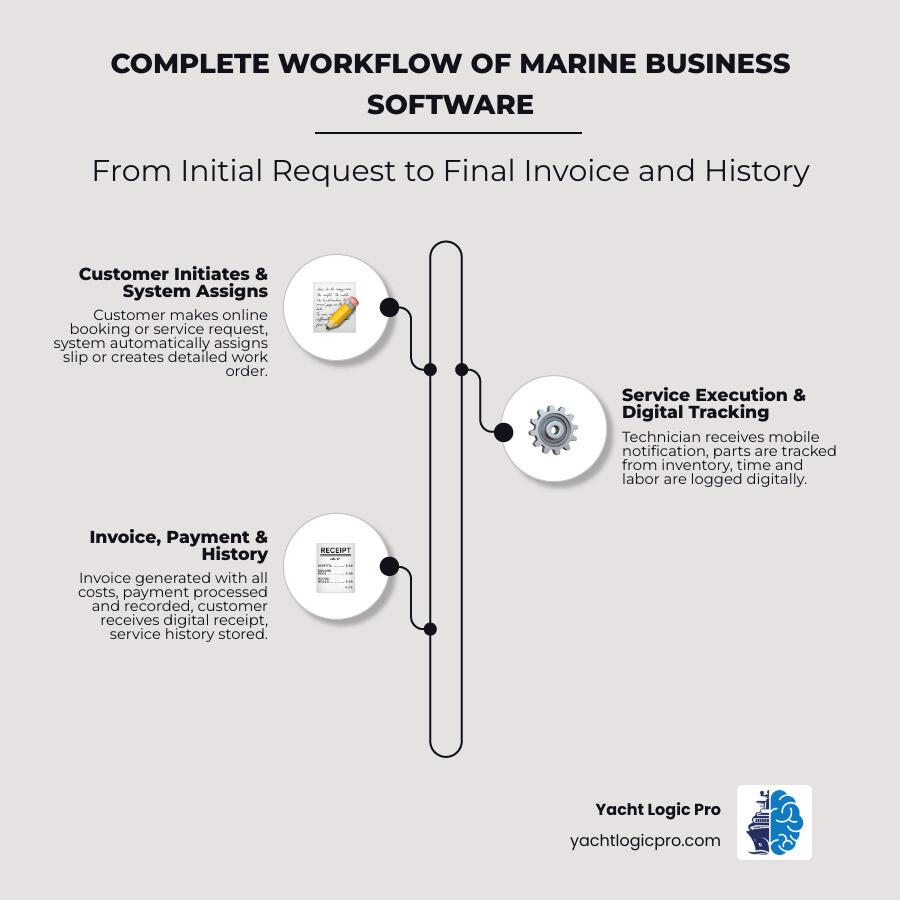
Core Capabilities: What Can Marine Business Software Do for You?
We understand that marine businesses are as diverse as the ocean itself. From the busy activity of a large marina to the precision of a yacht repair shop, each operation has unique needs. However, the common thread is the need for efficient, integrated management. Marine business software provides the digital backbone for these diverse operations, offering a suite of core functionalities that transform daily tasks into streamlined processes.
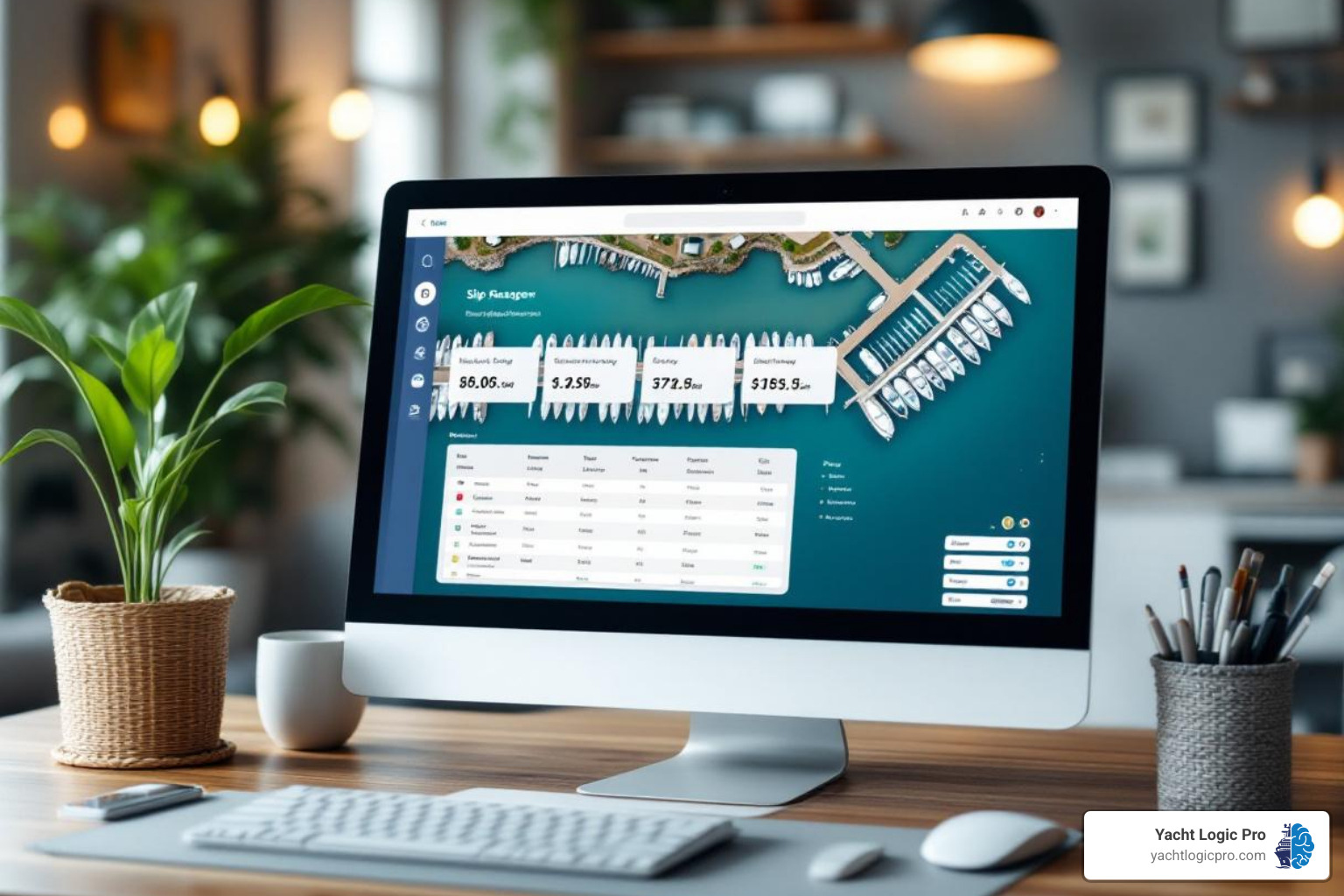
This section covers the primary functions of marine business software across different business types, from managing physical space to handling complex service jobs and sales pipelines.
Streamlining Marina, Yacht Club, and Boatyard Operations
Imagine a marina buzzing with activity, boats coming and going, slips being assigned, and fuel tanks being filled. Without robust marine business software, managing this can feel like herding cats. Yacht Logic Pro and similar solutions excel in space management, allowing you to track every slip, mooring, and dry storage spot with clarity instead of relying on scattered notes or whiteboards. You can visualize your entire property, assign spaces, and manage reservations, ensuring no double bookings and optimizing occupancy. This level of control helps you maximize revenue from every available space on your property.
Beyond space, you can manage contracts digitally, from initial dockage agreements to renewals. This ensures compliance and reduces paperwork, making the entire process smoother for both your team and your customers. Online bookings are a game-changer, allowing customers to reserve spaces or services at their convenience, often with contract agreements and stored credit card information handled securely. This empowers your customers while giving you greater control over availability and customer data.
Fuel management is another critical area. Modern systems integrate with fuel pumps, allowing for real-time tracking of fuel sales and quick, secure payment processing. This eliminates manual errors and ensures accurate inventory. When we talk about how to fix common scheduling failures in marine service, much of it comes down to having a centralized system that coordinates all these moving parts. Purpose-built marine business platforms are designed to help you avoid such pitfalls, as detailed in our guide on Why Most Marine Service Operations Fail at Scheduling and How to Fix It.
Powering Service, Repair, and Maintenance Shops
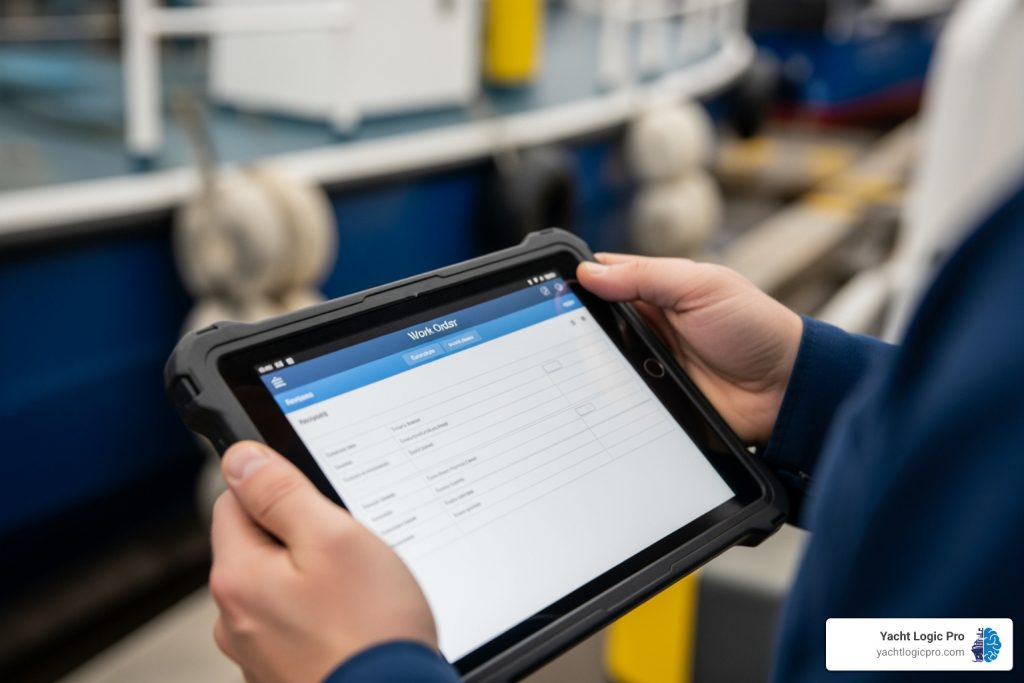
For marine service, repair, and maintenance shops, the complexity often lies in coordinating technicians, managing parts, and tracking the intricate details of each job. This is where marine business software truly shines. Yacht Logic Pro, for example, provides comprehensive service management tools, from creating detailed estimates and work orders to tracking jobs through every stage of completion. You can assign tasks to technicians, monitor their progress, and even capture voice-recorded job notes directly from a mobile device, ensuring every detail is documented and easy to review later.
Inventory management for parts is crucial, and the right software offers real-time tracking of marine parts and accessories. You can generate purchase orders to restock supplies on time, preventing costly delays and keeping projects on schedule. For businesses focused on yacht maintenance, tracking service history, managing parts, and sending reminders for seasonal maintenance are paramount. The ability to manage technicians and their schedules efficiently, whether they are in the shop or dockside, is a significant advantage.
Mobile applications empower your teams to manage jobs, track time, take photos, and process payments directly from the field, as highlighted in our article A Day in the Life of a Marine Service Manager Using Yacht Logic Pro. This digital approach is not just a convenience; it is the future of marine service, helping you get ahead in 2025 and beyond, as explored in The Future of Marine Service is Digital: Here’s How to Get Ahead in 2025.
Driving Sales for Boat, Motor, and Trailer Dealerships
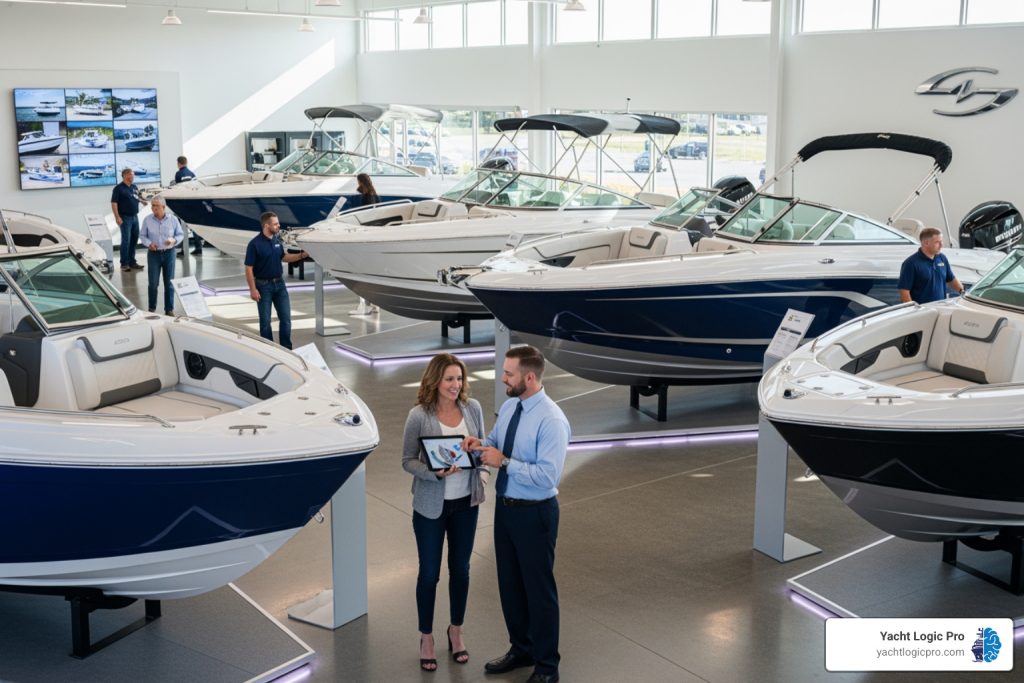
Sales in the marine industry involve unique considerations, from managing high-value assets like boats and yachts to tracking motors and trailers. Modern marine business software provides robust sales management features, including a comprehensive Customer Relationship Management (CRM) system. This CRM allows you to track every interaction with prospects and customers, manage their sales history, and nurture leads effectively. You can monitor the sales pipeline, generate accurate quotes, and track deals from initial inquiry to final contract.
For boat, motor, and trailer sales, the system handles the specifics: tracking inventory for new, used, brokerage, and specially ordered vessels. It also supports the quoting process, allowing you to quickly create and send professional estimates. The ability to integrate with Financial & Insurance (F&I) systems, and even your website, streamlines the entire sales process, making it easier to manage prospects, sales contracts, financing, and trade-ins.
This integrated approach ensures that your sales team has real-time insights and automated follow-ups, which are vital for effective Yacht Marketing – Yacht Logic Pro and closing deals.
Key Features and Benefits of Modern Marine Business Software
The shift from paper-based systems to digital platforms is not just about going green; it is about gaining a competitive edge and running a more predictable business. Modern marine business software comes packed with features designed to boost efficiency, improve customer satisfaction, and ultimately drive profitability for marinas, service yards, and dealerships.

This section explores the specific features that deliver the most value, highlighting how technology can boost revenue, improve customer relations, and provide the flexibility needed in the marine industry.
Opening up Efficiency with Essential Features
At the heart of any effective marine business software are core features that streamline daily operations. Inventory management is paramount, allowing you to track parts, accessories, and even entire vessels in real time instead of chasing down information across clipboards and spreadsheets. This prevents stockouts, reduces carrying costs, and ensures you have the right items when your customers need them.
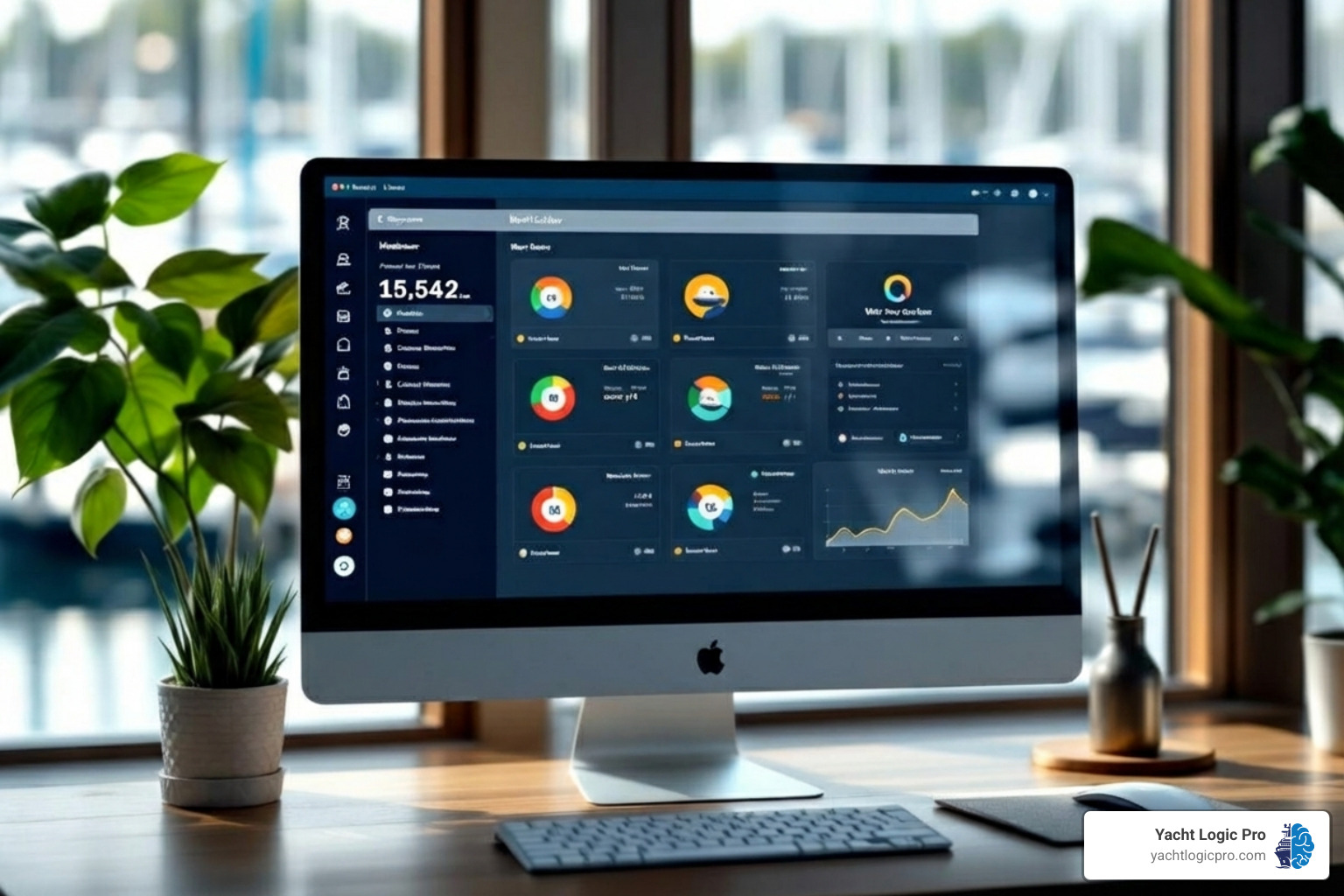
Beyond tracking, robust reporting and analytics tools provide invaluable insights into business performance. You can generate reports on sales, service profitability, technician efficiency, and customer trends, enabling data-driven decisions that move your business forward. As we have discussed in Why Data-Driven Yacht Service is the Future of the Marine Industry, leveraging data is no longer a luxury but a necessity for competitive marine operations.
Maintenance automation is another powerful feature, particularly for service shops and those managing fleets. Your software can automate maintenance schedules, send reminders, and even trigger work orders based on predefined criteria, ensuring preventative maintenance is never missed. When choosing software, these features are non-negotiable if you want to avoid costly downtime and missed revenue. For a comprehensive guide on what to prioritize, review What to Look For in Yacht Service Management Software: A Buyer’s Checklist.
The Advantages of Cloud-Based and Mobile-First Solutions
One of the most significant advancements in marine business software is the widespread adoption of cloud-based solutions. This means your software and data are hosted online, accessible from anywhere with an internet connection. The benefits are substantial: you eliminate the need for expensive on-premise servers and the headaches of maintaining them. Cloud-based solutions offer strong scalability, adapting as your business grows and your team or locations expand.
Coupled with cloud technology are mobile applications, which are indispensable in the marine environment. Your technicians can access work orders, update job status, take photos, and even process payments directly from the dock or on board a vessel using a smartphone or tablet. This real-time data access and input mean your entire team is connected, from the office to the farthest slip.
Yacht Logic Pro is trusted by marine businesses across the US and internationally, demonstrating the power and reach of this approach. This seamless connectivity is vital for keeping your entire marine team on the same page, as explored in From Dock to Dashboard: How Yacht Logic Pro Connects Your Entire Marine Team.
Improving Customer Communication and Driving Revenue
Happy customers are repeat customers, and modern marine business software provides powerful tools to improve customer communication and foster loyalty. CRM functionalities allow you to maintain detailed customer records, including contact history, vessel information, and service preferences. You can send automated reminders for upcoming maintenance, overdue payments, or special promotions, keeping your customers engaged and informed without adding to your administrative burden.
Many systems offer customer portals, giving clients direct access to their service history, invoices, estimates, and online booking options. This transparency builds trust and convenience. Effective lead management tools ensure that no potential sale or service opportunity falls through the cracks. By tracking leads, automating follow-ups, and streamlining the quoting process, you can significantly improve conversion rates.
Better communication leads to increased customer satisfaction, which in turn drives repeat business and referrals, directly contributing to increased revenue and improved operations. Your clients increasingly expect digital convenience and real-time updates, and being ready for that demand is crucial for success, as discussed in Your Yacht Clients Expect Digital: Is Your Service Business Ready?. Moreover, leveraging improved service records is a powerful way to create repeat business, a topic we dig into in How to Create Repeat Business with Better Yacht Service Records.
Financial and Technical Considerations for Implementation
Adopting new marine business software is a strategic investment. It is not just about the features; it is also about understanding the financial implications and how the new system will integrate with your existing technology stack.
Streamlining Financial Management and Payments
One of the biggest time-savers modern marine business software offers is the streamlining of financial management. You can process online payments securely, accepting credit cards and ACH payments directly through the system. This leads to faster payment collection and improved cash flow. Recurring invoicing is a lifesaver for services like slip rentals, storage, or annual maintenance contracts, automating what used to be a tedious manual process. One-click auto-pay with decline handling ensures that recurring revenue is collected efficiently and exceptions are easy to manage.
Many solutions include robust Point of Sale (POS) capabilities, allowing you to manage daily sales, process transactions, and update inventory in real time. This simplifies daily and monthly sales reporting. Your software can also provide comprehensive financial reporting, giving you clear insights into revenue, expenses, and overall financial health. By eliminating manual tracking, you avoid the hidden costs associated with manual yacht maintenance tracking, which can quietly erode profits, as highlighted in The Hidden Costs of Manual Yacht Maintenance Tracking.
Understanding Pricing Models for Marine Business Software
When it comes to pricing, marine business software typically offers several models. The most common is subscription-based (SaaS), where you pay a recurring fee (monthly or annually) for access to the software and its features. This model often includes updates and support, reducing surprise costs down the line. Some older systems might still offer a one-time license fee, which requires an upfront investment and potentially separate costs for upgrades and support.
Many providers offer free trials, allowing you to test the software before committing. Pricing can also vary based on factors like the number of users, specific features included (tiered pricing), or the size and complexity of your business. For instance, some providers base pricing on business size, offering unlimited users and data within that tier so your team can grow without constantly adjusting licenses.
It is always best to thoroughly explore the available options and choose a model that aligns with your budget and long-term needs. We encourage you to View pricing options for our solutions.
Integrating with Your Existing Business Toolkit
A truly effective marine business software does not operate in a vacuum. It integrates seamlessly with your other essential business tools, creating a unified ecosystem instead of a patchwork of disconnected systems. Accounting software integration is critical; your system can post transactions directly to popular platforms like QuickBooks or Xero, eliminating manual data entry and ensuring financial records are always accurate and up to date.
Many solutions also offer API access, allowing for custom integrations with other specialized tools you might use, such as website booking engines, fuel systems, or specific payment gateways. The goal is to connect all aspects of your business, from sales and service to inventory and finance, within a single, cohesive platform. This ensures that data flows freely and accurately across your operations, reducing double entry and human error.
We believe that marine-specific software consistently beats generic tools because it is designed with your unique needs in mind, as we discuss in Tech That Works at Sea: Why Marine-Specific Software Beats Generic Tools Every Time. To see how our platform can fit into your existing toolkit, you can Explore software categories on Yacht Logic Pro.
Frequently Asked Questions about Marine Business Software
When considering a significant investment like marine business software, it is natural to have questions. Here, we address some of the most common inquiries to help clarify how these specialized tools can benefit your operations.
Why choose a specialized marine business software over generic tools?
The marine industry is not just another business sector; it has its own rhythms, challenges, and terminology. Generic business software cannot easily account for the nuances of slip management, vessel service history, or the profound impact of seasonal demand. Specialized marine business software is built from the ground up to address these very specific needs. It includes features like visual marina layouts for slip assignments, detailed vessel profiles for tracking maintenance, and integrated tools for managing winterization or de-winterization schedules.
For instance, the software understands that a “work order” on a yacht is different from a general repair job in another industry; it needs to account for specific vessel systems, complex parts, and potentially mobile technicians working dockside. This specialization also extends to compliance, incorporating maritime regulations and standards directly into workflows.
Yacht Logic Pro is built by marine professionals for marine professionals, ensuring that our software reflects real-world processes on the water and in the yard. You can learn more about this approach in What Makes Yacht Logic Pro Different? Inside the Only Software Built by Marine Pros.
How does this software improve safety and compliance?
Safety and compliance are paramount in the marine industry. Marine business software plays a crucial role in enhancing both by providing structured systems for record-keeping and operational management. For safety, digital logbooks ensure that all critical vessel data, events, and crew activities are carefully recorded and easily accessible. Maintenance tracking modules help you stay on top of scheduled inspections and repairs, preventing equipment failures that could lead to dangerous situations. Some advanced systems even incorporate crew training modules, allowing you to track certifications, manage training schedules, and confirm that crew are always up to date on safety protocols.
From a compliance standpoint, these systems are invaluable for audit readiness. They centralize all necessary documentation, from vessel registrations to safety certificates and maintenance logs, making audits significantly smoother and less stressful. By digitizing and organizing this information, you drastically reduce the time spent preparing for inspections and audits.
Marine businesses running platforms like Yacht Logic Pro routinely report reduced audit time and improved compliance because everything an inspector needs is already organized in one place. This proactive approach helps you meet regulatory requirements, avoid penalties, and most importantly, ensure the safety of your operations, crew, and customers.
How long does it take to implement new software?
The implementation timeline for new marine business software can vary depending on the size and complexity of your operation, as well as the specific software chosen. Generally, you can expect a period of data migration, where existing customer, vessel, inventory, and historical data are transferred to the new system. This can range from a few days for smaller businesses to several weeks for larger, more complex enterprises.
Following data migration, team training is essential. While modern software is designed to be intuitive, a dedicated training period ensures everyone is comfortable and proficient with the new tools. Many providers offer custom onboarding support, guiding you through the setup and training process step by step.
Customization might also be part of the process, adapting the software to fit your unique workflows and preferences. While the exact duration varies, a structured implementation process, typically supported by the software provider, helps you start realizing the benefits as quickly as possible. To discuss your specific needs and timeline, you can Schedule your onboarding session with our team.
Conclusion: Charting Your Course to a More Profitable Future
As we’ve explored, marine business software offers unparalleled opportunities to transform our operations. From marinas optimizing slip management and maximizing revenue to service shops streamlining complex repairs and dealerships driving sales with intelligent CRM, the benefits are clear. We’re talking about a future where operational efficiency is the norm, manual data entry is a distant memory, and our entire business runs like a well-oiled machine.
By embracing an all-in-one, AI-powered platform, we can achieve increased profitability, deliver superior customer service, and scale our businesses without sacrificing quality. The right software unifies our operations, connects our entire team, and provides the data-driven insights needed to make smarter decisions.
Choosing the right solution is a critical step, but it’s an investment that pays dividends in efficiency, customer satisfaction, and ultimately, our bottom line. We encourage you to dive deeper into how marine business software can revolutionize your operations. To see the full potential and explore how our solutions can help you steer the digital tides to a more profitable future, we invite you to Explore the full range of features.