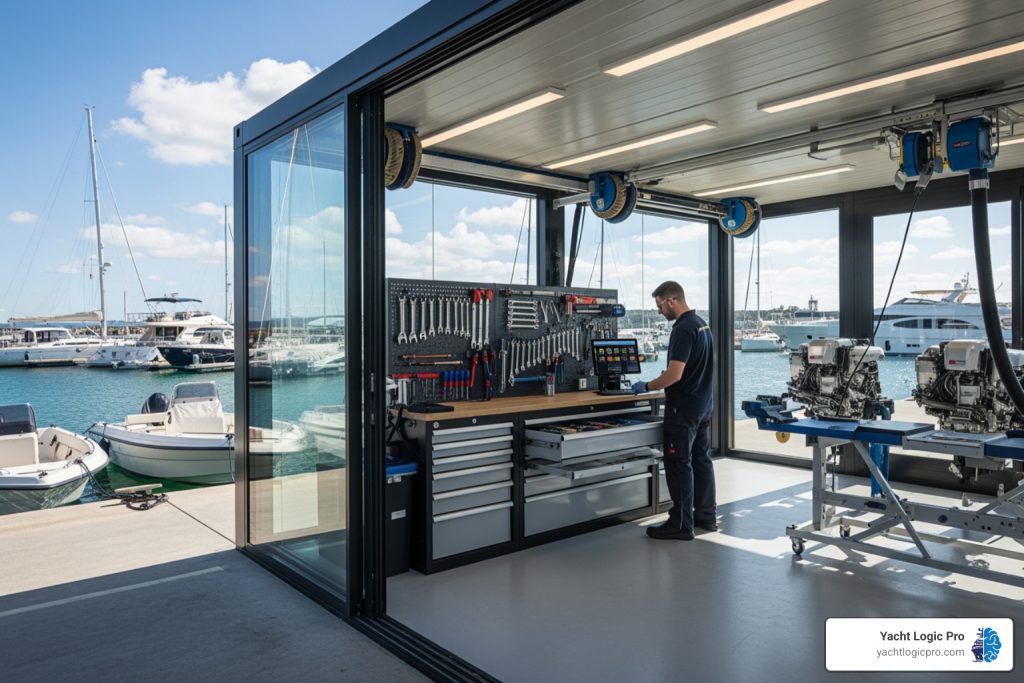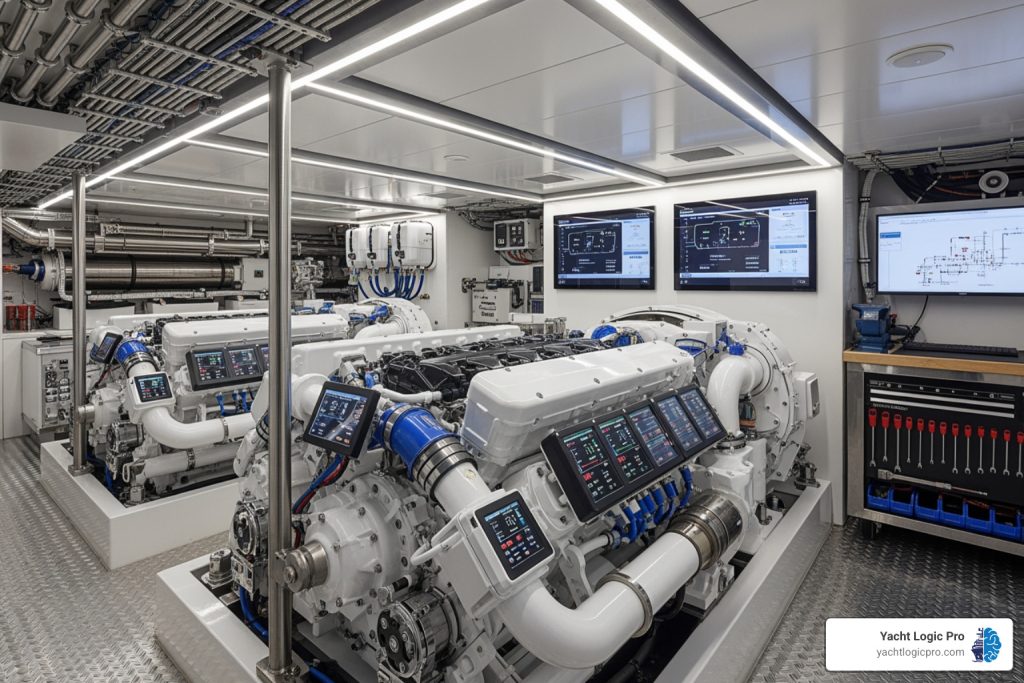

Why Marine Businesses Can’t Afford Manual Maintenance Anymore
Maintenance planning tools are software platforms that help marine businesses schedule, track, and execute maintenance to prevent costly equipment failures. These tools automate preventive maintenance, centralize work orders, track asset history, manage inventory, generate reports, and enable mobile access for technicians.
If you’re still using spreadsheets or paper logs for yacht maintenance, you’re likely losing money to unbilled labor, surprise breakdowns, and inefficient service. The marine industry’s unique challenges—scattered vessels, complex systems, and the high cost of downtime—make manual methods obsolete.
Research shows that maintenance software can reduce unplanned downtime by 30-33% and save over $50,000 per site on parts inventory. As one manager noted, it’s a shift “from fighting fires to feeling calm.”
The right tool transforms reactive chaos into proactive control. Instead of scrambling when things break, you gain automated reminders, complete maintenance histories, and the visibility to make smart repair-versus-replacement decisions.
What Are Maintenance Planning Tools and Why Do They Matter?
For too long, marine maintenance has been a reactive game of “whack-a-mole,” leading to unexpected costs and delays. Maintenance planning tools offer a strategic shift from this reactive “firefighting” to proactive control. Imagine software that predicts component failure or automatically schedules service. These tools prevent problems and optimize resources to support operations without costly interruptions.
The benefits are clear:
- Reduced Unplanned Downtime: Unexpected failures halt operations. Effective planning tools can achieve a 33% reduction in unplanned downtime, keeping yachts on the water.
- Improved Operational Efficiency: With organized tasks, technicians, and parts, everything runs smoother, leading to a 30% improvement in maintenance efficiency.
- Extended Asset Lifespan: Regular, planned maintenance keeps equipment in top shape for longer, delaying costly replacements.
- Data-Driven Decisions: These tools provide clear insights, replacing guesswork with data to identify problem areas and make smarter repair choices.
- Significant Cost Savings: Optimizing inventory and labor allocation leads to major savings. Organizations have saved over $50,000+ on parts inventory costs per site and achieved $3,000 annual reactive maintenance savings. Learn more about The Hidden Costs of Manual Yacht Maintenance Tracking.
Core Components of Effective Maintenance Software
An effective tool integrates several key components:
- Work Order Management: A central hub to create, assign, track, and complete all maintenance tasks, ensuring nothing is missed.
- Asset Management: A digital profile for every asset, including service history, manuals, and warranty information, which is crucial for understanding asset health.
- Preventive Maintenance (PM) Scheduling: Automates recurring tasks based on time, meter readings, or usage, shifting maintenance from reactive to proactive.
- Inventory and Parts Management: Monitors stock levels, sends low-stock alerts, and tracks consumption to prevent parts shortages and overspending.
- Reporting and Analytics: Customizable dashboards and reports provide visibility into KPIs like Mean Time To Repair (MTTR), helping to identify problems and optimize strategy.
How Software Reduces Downtime and Boosts Efficiency
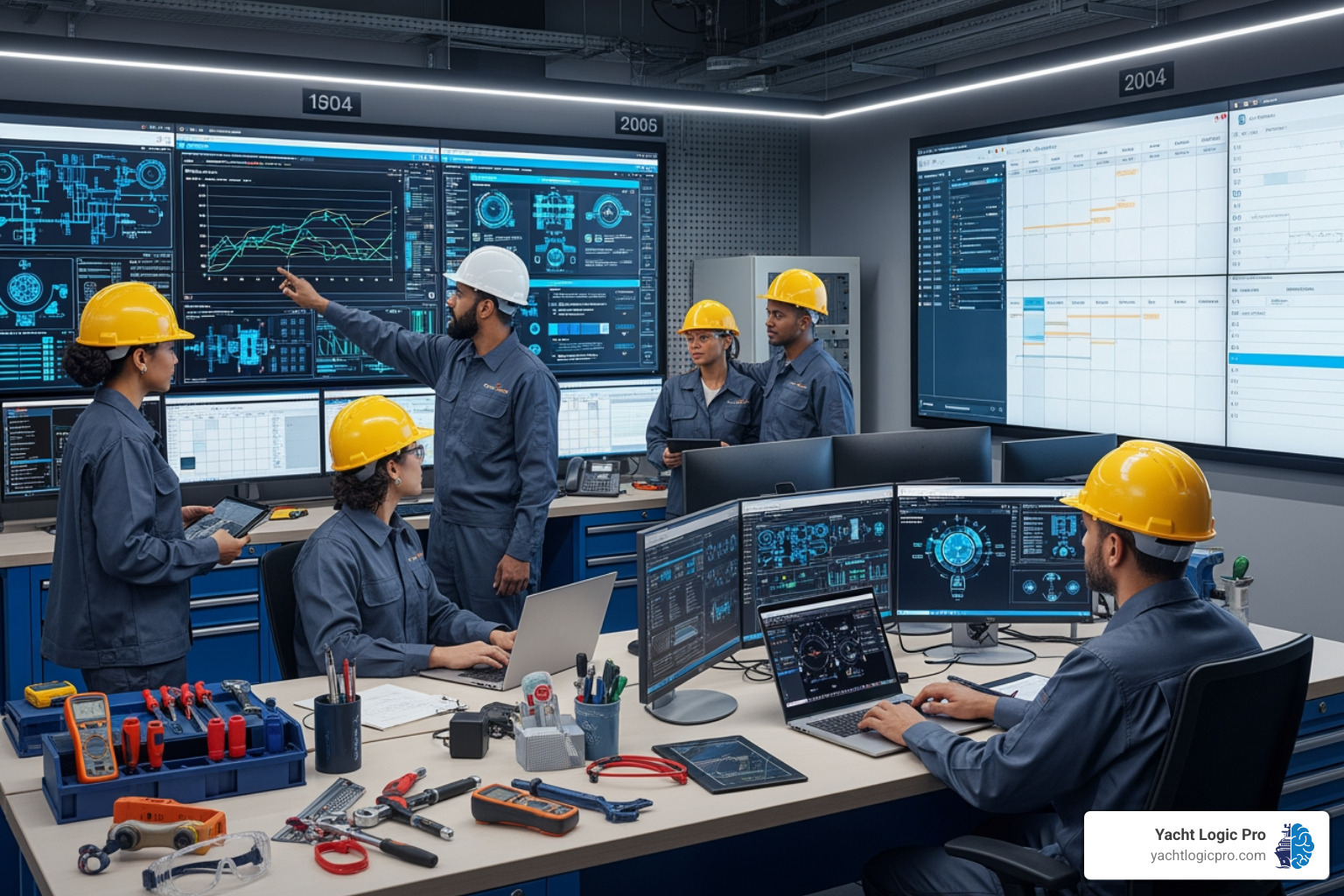
Maintenance planning tools fundamentally change upkeep, leading to less downtime and greater efficiency. One user described it as going “from fighting fires to feeling calm.”
Here’s how:
- Automated Scheduling: Software automatically schedules preventive maintenance based on set intervals (e.g., every 500 engine hours), ensuring critical services are performed on time.
- Real-Time Data Access: Technicians can instantly pull up an asset’s complete history, diagrams, and logs on a mobile device, enabling faster diagnostics and repairs.
- Centralized Communication: A central hub for all maintenance communication allows technicians to comment on work orders and attach photos, eliminating bottlenecks.
- Resource Planning and Optimization: Tools help optimize labor by tracking technician availability and skills. Robust inventory management ensures the right parts are on hand, preventing delays.
- Eliminating Surprise Breakdowns: By combining automated PMs and condition monitoring, software helps spot issues before they escalate, allowing for planned, cost-effective maintenance. This directly contributes to the 30-33% reduction in unplanned downtime. For more on scheduling, see Why Most Marine Service Operations Fail at Scheduling and How to Fix It.
Types of Modern Maintenance Planning Solutions
The world of maintenance planning tools is not one-size-fits-all. Businesses have several options, each designed for specific needs.

Key categories include:
- Computerized Maintenance Management Systems (CMMS): The foundational tool for managing maintenance.
- Enterprise Asset Management (EAM): A broader approach covering the entire asset lifecycle.
- Predictive Maintenance (PdM) Tools: Focus on forecasting failures.
- Condition-Based Monitoring (CBM): Uses real-time data to trigger maintenance.
While there’s overlap, the core focus of CMMS and EAM differs:
| Feature | CMMS Focus | EAM Focus |
|---|---|---|
| Primary Goal | Streamline maintenance operations | Manage entire asset lifecycle for maximum value |
| Scope | Maintenance department | Enterprise-wide, including finance, procurement, etc. |
| Key Functions | Work orders, PM, asset history, inventory | All CMMS functions + financial tracking, procurement, MRO, strategic planning |
| Integration | Often integrates with ERP | Integrates with ERP, finance, supply chain, HR |
Computerized Maintenance Management Systems (CMMS)
A CMMS is the central nervous system for maintenance operations, moving you away from disorganized spreadsheets to manage activities efficiently.
Key characteristics:
- Work Order Hub: A central place to create, assign, track, and log all work orders for clear accountability.
- Preventive Maintenance Focus: Excels at scheduling and automating recurring PM tasks to reduce unexpected downtime.
- Asset History Tracking: Stores a complete maintenance history for each asset, which is invaluable for troubleshooting and decision-making.
- Inventory Control: Includes modules to manage spare parts, track stock levels, and monitor consumption.
A CMMS is ideal for teams looking to streamline workflows and ensure consistent upkeep. Learn more about streamlining service workflows in From First Call to Final Invoice: Streamlining the Yacht Service Workflow.
Enterprise Asset Management (EAM)
While a CMMS focuses on maintenance, an EAM system looks at the entire asset lifecycle, from acquisition to disposal, to maximize its value.
EAM adds:
- Holistic Asset Lifecycle Management: Manages an asset’s entire journey, providing a complete view of its total cost of ownership.
- Financial Integration: Tightly integrates with financial systems to track depreciation, capital expenditures, and overall asset financial performance.
- Procurement and MRO Inventory: Manages vendor relationships and automates purchasing for Maintenance, Repair, and Operations (MRO) inventory.
- Strategic Planning: Supports high-level decisions about asset upgrades and replacements with comprehensive data.
EAM solutions are typically for larger organizations needing deep integration across business functions.
Predictive and Condition-Based Tools
Predictive maintenance (PdM) and condition-based monitoring (CBM) represent the cutting edge, using technology to determine when maintenance is actually needed.
- IoT Sensors: Smart sensors attached to equipment (e.g., vibration sensors on engines, temperature probes on bearings) continuously monitor health parameters in real-time. Find more details in resources like this: More on sensor technology.
- Data Analysis: Specialized software uses algorithms and machine learning to analyze sensor data, identifying patterns and deviations from normal operation.
- Failure Forecasting: By analyzing historical and real-time data, these tools can forecast when a component is likely to fail, allowing for proactive repairs.
- Proactive Alerts: When the system detects an anomaly, it generates an alert that can trigger an automated work order, enabling intervention precisely when needed.
This approach significantly reduces unplanned downtime and optimizes maintenance schedules.
The Future is Now: AI, Mobile, and Integrations
Maintenance planning tools are rapidly evolving, driven by Artificial Intelligence (AI), mobile capabilities, and seamless integrations. This shift creates smarter, more proactive solutions for the complex marine industry. We’re moving toward a future where maintenance is about anticipating problems, not just reacting to them. This data-driven approach is the future, as explored in Why Data-Driven Yacht Service is the Future of the Marine Industry.
The Role of AI in Modern Maintenance Planning Tools
AI and Machine Learning (ML) are now integral to advanced maintenance planning tools, acting as a super-powered brain for maintenance systems.
How AI is changing maintenance:
- Predictive Analytics: AI algorithms analyze vast data sets to predict equipment failures, allowing for precisely timed maintenance.
- Anomaly Detection: AI is excellent at spotting subtle data anomalies that indicate potential issues long before they become critical.
- AI-Powered Suggestions: AI can analyze past repairs and manuals to provide intelligent suggestions for troubleshooting, repair procedures, and even help estimate job times.
- Root Cause Analysis: When a failure occurs, AI can quickly analyze data to identify the root cause, reducing diagnostic time.
- Optimizing Labor Utilization: AI helps balance workloads and can even capture and share ‘tribal knowledge’ by training on manuals and work order history.
AI-powered solutions aim to bring unplanned downtime to zero by turning data into cost-saving insights.
Mobile Apps for Field Technicians
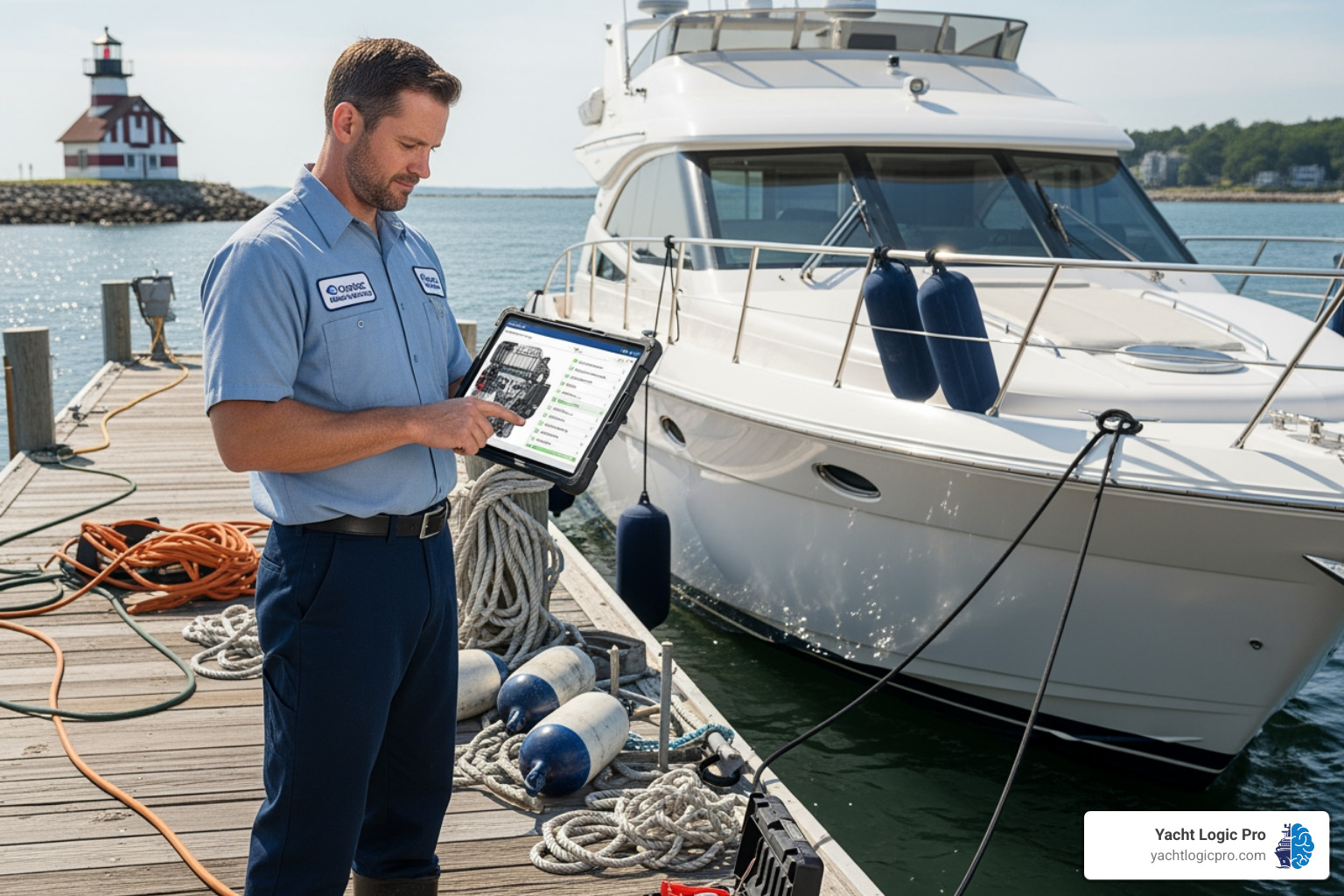
In the marine industry, technicians are constantly on the move, making mobile capabilities a necessity for modern maintenance planning tools. Mobile apps put the full power of the maintenance system into technicians’ hands.
How mobile apps improve effectiveness:
- Offline Access: Technicians can download work orders and manuals to work offline on a vessel at sea, with data syncing automatically once connectivity is restored.
- On-Site Work Order Updates: Technicians can update progress, add notes, and attach photos directly from their mobile device, reclaiming valuable “wrench time.”
- QR Code Scanning: Scanning a QR code on equipment can instantly pull up its complete history, manuals, and work orders.
- Digital Checklists and Forms: Digital checklists ensure vital inspection and safety steps aren’t missed and can enforce compliance with required inputs.
- Real-Time Communication: Mobile apps facilitate instant communication between field technicians and managers, speeding up problem resolution.
Equipping technicians with mobile apps increases productivity and data accuracy. This is why digital tools are indispensable, as detailed in Digital Tools Every Marine Technician Should Be Using in 2025.
The Power of Integration (ERP, IoT)
The true power of modern maintenance planning tools lies in their ability to integrate with other business systems like Enterprise Resource Planning (ERP) and the Internet of Things (IoT).
- Unified Data: Integration with an ERP system creates a single source of truth for asset, inventory, and financial data, eliminating manual entry.
- Eliminating Data Silos: Integration breaks down departmental data silos, providing a comprehensive view of operations.
- Automated Work Triggers from IoT: IoT sensors monitoring equipment can automatically trigger a work order in the maintenance software when a parameter exceeds a threshold (e.g., high engine temperature).
- Financial Syncing: Integration allows for accurate tracking of labor and parts costs against specific assets, providing precise cost accounting.
- Streamlined Workflows: From acquisition to maintenance and financial reporting, integration connects every step, reducing administrative burden.
By integrating with systems like ERP and IoT, maintenance tools become intelligent platforms that drive operational excellence.
How to Select the Right Maintenance Planning Software
Choosing the right maintenance planning tool is a critical decision. A strategic approach that aligns the software with your unique business needs is essential. Start by assessing your biggest pain points: Is it unplanned downtime, inventory issues, or compliance challenges?
When evaluating options, consider:
- Scalability: Will the software grow with your business and handle increased data and user demands?
- User-Friendliness: An intuitive interface is critical for adoption, especially for field technicians.
- Vendor Support: Does the provider offer responsive support and understand the marine industry?
- Implementation Process: Understand the time, resources, and effort required to get the system fully operational.
For marine businesses, the right tool must understand unique assets and challenging operating environments. For a comprehensive guide, refer to What to Look For in Yacht Service Management Software: A Buyer’s Checklist.
Key Features to Look for in Maintenance Planning Tools
When sifting through options, certain features are essential for an effective system. Prioritize these must-haves:
- Work Order Tracking: Easily create, assign, track, and close work orders with details like priority, parts, and labor hours.
- Preventive Maintenance Scheduling: Automated scheduling for recurring tasks based on time, meter readings, or condition.
- Asset Management: A comprehensive database for all assets, including history and associated documents.
- Inventory Control: Tools to manage spare parts, track stock levels, and set reorder points.
- Mobile-First Design: A user-friendly mobile app with offline capabilities for technicians.
- Robust Reporting and Analytics: Customizable dashboards and reports for insight into KPIs like downtime and costs.
- Digital Checklists and Forms: Customizable digital forms for inspections and safety checks to ensure consistency.
- Integration Capabilities: The ability to connect with other systems like ERP and accounting software.
Supporting Compliance and Safety
In the marine industry, compliance and safety are non-negotiable. Maintenance planning tools play a critical role in regulatory adherence.
How these tools help:
- Audit Trails: The software automatically creates a detailed, immutable record of all maintenance activity, providing verifiable proof of compliance during audits.
- Digital Safety Procedures and Checklists: Digitize safety procedures to ensure technicians follow every critical step, with options for photo or signature verification.
- Regulatory Documentation Management: Store and link permits and certifications directly to relevant assets for easy access during inspections.
- Automated Record-Keeping: Automating data capture saves time and reduces the risk of human error in compliance documentation.
Leveraging these capabilities helps build a culture of safety and simplifies compliance. Better service records also build customer loyalty, as highlighted in How to Create Repeat Business with Better Yacht Service Records.
Cost Structures and Calculating ROI
Understanding cost structures and Return on Investment (ROI) is crucial when investing in maintenance planning tools.
Typical Cost Structures:
Pricing models vary and may include per-user fees, tiered plans, or asset-based pricing. Also, consider one-time implementation costs for setup and training. It’s important to understand the Total Cost of Ownership (TCO), not just the subscription fee.
Calculating ROI:
The ROI is often substantial. Calculate it by looking at:
- Downtime Savings: Reducing unplanned downtime by 30-33% saves significant revenue.
- Asset Life Extension: Consistent PM delays costly replacements.
- Labor Efficiency: A 30% improvement in maintenance efficiency means more work done in less time.
- Inventory Optimization: Savings from reduced parts inventory ($50K+ saved per site) and preventing stockouts directly impact the bottom line.
- Reduced Reactive Maintenance Costs: Proactive maintenance is cheaper than urgent, reactive repairs.
The initial investment is typically far outweighed by long-term savings. For more details, explore options on our Pricing page.
Conclusion
We’ve explored maintenance planning tools, from their core components to the transformative power of AI, mobile apps, and integrations. It’s clear that the era of reactive, paper-based maintenance is over, replaced by a proactive, data-driven approach that offers significant benefits to marine businesses.
The message is simple: embracing these tools can dramatically reduce unplanned downtime by up to 30-33%, extend asset life, boost efficiency by 30%, and open up substantial cost savings—sometimes over $50,000 on parts inventory alone. These solutions also foster better compliance and safety, empowering teams with real-time information for a calmer, more profitable operation.
Choosing the right tool requires careful consideration of your business needs, scalability, and user-friendliness. Look for key features like robust work order management, asset tracking, PM scheduling, and mobile access. For marine businesses, a specialized solution that understands the industry’s unique challenges is essential.
If you’re ready to move from fighting fires to a proactive, efficient future, it’s time to explore the tools built for your industry.