
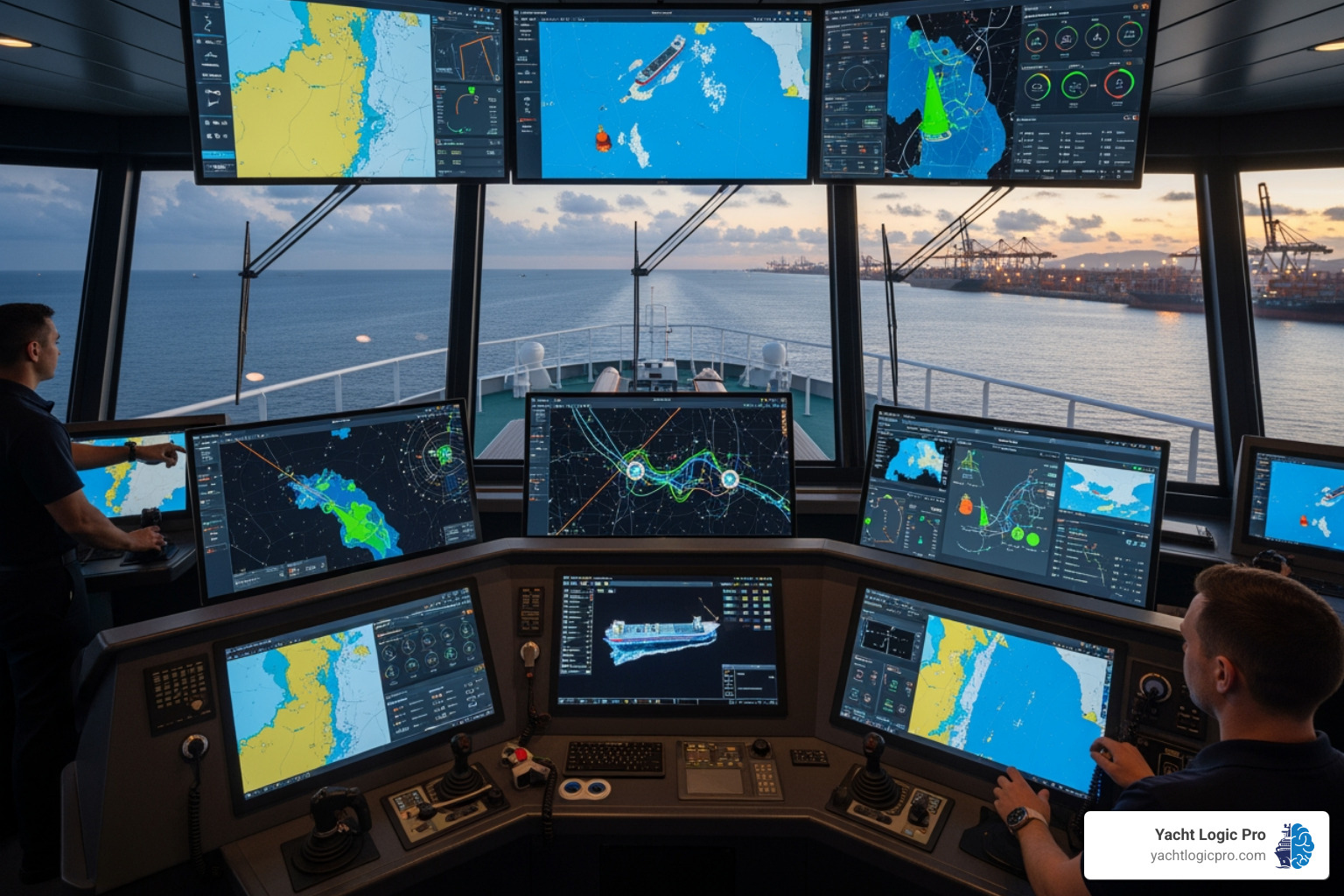
Why Modern Maritime Operations Need Digital Change
Marine software solutions are specialized digital platforms designed to streamline operations for marinas, boatyards, yacht clubs, shipping companies, and marine service centers. These systems address critical industry challenges by automating maintenance scheduling, inventory tracking, financial management, and regulatory compliance—changing manual, error-prone processes into efficient, data-driven workflows.
What Marine Software Solutions Do:
- Automate maintenance tracking – Schedule planned and unplanned jobs, track work orders, and manage technician workflows
- Manage inventory in real-time – Monitor parts, automate reordering, and sync with point-of-sale systems
- Streamline finances – Handle invoicing, recurring billing, payment processing, and integrate with accounting software
- Ensure compliance – Track vessel certificates, manage safety audits, and maintain regulatory documentation
- Enable mobile operations – Give technicians and managers access to critical data from anywhere
The maritime industry faces mounting pressure from supply chain disruptions, rising fuel costs, environmental regulations, and the need to do more with less. Yet many marine businesses still rely on spreadsheets, paper logs, and disconnected systems that lead to billing errors, inventory losses, and scheduling conflicts.
Consider this reality: over 500 vessels worldwide depend on modern marine management systems to handle everything from planned maintenance to procurement. Companies with 40+ years of maritime expertise have built these platforms specifically for the unique challenges of marine operations—because generic business software simply doesn’t account for vessel-specific workflows, maritime compliance requirements, or the harsh realities of working on the water.
The shift from manual processes to integrated software isn’t just about efficiency. It’s about survival. Marine businesses that accept digital change report eliminating double bookings, reducing operational costs, and—as one marina manager put it—finally feeling “more like an actual business rather than a mom-and-pop shop.”
The good news? Modern marine software solutions are now cloud-based, mobile-friendly, and designed for real-world marine environments—from small boat repair shops to large shipping fleets managing hundreds of vessels across multiple locations.
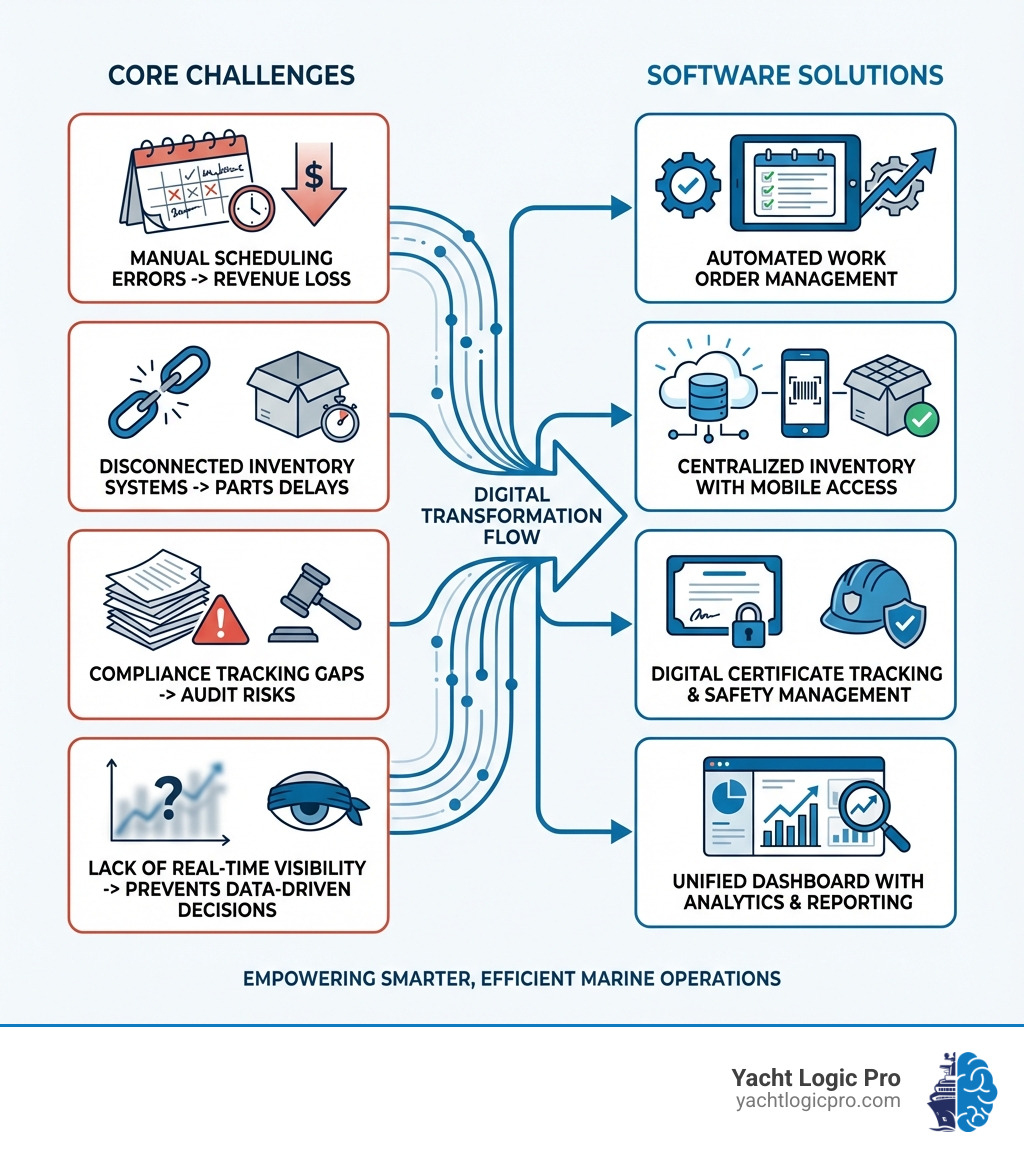
How Marine Software Drives Efficiency and Profitability
Imagine a world where your marina never double-books a slip, your boatyard technicians always have the right parts, and your accounting team effortlessly handles invoicing for complex refits. This isn’t a pipe dream; it’s the reality enabled by modern marine software solutions. These powerful tools are specifically designed to tackle the primary challenges faced by the marine industry, leading directly to operational efficiency and significant cost reductions.
For businesses like marinas, boatyards, and shipping companies, the benefits are clear. We’re talking about automating daily tasks that used to eat up valuable time, from managing reservations to tracking repair jobs. This automation frees up your team to focus on what they do best: providing exceptional service and growing your business. As one software provider succinctly puts it, these solutions aim to “create new profit opportunities and maximize profit while reducing operational costs.”
One of the most immediate impacts of adopting marine software solutions is the streamlining of workflows. From the moment a customer calls to the final invoice, every step of the service process can be managed digitally. This not only reduces errors but also speeds up operations, ensuring that boats get back on the water faster and customers are happier. You can learn more about this journey in our article on From First Call to Final Invoice: Streamlining the Yacht Service Workflow.
Consider the example of a busy marina. Before software, managing slip assignments, reservations, and billing could be a chaotic dance of spreadsheets and phone calls. With a specialized marina management solution, these tasks are centralized and automated. Online booking systems allow customers to reserve slips themselves, reducing administrative burden and eliminating the dreaded “double booking” scenario that can lead to serious customer service headaches. This kind of efficiency also extends to managing fuel sales, where real-time pump integration and secure payment processing ensure quick turnaround times.
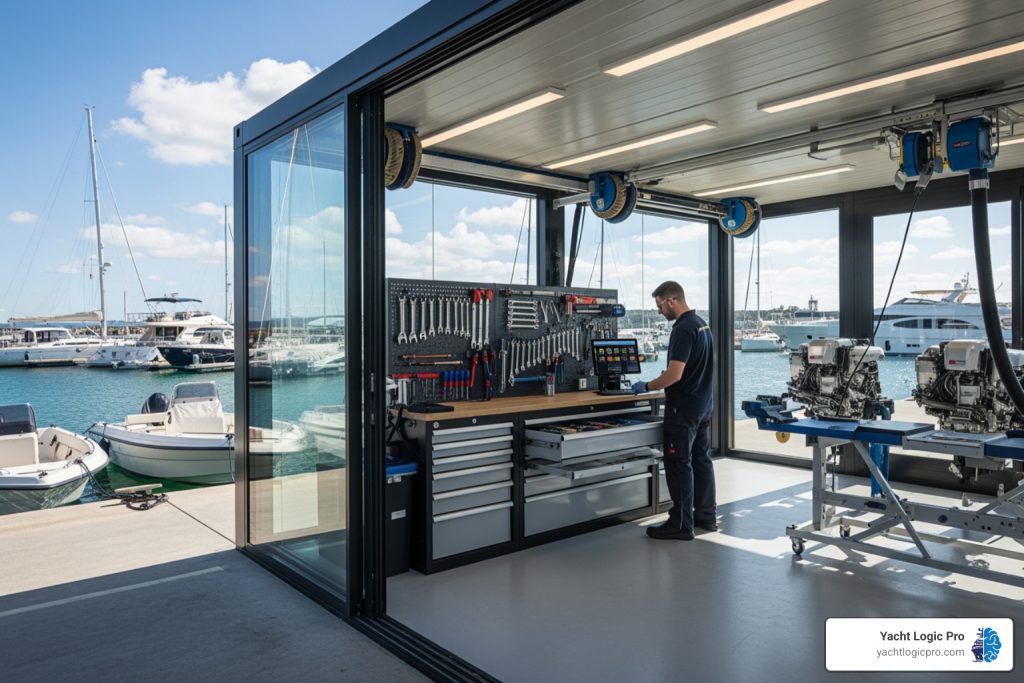
For boatyards and service centers, the gains are equally impressive. Tracking estimates, work orders, and jobs becomes a seamless process. Technicians can access job details and inventory information from mobile devices right at the dock, reducing trips back to the office and improving overall productivity. This level of detail also allows for better record-keeping, which is crucial for building customer trust and encouraging repeat business. Find how better records can build loyalty by reading How to Create Repeat Business with Better Yacht Service Records.
Beyond direct operational improvements, these solutions contribute to cost reduction by:
- Minimizing administrative overhead: Less manual data entry means fewer staff hours spent on repetitive tasks.
- Optimizing inventory: Real-time tracking prevents overstocking or stockouts, reducing carrying costs and lost sales.
- Reducing billing errors: Automated invoicing and payment processing ensure accuracy and faster revenue collection.
- Improving resource allocation: Better scheduling and tracking of personnel and equipment lead to more efficient use of resources.
Marine software solutions don’t just digitize your existing processes; they transform them. They provide the detailed management information needed to make data-driven decisions, turning what might feel like a “mom-and-pop shop” into a well-oiled, profitable business ready for the future.

Core Capabilities of Leading Marine Software Solutions
At the heart of every effective marine software solution lies a commitment to centralizing data and offering a comprehensive suite of functionalities custom to the maritime world. These solutions aren’t just about one specific task; they’re about creating an interconnected ecosystem where every aspect of your operation, from the largest shipping fleet to the smallest boat repair, is managed with precision and ease.
A typical robust marine software platform will integrate several key functionalities:
- Fleet Management: For shipping companies, this means overseeing an entire fleet of vessels, tracking their locations, performance, and compliance status. For marinas, it’s about managing every slip, mooring, and storage space with a visual, intuitive interface.
- Maintenance Planning (PMS/CMMS): This is the backbone for keeping vessels operational. It covers planned maintenance schedules, unplanned defect management, dry-docking, and refit management.
- Inventory Management: From spare parts for a refit to the merchandise in a marine store, accurate inventory is crucial. This includes real-time stock tracking, purchase order generation, and barcode printing.
- Accounting & Financial Management: Handling everything from basic invoicing and recurring charges to complex financial control and reporting, often with integrations to popular accounting software.
- Compliance Management: Ensuring adherence to maritime regulations, safety standards, and environmental requirements through digital documentation, certificate tracking, and audit management.
- Mobile Access & Remote Operations: Allowing owners, managers, and technicians to access critical information and perform tasks from anywhere, whether on the dock, at sea, or in the office.
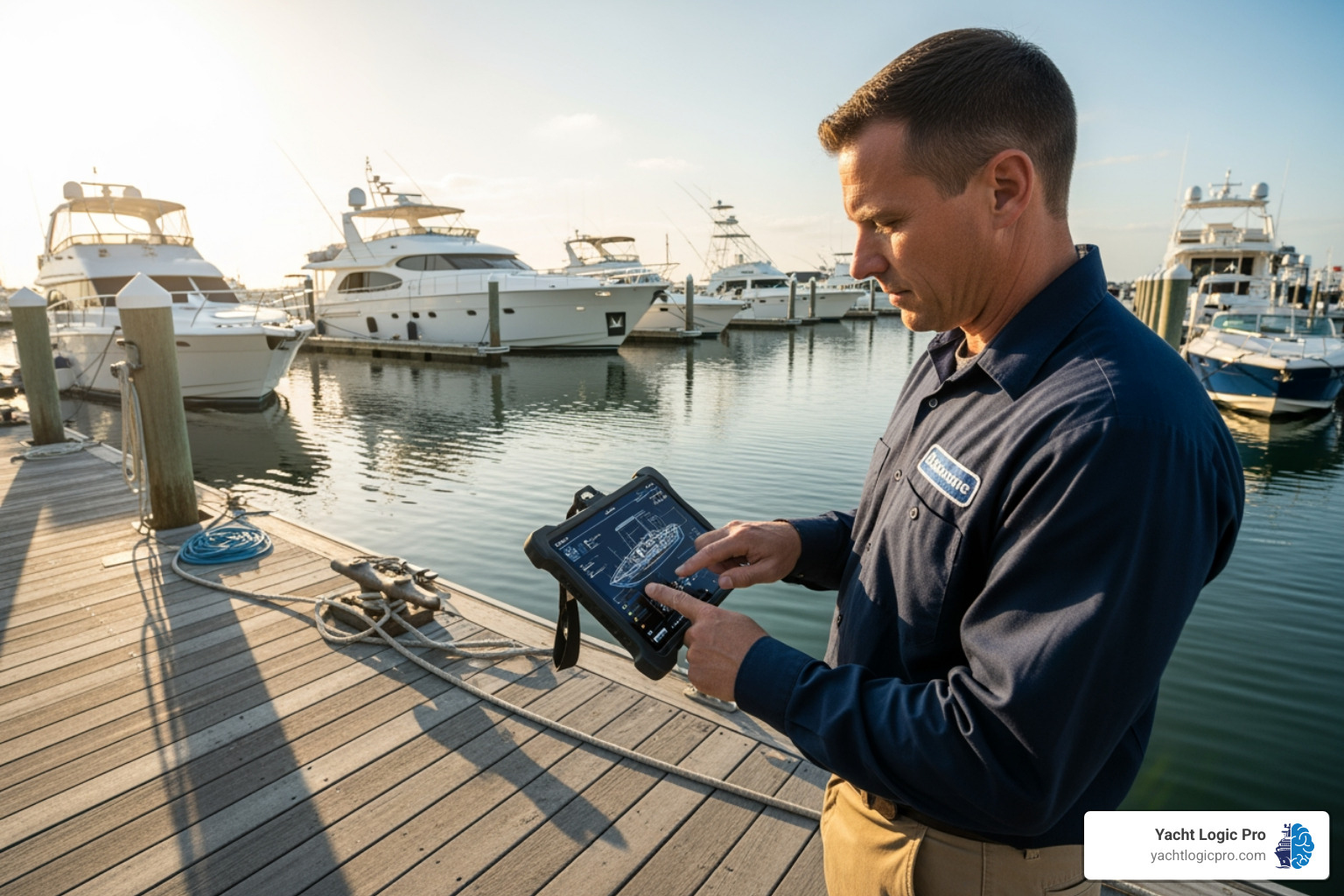
Key Features for Maintenance and Service Operations
For any marine business involved in service and repairs, effective maintenance management is paramount. Our marine software solutions are built to simplify this complex area, changing reactive repairs into proactive, efficient operations.
- Planned Maintenance Systems (PMS) / Computerized Maintenance Management Systems (CMMS): These systems allow you to schedule and track routine maintenance jobs, ensuring critical tasks aren’t missed. They manage both planned and unplanned jobs for vessels, with some systems having been in use on over 500+ vessels worldwide for decades. Many PMS modules are DNV-GL Type Approved, signifying their adherence to rigorous industry standards.
- Work Order Management: From initial estimates to final job completion, our software provides a streamlined workflow for tracking every repair. This includes managing job details, assigning tasks to technicians, and monitoring progress in real-time.
- Technician Scheduling: Say goodbye to scheduling conflicts and inefficient dispatching. Advanced marine software solutions offer tools to optimize technician schedules, ensuring the right person is on the right job at the right time. This is a common pitfall for many operations, and we dig deeper into how to fix it in Why Most Marine Service Operations Fail at Scheduling and How to Fix It.
- Service History Records: Every repair, every part used, and every technician note is carefully recorded. This creates a comprehensive service history for each vessel, invaluable for future diagnostics, warranty claims, and building customer trust.
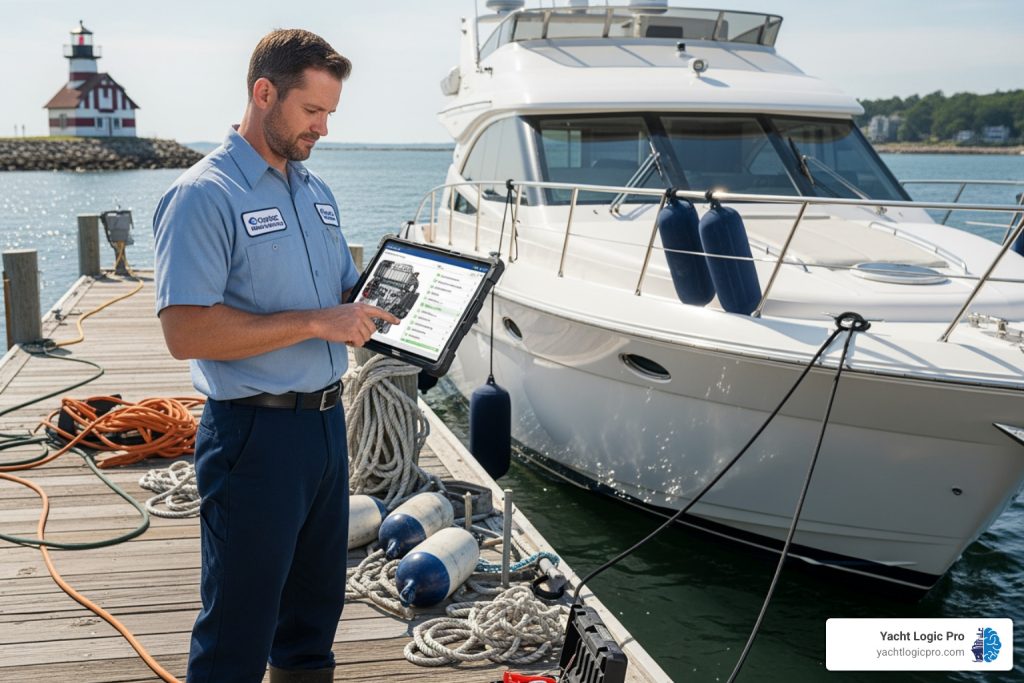
- Mobile Apps for Technicians: In the marine world, work rarely happens behind a desk. Our mobile applications empower technicians to access work orders, update job statuses, track time, and even order parts directly from their smartphones or tablets, whether they’re on a small boat repair or working on a megayacht refit. These are truly the Digital Tools Every Marine Technician Should Be Using in 2025.
These features, often developed by “Mariners for Mariners,” ensure that the software understands the unique demands of working at sea and on the dock, making it an indispensable tool for marine professionals.
Integrated Financial and Inventory Management
Running a successful marine business isn’t just about keeping boats afloat; it’s also about keeping your finances healthy and your inventory in check. Modern marine software solutions provide robust, integrated tools for both, ensuring that every dollar and every part is accounted for.
- Real-time Stock Tracking: Gone are the days of manual inventory counts. Our software offers real-time visibility into your stock levels, from spare parts to retail items. This helps prevent stockouts, reduces carrying costs, and ensures you always have what you need when you need it.
- Purchase Orders (POs): Streamline your procurement process with digital PO generation and tracking. Manage your entire vendor lifecycle, from inquiries and quotes to orders and invoice registration, ensuring transparency and efficiency in all your transactions.
- Point of Sale (POS) Systems: For marinas, marine stores, and service centers, a fully integrated POS system is essential. It handles daily and monthly sales reports, processes payments quickly, and automatically updates inventory, making transactions seamless.
- Automated Invoicing & Recurring Billing: Say goodbye to manual invoice creation. Our software automates invoicing for services rendered, parts sold, and recurring charges like slip rentals or storage fees. Features like 1-click auto-pay and decline handling ensure you collect revenue with ease, eliminating billing errors and speeding up payment cycles.
- Accounting Software Integration: To ensure your books are always balanced, our marine software solutions seamlessly integrate with popular accounting platforms like QuickBooks and Xero. This eliminates duplicate data entry, reduces reconciliation time, and provides a comprehensive financial overview of your operations.
These integrated features mean that when a technician uses a part on a job, it’s automatically deducted from inventory, added to the customer’s invoice, and reflected in your accounting system. This interconnectedness is what makes these solutions so powerful, covering all the essential Features your marine business needs to thrive.
Ensuring Safety, Security, and Regulatory Compliance
The maritime industry operates under a stringent framework of international and national regulations. Ensuring safety, security, and compliance isn’t just good practice; it’s a legal and ethical imperative. Marine software solutions play a critical role in navigating this complex landscape, turning what could be an administrative nightmare into a manageable, transparent process.
- ISM Document Management: The International Safety Management (ISM) Code requires extensive documentation. Our software provides digital platforms for managing safety manuals, procedures, checklists, and records, ensuring they are always up-to-date and accessible.
- Certificate Tracking: Vessels and crew members require numerous certificates with varying expiration dates. Software automates the tracking of these expirations, sending timely alerts to prevent non-compliance and ensure all necessary certifications are current.
- Safety Audits & Incident Reporting: Streamline the process of conducting internal and external safety audits. Our solutions allow for digital audit trails, efficient handling of corrective actions, and comprehensive incident/event reporting, including risk assessments, safety meeting management, and safety drills.
- Data Security & Compliance: With sensitive operational and personal data being managed, security is paramount. Leading marine software solutions are often ISO 27001 certified and GDPR compliant, ensuring that your data is protected with robust security measures, including secure access controls and encrypted data transfer. This also includes features like eSignature workflows for secure document signing.
- Fleet Compliance & KPIs: Beyond individual documents, the software helps track drills, safety meetings, forms, audits, and corrective actions across your entire fleet to ensure continuous compliance. It provides quick access to data and Key Performance Indicators (KPIs) that can be presented to auditors, regulators, and customers, proving your adherence to standards. We make it simple to track and prove compliance.
By centralizing these critical functions, marine software solutions not only help avoid costly fines and operational delays but also foster a culture of safety and responsibility throughout your organization.
The Technological Wave: Current and Future Trends
The marine industry, traditionally rooted in long-standing practices, is now experiencing a profound technological change. Marine software solutions are at the forefront of this wave, continuously evolving to incorporate cutting-edge advancements that promise even greater efficiency, safety, and sustainability.
One of the most significant shifts has been towards cloud-based solutions. This move liberates businesses from the shackles of on-premise servers, offering unparalleled flexibility, scalability, and accessibility. As one user noted about cloud-based software, it “eliminated issues with a server and connectivity, leading to more accuracy and better records.” This also enables remote access, allowing managers and crew to stay connected and productive from anywhere in the world. Our article, From Dock to Dashboard: How Yacht Logic Pro Connects Your Entire Marine Team, explores this connectivity in detail.
The explosion of data generated by vessels and marine operations has also given rise to advanced data analytics. Software now transforms raw operational data into graphical charts and reports, providing deep insights into KPIs, vessel performance, and operational trends. This data-driven approach is empowering marine companies with AI-powered maritime digital solutions, pushing the boundaries of what’s possible.
The Rise of Advanced Technology in Marine Software Solutions
The integration of advanced technologies like Artificial Intelligence (AI) and machine learning is rapidly redefining the capabilities of marine software solutions. These innovations are moving beyond simple automation to enable predictive capabilities and intelligent decision-making.
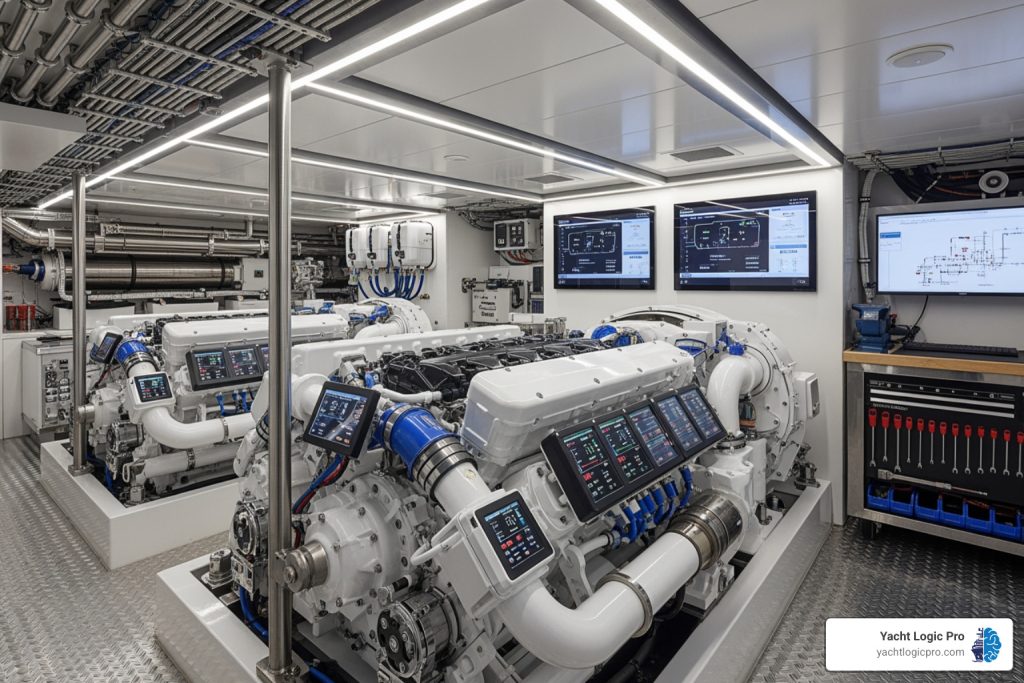
- Predictive Maintenance: Instead of reacting to equipment failures, AI-powered software analyzes sensor data and historical trends to predict when a component is likely to fail. This allows for proactive maintenance scheduling, reducing unexpected downtime and costly emergency repairs. Imagine a system that alerts you to a potential engine issue weeks before it becomes critical, allowing you to schedule repairs during planned downtime.
- Route Optimization: Leveraging real-time weather data, vessel performance metrics, and port information, software can suggest the most fuel-efficient and safest routes, directly impacting operational costs and environmental footprint.
- Automated Reporting: Tedious manual reporting is being replaced by intelligent systems that automatically generate detailed reports on vessel performance, compliance, and financial metrics, freeing up valuable staff time.
- Resource Allocation: AI can optimize the allocation of crew, spare parts, and other resources across a fleet, ensuring maximum efficiency and minimizing waste.
These technologies are fostering a “connected ocean,” where data flows seamlessly between design, engineering, and operations, creating a unified and highly efficient maritime ecosystem.
The Future of Marine Software Solutions and Sustainability
Perhaps one of the most critical areas where marine software solutions are making an impact is in supporting the industry’s ambitious sustainability and decarbonization goals. With increasing pressure to reduce emissions and operate more environmentally responsibly, technology provides the tools needed to measure, manage, and mitigate environmental impact.
- Fuel Consumption Tracking: Precise monitoring of fuel consumption is the first step toward reducing it. Software tracks bunker usage in real-time, helping identify inefficiencies and optimize operational parameters.
- Emissions Monitoring: Integrated systems can monitor and report on greenhouse gas emissions, ensuring compliance with evolving environmental regulations and supporting efforts to reduce carbon footprint with lower emissions. Live insights from such systems are actively used to reduce fuel costs and meet decarbonization goals.
- Retrofit Project Management: As older vessels are upgraded to meet new environmental standards, managing complex retrofit projects becomes crucial. Software streamlines this process, from initial planning and 3D modeling based on point cloud data to tracking progress and costs, avoiding unnecessary work.
- Green Shipping Initiatives: Beyond individual vessel operations, marine software solutions contribute to broader green shipping initiatives by providing the data and analytics necessary to understand environmental impact, implement sustainable practices, and report on progress. This includes data-led design operating models that provide engineers with complete control throughout project stages, fostering innovation in eco-friendly vessel design.
The future of marine software is inextricably linked with the industry’s commitment to a greener, more sustainable maritime sector. These solutions are not just about profit; they are about planetary responsibility.
How to Select the Right Software for Your Marine Business
Choosing the right marine software solution can feel like navigating a complex channel. With numerous options available, consider several key factors to ensure the solution aligns perfectly with your business needs and future goals. Selecting the right marine ERP partner is a crucial decision that can impact your operations for years to come.
- Scalability: Will the software grow with your business? Whether you’re a small marina with a few slips or a shipping company managing a large fleet of 100+ vessels, the solution should offer tiered options (e.g., Lite, Standard, Enterprise) to accommodate your evolving needs.
- Integration Capabilities: Your software shouldn’t operate in a silo. Look for solutions that seamlessly integrate with your existing business systems, such as accounting software (QuickBooks, Xero), ERPs, and other third-party tools. This ensures a unified data flow and avoids duplicate data entry.
- User-friendliness: Complex software can lead to low adoption rates. Prioritize solutions with intuitive dashboards, easy navigation, and simplified data entry processes. As one provider wisely states, “Simplicity is the Key to Success” in an increasingly complex world.
- Vendor Support & Training: What kind of support does the provider offer? Look for 24/7 support, comprehensive training and onboarding programs, and responsive customer service to ensure your team can maximize the software’s potential.
- Industry-specific Design: Generic business software simply won’t cut it. Opt for solutions specifically “Built for the Business of Boating” and developed “by Mariners for Mariners.” This ensures the software understands the unique workflows, terminology, and regulatory requirements of the marine industry.
- Security & Compliance: Given the sensitive nature of operational and financial data, robust security features are non-negotiable. Look for solutions that are ISO 27001 certified, GDPR compliant, and offer secure data access and encryption.
Matching Software to Your Business Type
The diverse landscape of the marine industry means that a one-size-fits-all approach to software rarely works. Fortunately, marine software solutions are highly adaptable, with specialized offerings for different business types.
- Marinas and Yacht Clubs: These businesses require robust space management (slips, moorings, storage), reservation systems, online booking capabilities, fuel management, and automated billing for recurring charges. The right software is designed to help marinas maximize revenue and improve operations.
- Boatyards and Service & Repair Centers: Here, the focus shifts to detailed work order management, technician scheduling, parts inventory tracking, service history records, and mobile apps for on-site operations. Our article on How Yacht Logic Pro Helps Boatyards Scale Without Sacrificing Quality highlights these specific needs.
- Shipping Companies and Fleet Managers: These operations demand comprehensive fleet management, planned maintenance systems (PMS), crew management, procurement, QHSE (Quality, Health, Safety, Environment) management, vessel performance monitoring, and advanced data analytics across multiple vessels, including tankers, bulk carriers, and container ships.
- Marine Stores: Inventory management, POS systems, and integration with accounting software are crucial for efficient retail operations.
Whether you’re managing a single boat repair shop or an international shipping fleet, there’s a specialized marine software solution designed to meet your unique operational challenges.
A Buyer’s Checklist: What to Look For
To make an informed decision, we recommend using a detailed buyer’s checklist. This ensures you cover all critical aspects before committing to a marine software solution. Our comprehensive guide, What to Look For in Yacht Service Management Software: A Buyer’s Checklist, provides a deeper dive, but here are some key considerations:
- Mobile Functionality: Does the software offer dedicated mobile apps for owners, managers, and technicians? This is crucial for marine professionals who are constantly on the go and need to access data and perform tasks from the dock, a boat, or remote locations.
- Customization Options: Can the software be custom to your specific workflows and reporting needs? While industry-specific solutions are vital, the ability to customize fields, reports, and processes ensures the software truly works for your business.
- Training and Onboarding: What kind of support is provided during the implementation phase? Look for comprehensive training programs, dedicated onboarding specialists, and accessible resources to ensure your team quickly becomes proficient with the new system.
- Total Cost of Ownership (TCO): Beyond the initial purchase or subscription fee, consider all potential costs, including implementation, training, ongoing support, and any hidden fees. Some providers offer competitive pricing with all core modules included under one package, avoiding astronomical costs often associated with marine ERP suites.
- Marine-Specific Features: Does the software truly understand the nuances of marine operations, or is it a generic tool adapted for the industry? As we emphasize in Tech That Works at Sea: Why Marine-Specific Software Beats Generic Tools Every Time, marine-specific software is always the superior choice.
Don’t hesitate to schedule demos, ask for testimonials, and conduct thorough due diligence. The right software partner will be transparent, supportive, and committed to your long-term success.
Conclusion: Set Sail for a More Efficient Future
The maritime industry is at a pivotal moment, with digital change no longer a luxury but a necessity. Marine software solutions are the compass guiding businesses toward a future of improved efficiency, reduced costs, and sustainable operations. By embracing these innovative tools, marine businesses can overcome traditional challenges and open up unprecedented levels of productivity and profitability.
From automating maintenance and streamlining inventory to ensuring regulatory compliance and fostering data-driven decision-making, these solutions provide a competitive advantage in an increasingly complex global market. They empower businesses of all sizes—from busy marinas to vast shipping fleets—to operate smarter, faster, and safer.
The future of marine service is digital, and getting ahead in 2025 means leveraging these powerful technologies. As we’ve explored, the benefits extend beyond mere operational improvements, contributing to crucial sustainability goals and fostering a more connected, resilient maritime ecosystem.
At Yacht Logic Pro, we believe in empowering marine businesses with intuitive, powerful, and industry-specific tools. Our all-in-one, AI-powered marine maintenance and operations software is designed to unify your operations, eliminate manual data entry, and help you save time while boosting profits. It’s about more than just software; it’s about providing the confidence to steer the future with clarity and control.
Don’t let manual processes hold your business back. It’s time to set sail for a more efficient and profitable future.