
Every marine service business owner has the same story. A boat owner calls in a panic — engine overheated, impeller gone, now stranded at the dock — because nobody reminded them it was due eight months ago. You fix the boat. You charge for the job. But somewhere in that transaction, you both know: this was avoidable.
Preventive maintenance is not just a technical practice. For a marine service business, it is a revenue model. Shops that build systematic preventive maintenance into their operations fill their schedules with planned work instead of chasing reactive calls. They retain clients at higher rates, generate more predictable income, and build a reputation that brings referrals.
This guide covers the preventive maintenance practices that separate high-performing marine service businesses from ones that are always behind. Not the maintenance itself — your technicians already know the intervals. The business systems that make it sustainable.
Why Most Marine Service Businesses Lose Preventive Maintenance Revenue
Shops that handle preventive maintenance reactively — waiting for customers to call when something breaks — leave a significant amount of revenue on the table. The issue is not technical knowledge. It is process.
Three patterns show up repeatedly in marine service businesses that struggle with retention:
- Service intervals tracked in technicians’ heads rather than a system
- No structured way to notify customers when their vessel is due for service
- Vessel service histories split across job tickets, paper forms, and memory
Each one compounds the others. When service history is not centralized, it is impossible to know which vessels are due for what. When there is no reminder process, customers only come in when something breaks. When something breaks, the shop is reactive — taking calls on someone else’s schedule rather than filling the calendar on their own.
The result is a shop that does quality work but never builds the predictable revenue base that preventive maintenance should create.
The Five Preventive Maintenance Intervals Every Marine Shop Should Track
Not all service intervals carry the same weight. Some are safety-critical. Some are high-ticket recurring jobs. Some drive loyalty because owners appreciate being reminded before a problem develops. Here are the five categories worth building formal tracking around:
1. Engine Hour Milestones
Engine hour-based maintenance is the backbone of marine service. Impeller replacements, oil and filter changes, transmission services, and fuel filter swaps all run on hour-based schedules. The challenge is that every vessel has a different hour count, and many owners do not track hours precisely.
Shops that capture engine hours at every service visit and store them against the vessel profile can project upcoming milestones and reach out before the interval arrives. This turns a reactive call into a scheduled appointment.
2. Seasonal Service Events
Winterization and spring commissioning are the highest-volume predictable events in a marine service calendar. Shops in seasonal markets that do not systemize outreach for these services are leaving their most natural recurring revenue cycle unmanaged.
The best practice is to flag every active vessel for seasonal service at the close of the previous year’s work, then run a reminder campaign 4-6 weeks ahead of the seasonal window. Shops that do this consistently fill their spring and fall calendar before the phone starts ringing.
3. Bottom Paint and Antifouling Cycles
Bottom paint cycles vary by vessel usage, water conditions, and paint type — typically running 12 to 18 months for boats in active use. This makes it one of the few high-ticket recurring jobs where the shop can project demand accurately, because the interval is tied to the previous haul-out date rather than engine hours or calendar season.
Tracking haul-out dates and paint type at the vessel profile level allows a shop to project when each boat will need to return. For a shop running 50 or more active vessels, this alone represents a significant revenue pipeline if managed proactively.
4. Raw-Water Pump and Impeller Replacements
Impeller failures are one of the most common preventable engine failures in marine service. Most manufacturers recommend annual replacement on vessels in regular use — more frequently for high-hour boats. Because the job is straightforward and the consequences of failure are significant, proactive reminders carry genuine value for the boat owner.
Shops that communicate this clearly — framing the reminder around cost avoidance rather than just compliance — see high acceptance rates on impeller replacement recommendations.
5. Safety Equipment Certification and Annual Inspections
USCG-required safety equipment — flares, EPIRBs, life rafts — has fixed expiration dates. Boats operating in offshore or coastal waters with expired safety equipment create liability for both the owner and, in some cases, the last service provider on record. Tracking certification dates and flagging upcoming expirations positions the shop as a compliance resource, not just a repair facility.
Building a Preventive Maintenance System That Actually Runs
Knowing what to track is straightforward. Building a system that captures the data, triggers reminders at the right time, and connects back to the shop’s scheduling workflow is where most operations break down.
A functional preventive maintenance system for a marine service business needs four components:
Centralized Vessel Profiles
Every active vessel in the client base should have a profile that stores engine hours at last service, haul-out dates, paint type and interval, and safety equipment expiration dates. This data needs to live in one place — not split between paper job tickets, a spreadsheet, and a technician’s notes.
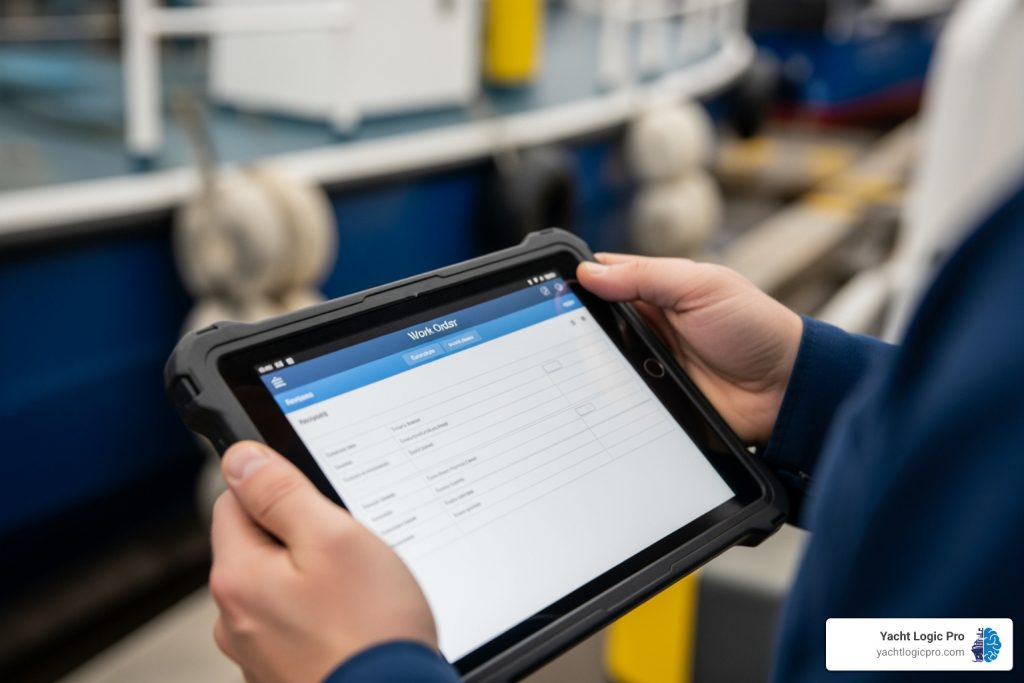
When a vessel comes in for any job, the technician updates the relevant intervals as part of the job close-out process. This turns every service visit into a data collection opportunity that feeds the next outreach cycle.
Automated Service Reminders
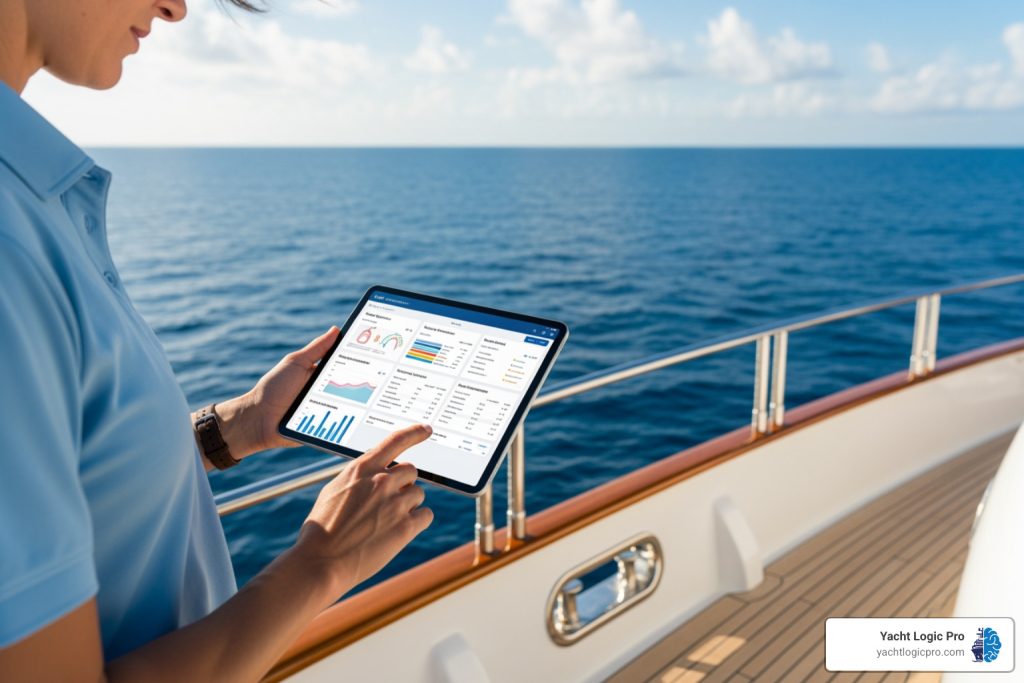
Manual outreach does not scale. A shop managing 40 or 50 active vessels cannot realistically make personal calls ahead of every service interval. Automated reminders — triggered by date or engine hours logged against the vessel profile — replace the follow-up burden with a system that runs in the background.
The reminder does not need to be elaborate. A straightforward message referencing the vessel by name, the specific service due, and a simple way to book an appointment is more effective than a generic marketing email.
Scheduling Integration
Preventive maintenance reminders only convert to revenue when they connect directly to the scheduling workflow. If a boat owner responds to a reminder and cannot easily get on the calendar, the outreach effort is wasted. The reminder system and the scheduling system need to be part of the same workflow, not separate tools that require manual hand-off.
Job Costing on Recurring Services
Preventive maintenance jobs are often underpriced because shops set rates based on the straightforward scenarios and then absorb the cost when complications arise. Tracking actual labor and parts costs on preventive maintenance jobs — not just invoiced amounts — reveals which services are priced correctly and which are eroding margin.
| Marine service businesses that track service intervals at the vessel level and send proactive reminders retain clients at significantly higher rates than shops that wait for customers to call. The difference is not the quality of the work — it is the consistency of the follow-up. |
What to Look for in Marine Maintenance Software
Generic field service platforms can handle job creation and invoicing, but they are not built for marine-specific maintenance tracking. A plumber’s job management tool does not have a field for engine hours, hull identification numbers, or haul-out history. Working around those gaps with custom fields and workarounds costs time and creates gaps.
Marine service businesses that want a functional preventive maintenance system should look for platforms that include:
- Vessel-level profiles with customizable service interval fields
- Automated reminder workflows triggered by date or engine hours
- Service history tied to the vessel, not just the customer account
- Scheduling integration so reminders convert directly to booked appointments
- Mobile access for technicians updating vessel data in the field
Yacht Logic Pro is built specifically for marine service businesses. The platform includes preventive maintenance scheduling, vessel profile management, automated service reminders, and AI-powered job creation — so your shop can run a proactive maintenance operation without managing a stack of disconnected tools.
| See How Yacht Logic Pro Handles Preventive Maintenance Book a live demo at Yacht Logic Pro. |
Frequently Asked Questions: Preventive Maintenance for Marine Service Businesses
What is preventive maintenance scheduling for marine businesses?
Preventive maintenance scheduling is a proactive system that tracks upcoming service intervals for each vessel in your client base — engine hours, seasonal haul-outs, bottom paint cycles, fluid changes — so your shop is driving recurring revenue through planned work rather than reacting to breakdowns.
How do boat repair shops track preventive maintenance efficiently?
The most efficient approach is marine-specific software that stores vessel profiles with individual service histories and sends automated alerts when a vessel is due for service. Generic tools like spreadsheets or QuickBooks lack vessel-level tracking, which forces shops to manage reminders manually — a process that breaks down at scale.
Can marine maintenance software reduce customer churn?
Yes. Shops that send proactive service reminders retain clients at higher rates than shops that wait for customers to call. Automated reminders built into marine business management software create consistent touchpoints that keep your shop top-of-mind and reduce the likelihood of an owner going to a competitor when service is due.