
Why Manual Operations Are Sinking Your Marine Workshop’s Profits
Marine workshop software is a digital management platform that helps boat repair shops, marinas, and marine service centers automate job scheduling, track inventory in real-time, manage customer relationships, and streamline billing—replacing scattered paperwork and disconnected systems with a unified, cloud-based solution that increases efficiency and profitability.
Key capabilities of marine workshop software include:
- Job Management – Digital work orders, technician scheduling, time tracking, and progress monitoring
- Inventory Control – Real-time stock levels, automated purchase orders, and low-stock alerts
- Customer & Vessel CRM – Complete service history, automated reminders, and two-way communication
- Mobile Access – Dockside updates, offline functionality, and real-time data syncing
- Financial Integration – QuickBooks, Xero, and MYOB connections for seamless accounting
If you’re running a marine workshop today, you already know the pain. Lost paperwork costs you hours. Missed reminders lose you customers. Manual quoting leads to costly errors. One business owner described their previous system bluntly: “Eliminating paper and pen from a business has been huge.”
The marine maintenance industry faces unique challenges that generic business software simply can’t address. Between managing multiple jobs on different vessels, tracking specialized parts across locations, coordinating technicians who work both dockside and offshore, and maintaining detailed compliance documentation, the administrative burden can overwhelm even experienced operators.
Time is money in vessel maintenance. Workshops aim to complete repairs in the shortest time with minimum costs, but inefficiencies like chaotic email chains, double bookings, and scattered records drain both. The good news? Digital change doesn’t have to be complicated. Modern marine workshop software adapts to how your business actually works, not the other way around.
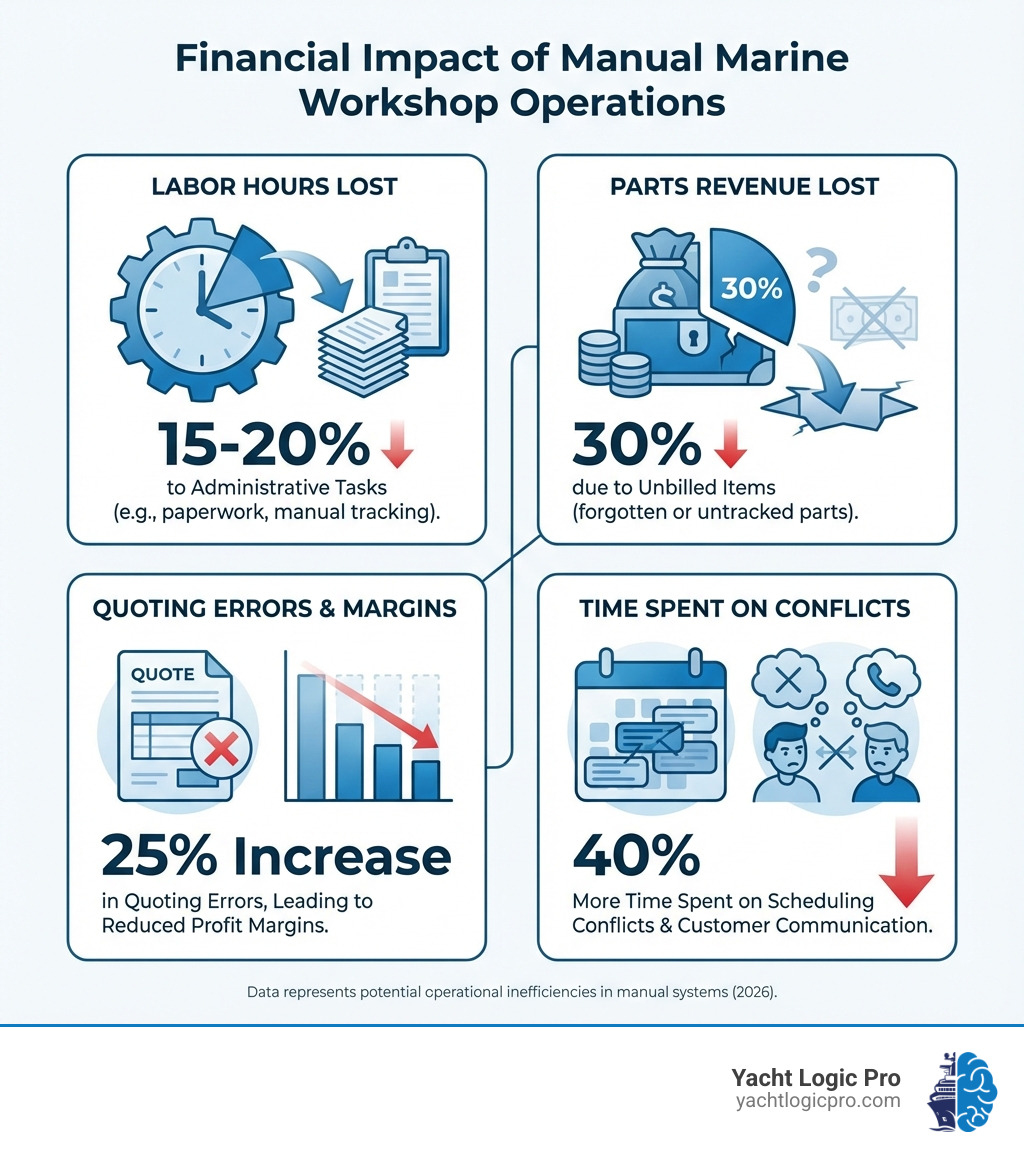
The Modern Marine Workshop’s Dilemma: Common Operational Problems
We understand the daily grind of a marine workshop. It’s often a flurry of activity, where precision and timeliness are paramount. Yet, many of us still grapple with operational challenges that can feel like trying to steer a stormy sea without a compass.
One of the primary frustrations we hear is the sheer volume of scattered records. Imagine trying to find a specific repair history for a yacht from three seasons ago, buried in a filing cabinet or a disorganized desktop folder. It’s a recipe for wasted time and potential miscommunication. “No more guesswork, missed tasks, or scattered records—just a clear, reliable way to manage your workflow,” as one expert put it.
Scheduling conflicts are another major headache. Juggling technician availability, slip space, dry dock schedules, and parts delivery can quickly become a logistical nightmare. Without a centralized system, double bookings and missed deadlines are almost inevitable. This chaos leads to inefficiency and, ultimately, lost revenue.
Inaccurate quoting is a costly problem. Relying on memory or outdated price lists for parts and labor can lead to undercharging for services or overcharging, which damages customer trust. Marine service businesses often struggle with misquoting and manual data entry, which eats into profit margins.
Inventory management, or the lack thereof, can bring operations to a standstill. Not knowing exactly what’s in stock, where it is, or when to reorder can delay repairs significantly. Keeping track of machinery parts and pieces is crucial, but manual systems often fail.
Poor customer communication, exacerbated by chaotic email exchanges and streams of emails, leaves clients feeling out of the loop. They want to know the status of their vessel, and when we can’t provide quick, accurate updates, satisfaction plummets.
Finally, documentation problems and the general administrative burden are relentless. Scheduled maintenance, warranty claims, and safety compliance all require meticulous record-keeping. The hidden costs of manual yacht maintenance tracking are real and significant, impacting our bottom line. These small inefficiencies—like lost paperwork and missed reminders—can cost us significant time and money. It’s clear that the traditional “paper and pen” approach is sinking many marine businesses, making us less efficient and less profitable.
The Digital Anchor: Core Features of Effective Marine Workshop Software
So, how do we tackle these challenges head-on? The answer lies in adopting specialized marine workshop software. This isn’t just about going digital; it’s about leveraging tools designed specifically for our unique industry. Let’s explore the core features that can transform our operations.
Job and Workflow Management
At the heart of any efficient marine workshop is seamless job and workflow management. Marine workshop software allows us to manage large repair jobs and quick fixes with unparalleled flexibility. We can create digital work orders, replacing messy paper trails with clean, accessible records.
Technician scheduling becomes a breeze with features like a booking diary, which allows us to carry over bookings or pre-book for multiple days. This helps us optimize our team’s time and avoid conflicts. Customizable workflows mean we can adapt the software to our specific operational needs, ensuring it works for us, not the other way around.
Time tracking features allow us to log every shift in real-time for clocking in/out, providing accurate data for payroll and billing. We can also manage multiple jobs within a single work order, tracking progress, assigning technicians, and streamlining billing for various services. This unified approach, from first call to final invoice, is essential for streamlining the yacht service workflow.
Inventory and Parts Control
Managing marine parts and accessories is a complex task. With marine workshop software, we gain real-time stock levels, ensuring we know exactly what’s in stock and where it is. This eliminates guesswork and prevents costly delays.
Automated purchase orders can be generated directly from the system to restock on time, preventing shortages and delays with low-stock alerts. We can organize inventory by category, supplier, or location, making it easy to find what we need, when we need it. The software allows us to track parts for boat maintenance across multiple locations, ensuring stock and parts on hand are always accounted for. This level of control is crucial for keeping our workshops running smoothly and profitably.
Customer and Vessel Relationship Management (CRM)
Our customers are the lifeblood of our business, and strong relationships are built on excellent communication and service. Marine workshop software provides a centralized customer and vessel CRM, allowing us to maintain comprehensive customer and vessel profiles. This includes detailed records of past work on vessels, showing exactly what services were performed, when they were done, and how much was charged. This “Boat History” feature is invaluable for building repeat business with better yacht service records.
Automated service reminders can increase leads and conversions by bringing customers back for seasonal maintenance or routine checks. Two-way SMS and email communication features facilitate quick and convenient updates, keeping clients informed about repair milestones and inquiry handling. This fosters trust and loyalty by allowing us to collect and display customer feedback, enhancing their overall experience. We can even implement automated recurring billing for services like storage, simplifying financial aspects and improving cash flow.
Digital Inspections and Compliance
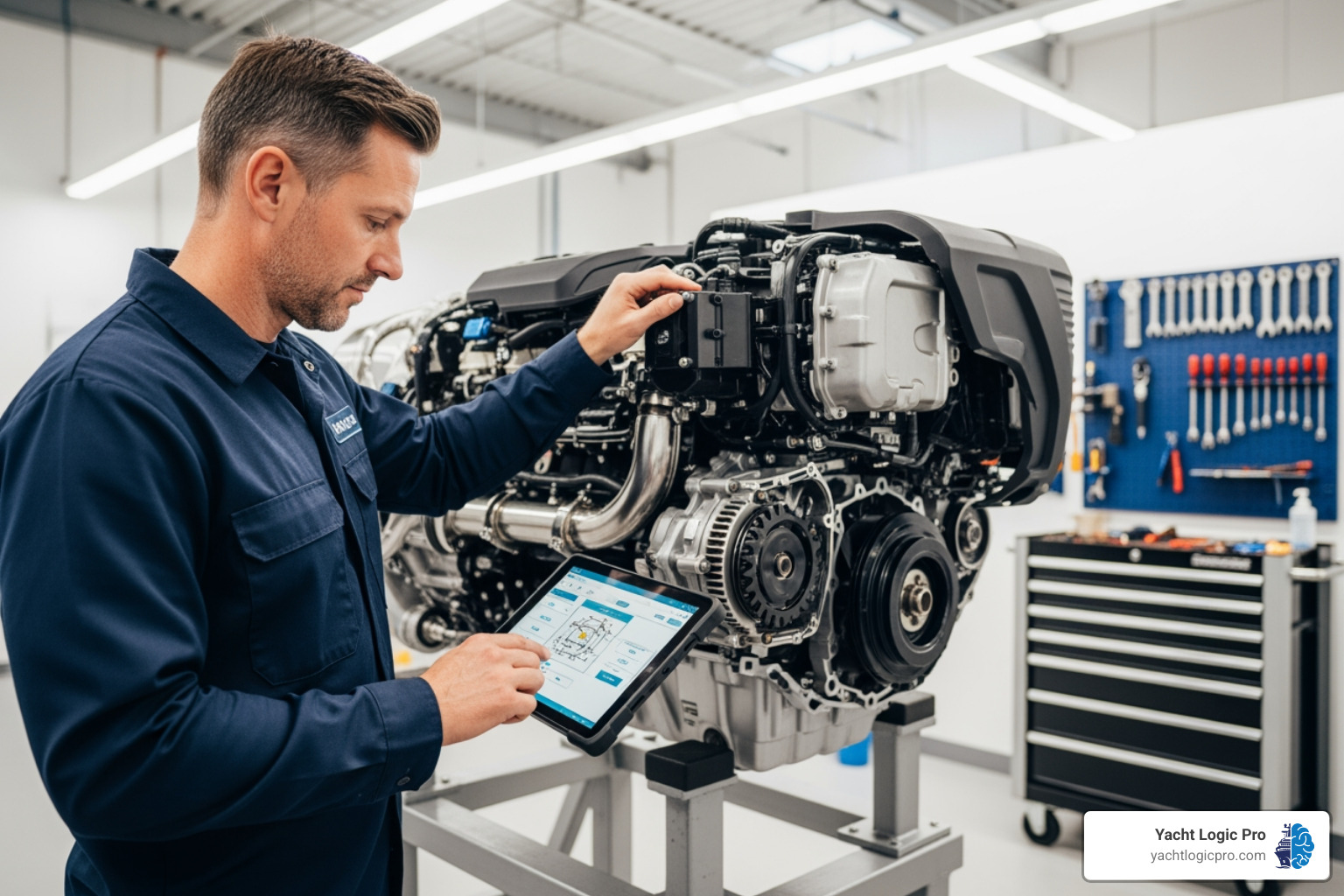
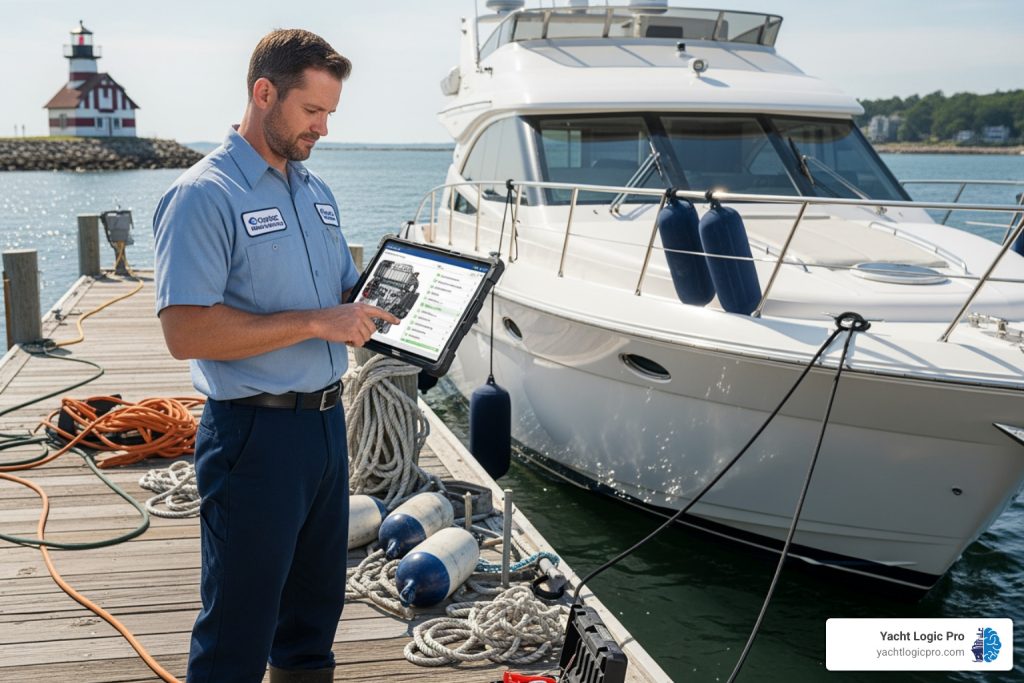
Digital inspections are a game-changer for transparency and efficiency. Technicians can use tablets to perform inspections, taking photos and videos, marking them up, and adding notes. This allows us to impress customers by visually explaining recommended services and getting instant customer authorizations via e-signatures.
Digital checklists ensure no step is overlooked, maintaining consistent quality across all repairs. Pre- and post-service digital waivers streamline operations and safeguard our interests, ensuring compliance with maritime safety standards. The software helps us manage and log unplanned maintenance tasks and warranty claims, creating an official log of all planned maintenance, breakdowns, modifications, and warranty claims. This robust documentation is essential for both internal quality control and external compliance requirements.
Open uping Peak Performance: The Strategic Benefits of Going Digital
Adopting marine workshop software isn’t just about fixing problems; it’s about open uping our workshop’s full potential. The strategic benefits of going digital ripple through every aspect of our business, leading to increased efficiency, higher profitability, and improved customer satisfaction.
By streamlining operations and reducing administrative tasks, we spend less time on paperwork and more time on repairs. This directly translates to increased efficiency. When we optimize our workflows and gain real-time insights, we make data-driven decisions that improve our profit margins. One business owner noted that the software made access to information much, much easier, allowing them to gain key insights and improve their profit margin. Satisfied customers and an efficient workflow are our best guarantee to save tons of money, time, and resources. This is why data-driven yacht service is the future of the marine industry.
The Power of the Cloud and Mobile Access
One of the most transformative aspects of modern marine workshop software is its cloud-based nature and mobile accessibility. We can streamline our marine and boat workshop anywhere, anytime. Whether we’re on the dock, in the service center, or in the back office, a cloud-based solution helps us better understand, manage, and grow our marine repair business.
Mobile apps empower our technicians to manage work orders, capture photos, and process payments right from the dock. This means dockside updates are immediate, and real-time data syncs ensure everyone is working with the most current information. Even in areas with limited connectivity, features like offline mode for technicians working without an internet connection ensure that work continues seamlessly, with data syncing automatically once connected. This flexibility allows us to manage our business from a smartphone or tablet, connecting our entire marine team from dock to dashboard. Cloud-based software eliminates server and connectivity issues, leading to increased accuracy and better record-keeping.
Why Marine-Specific Software Beats Generic Tools
When it comes to managing a marine workshop, generic business tools simply don’t cut it. The nuances of our industry demand a vessel-centric design that understands marine terminology, haul-out scheduling, winterization tracking, and component life tracking.
Specialized marine workshop software is custom for the marine repair industry, highlighting features like dockside service management and boat storage. It allows for vessel identification by hull/power type (e.g., Yacht, Catamaran, Jet Ski, Tender), which is critical for accurate record-keeping and service. Boat storage management can be organized using customizable asset warehouses, a feature rarely found in generic software. Furthermore, some solutions even offer AI tools for managing marine parts and customer communication, further demonstrating how tech that works at sea truly beats generic tools every time. This specialized approach ensures the software adapts to how our marine repair business works, rather than forcing us to adapt to a system not built for our unique needs.
Choosing and Implementing Your Marine Workshop Software
Making the switch to new marine workshop software is a significant step, and we want to ensure it’s a smooth sailing experience. The process involves careful evaluation, thoughtful onboarding, and comprehensive team training.
Key Integrations for a Seamless Operation
A crucial aspect of selecting the right software is its ability to integrate with our existing business tools. For financial management, integration with accounting systems like QuickBooks, Xero, or MYOB is paramount. These integrations make financial transactions and recording easier, ensuring smooth operation between front-end maintenance and back-end financial processes. As one user aptly put it, “Accountants and bookkeepers will love using world-class accounting packages integrated with the software.”
Beyond accounting, we should look for integrations with payment processors for secure online and in-shop payments, and potentially parts supplier catalogs for streamlined ordering. The ability to connect our marine workshop software to existing business tools creates a unified operational view, reducing manual data entry and potential errors. This is a key item on our buyer’s checklist when looking for yacht service management software.
The Implementation Roadmap for Your New Marine Workshop Software
Getting started with marine workshop software should be quick and straightforward. The best solutions offer intuitive design, allowing us to start seeing benefits immediately. Many providers offer free, no-obligation trials or demonstrations, giving us the opportunity to test the waters before committing.
The implementation roadmap typically involves:
- Defining Goals: Clearly outlining what we want to achieve with the new software (e.g., reduce admin time, improve customer communication).
- Free Trials & Demos: Taking advantage of trial periods to ensure the software fits our specific needs.
- Data Migration Planning: Strategizing how to transfer existing customer, vessel, and inventory data.
- Staff Training: Ensuring our team is comfortable and proficient with the new system. Custom onboarding, designed for team adaptation in days, not weeks, is a huge plus. This will help us train new staff faster.
- Phased Rollout: Starting with a smaller team or specific functions before a full workshop implementation.
- Measuring Success: Regularly evaluating if the software is meeting our defined goals.
We’ve found that good support and online tutorials can significantly reduce the learning curve, making the transition much easier for everyone involved.
Frequently Asked Questions about Marine Workshop Software
We often hear similar questions from marine business owners considering a digital change. Let’s address some of the most common ones.
What types of marine businesses benefit most from this software?
The beauty of marine workshop software is its versatility. It’s not just for one type of operation; rather, it’s designed to support a wide array of marine businesses. We’ve seen it transform:
- Repair Shops: Whether we’re repairing engines, electronics, or hulls, the software keeps jobs, parts, and billing organized.
- Maintenance Yards: For comprehensive maintenance tasks, haul-outs, and winterization, the software streamlines scheduling and resource allocation.
- Marinas: From managing slip bookings and recurring storage to processing payments and tracking customer vessels, marinas benefit from unified operations.
- Mobile Technicians: With mobile apps and offline functionality, technicians can manage their work directly from a smartphone or tablet, dockside or offshore.
- Yacht Management Companies: For overseeing multiple vessels and ensuring meticulous maintenance records, the software provides essential oversight.
- Boat Builders: Even during the construction phase, tracking components, labor, and progress can be significantly improved.
Essentially, any business that deals with marine vessels—from Yachts and Catamarans to Jet Skis and Tenders—and requires efficient job management, inventory control, and customer relations will find immense value in this specialized software.
How does marine workshop software handle seasonal demand?
The marine industry is inherently seasonal, with peaks in spring and summer and slower periods in winter, especially in colder climates. Marine workshop software is built to steer these fluctuations with ease:
- Advanced Scheduling: It allows for pre-booking and carrying over jobs, enabling us to smooth out the workflow across seasons. We can plan proactively for busy periods and allocate resources effectively.
- Resource Planning: By tracking technician availability, equipment, and slip space, we can optimize our capacity to meet seasonal demands without overstretching or underutilizing resources.
- Historical Data Analysis: The software provides robust reporting features that allow us to spot seasonal demand trends. This data helps us make informed decisions about staffing, inventory levels, and marketing efforts for the upcoming season.
- Automated Reminders: For regions with distinct seasons, the software can automate reminders for winterization services in the fall and summarization services in the spring, driving repeat business and helping us manage the flow of work.
By leveraging these features, we can handle seasonal demands smoothly, ensuring consistent service quality and maximizing profitability year-round.
Is cloud-based marine workshop software secure?
Security is a paramount concern for any business, especially when dealing with sensitive customer and financial data. Cloud-based marine workshop software providers understand this, employing robust security measures:
- Data Encryption: Our data is typically encrypted both in transit (when it’s moving between our device and the server) and at rest (when it’s stored on the server), making it unreadable to unauthorized parties.
- Secure Cloud Servers: Reputable providers use highly secure data centers with physical security, environmental controls, and redundant power supplies to protect our information.
- Role-Based User Access: We can control who sees what. The software allows us to assign different access levels to our team members based on their roles, ensuring that sensitive information is only accessible to authorized personnel.
- Regular Data Backups: Our data is regularly backed up to prevent loss from hardware failures, cyberattacks, or other disasters. This means our critical business information is always safe and recoverable.
- Disaster Recovery Protocols: In the unlikely event of a major outage, providers have disaster recovery plans in place to quickly restore service and minimize downtime.
While no system is entirely impenetrable, cloud-based solutions from reputable providers often offer a higher level of security than what most individual workshops could achieve with on-premise systems, allowing us to focus on our work with peace of mind.
Conclusion: Charting a Course for a More Profitable Future

The journey from manual chaos to streamlined efficiency in our marine workshops is not just a dream—it’s an achievable reality with the right marine workshop software. We’ve seen how these specialized tools address the daily dilemmas of scattered records, scheduling conflicts, and inefficient inventory, changing them into opportunities for growth.
By investing in digital solutions, we’re not just buying software; we’re investing in increased efficiency, boosting our profitability, and enhancing customer loyalty. We’re embracing a future where data-driven decisions guide our operations, where mobile accessibility keeps our team connected dockside, and where marine-specific features truly cater to the unique demands of our industry.
The time to modernize is now. Let’s accept the digital tide and steer our marine businesses toward a more organized, efficient, and ultimately, more profitable future.
Explore the features that will transform your marine business