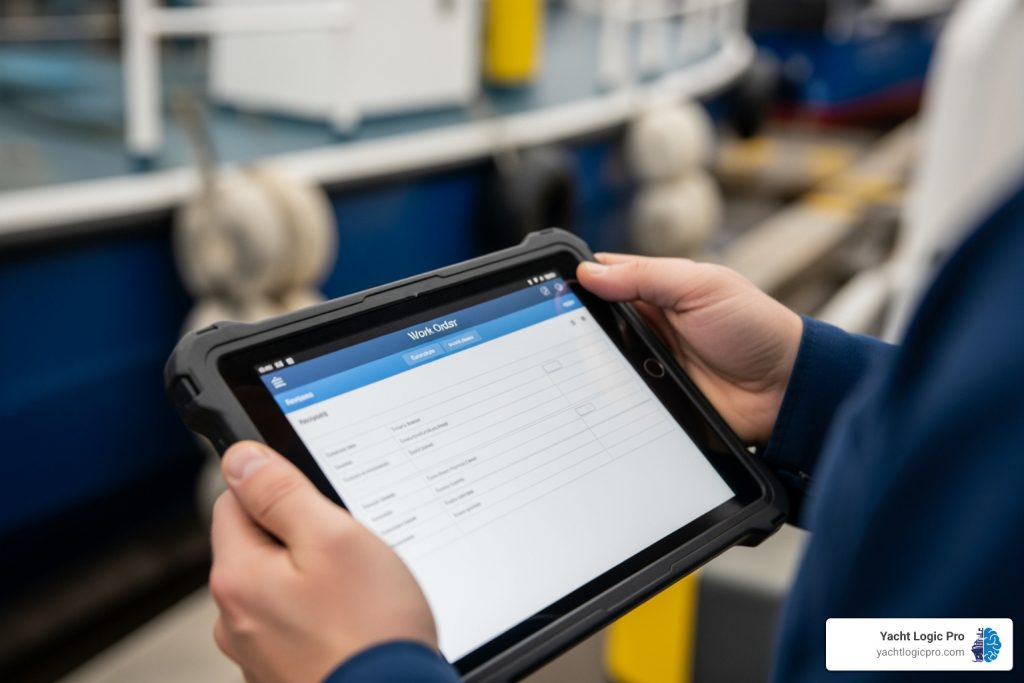

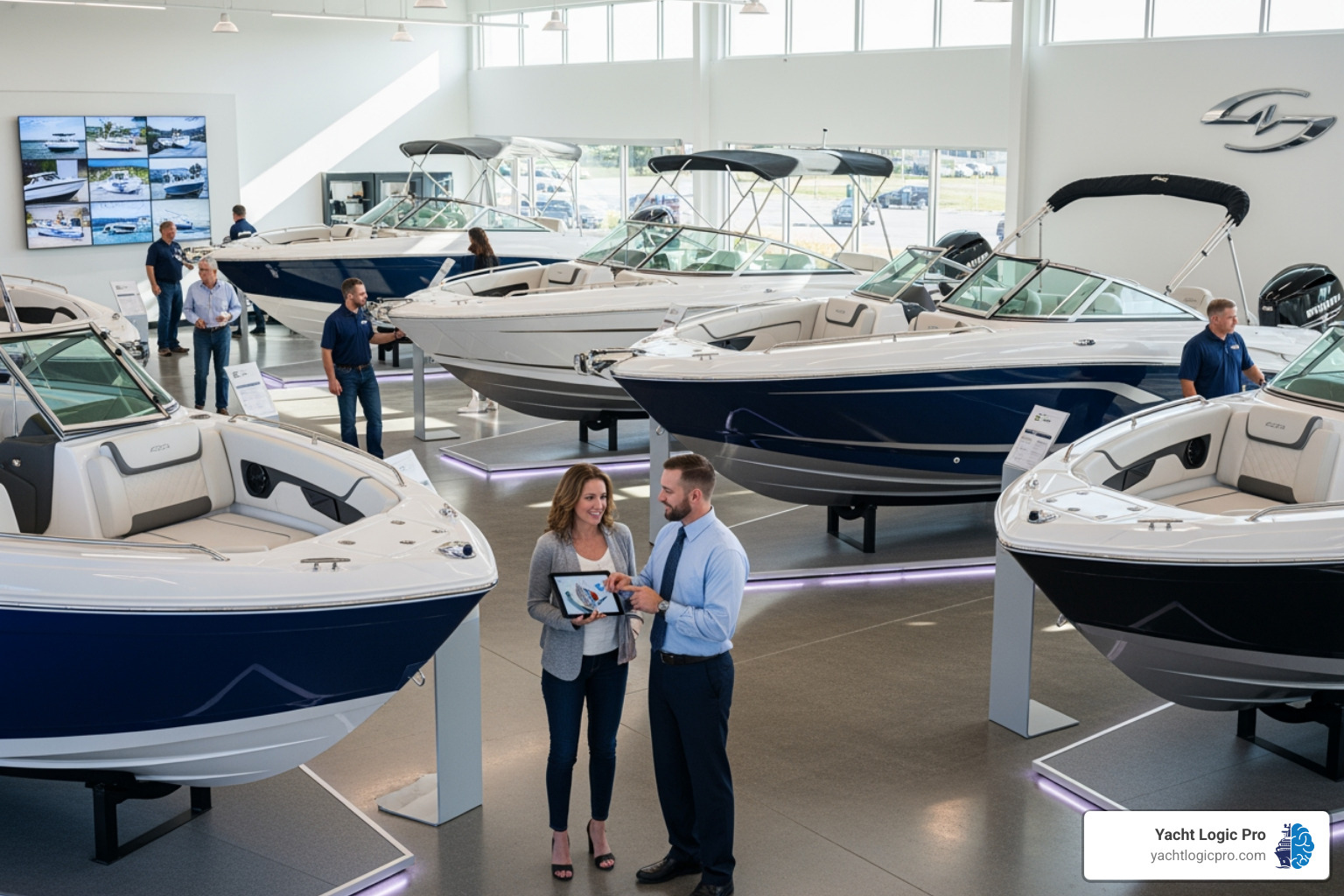
Yacht management software and boat fleet management software solve the same core problem — tracking maintenance, compliance, and cost across more than one vessel from a single dashboard — but fleet-specific needs (charter scheduling, utilization reporting, multi-location technician assignment) go beyond what a single-yacht platform is built for. Here’s how to tell which one your operation actually needs.
What’s actually different between the two
- Yacht management software is typically built around owner reporting for one or a handful of high-value vessels: maintenance history, compliance/certification tracking, and cost transparency for the owner.
- Boat fleet management software is built for operators running many vessels commercially — charter companies, rental fleets, water taxis, tour operators — and needs utilization data, booking/scheduling across the fleet, and centralized parts inventory shared across boats.
Most platforms marketed as “yacht management software” (including the existing marine-management guides on this blog) focus on the service-workflow side for a single shop managing client relationships — not the multi-vessel oversight problem covered here.
Core requirements for multi-vessel operators
| Requirement | Why it matters |
| Cross-vessel maintenance calendar | See every boat’s upcoming service in one view, not one spreadsheet per boat |
| Owner-facing reporting | Yacht management companies need to show owners exactly what was done and what it cost |
| Utilization/booking data | Fleet operators need to know which vessels are earning and which are sitting idle |
| Centralized parts inventory | Shared parts across a fleet shouldn’t live in per-boat notebooks |
| Technician assignment across locations | Techs and vessels aren’t always at the same dock — assignment needs to account for that |
Single-yacht tool vs. fleet-specific tool vs. Yacht Logic Pro
| Single-yacht management tool | Fleet-specific/charter tool | Yacht Logic Pro | |
| Multi-vessel dashboard | Limited | Yes | Yes |
| Owner-facing reporting | Yes | Rare | Yes |
| Preventive maintenance scheduling per vessel | Yes | Sometimes | Yes |
| Centralized inventory across vessels | No | Sometimes | Yes (barcode-based) |
| Two-way QuickBooks Online sync | Sometimes | Rare | Yes |
| Built by marine industry operators | Varies | Varies | Yes |
Why consolidating onto one platform beats per-vessel spreadsheets
Every additional vessel run on its own spreadsheet or notebook is another place maintenance can be missed and another place cost data goes untracked. Multi-vessel operators moving to a single connected platform typically see this most clearly in maintenance tracking — see the hidden costs of manual yacht maintenance tracking for specifics.
Pricing at a glance: Multi-vessel operations typically need multi-user plans — the 3-user annual plan is $149/month, with additional users at $25–50/month and no setup fees.
Book a Demo to walk through a multi-vessel setup, or see the full Features page.
FAQ
What’s the difference between yacht management software and boat fleet management software? Yacht management software typically focuses on owner reporting and maintenance for one or a few high-value vessels, while fleet management software is built for operators running many vessels commercially, with utilization and booking data added on top.
Can one platform manage maintenance across an entire fleet, not just one yacht? Yes — a fleet-capable platform gives you a single cross-vessel maintenance calendar instead of tracking each boat separately.
Does Yacht Logic Pro support multiple vessels under one account? Yes — Yacht Logic Pro supports multi-vessel operations with a shared dashboard, centralized parts inventory, and owner-facing reporting.
How is fleet management software typically priced? Most platforms, including Yacht Logic Pro, price by user rather than by vessel — Yacht Logic Pro’s 3-user annual plan is $149/month, with additional users at $25–50/month.
What reporting does a yacht management company need to show owners? At minimum: completed maintenance history, upcoming scheduled work, and itemized costs per vessel — ideally generated automatically rather than compiled by hand each month.