
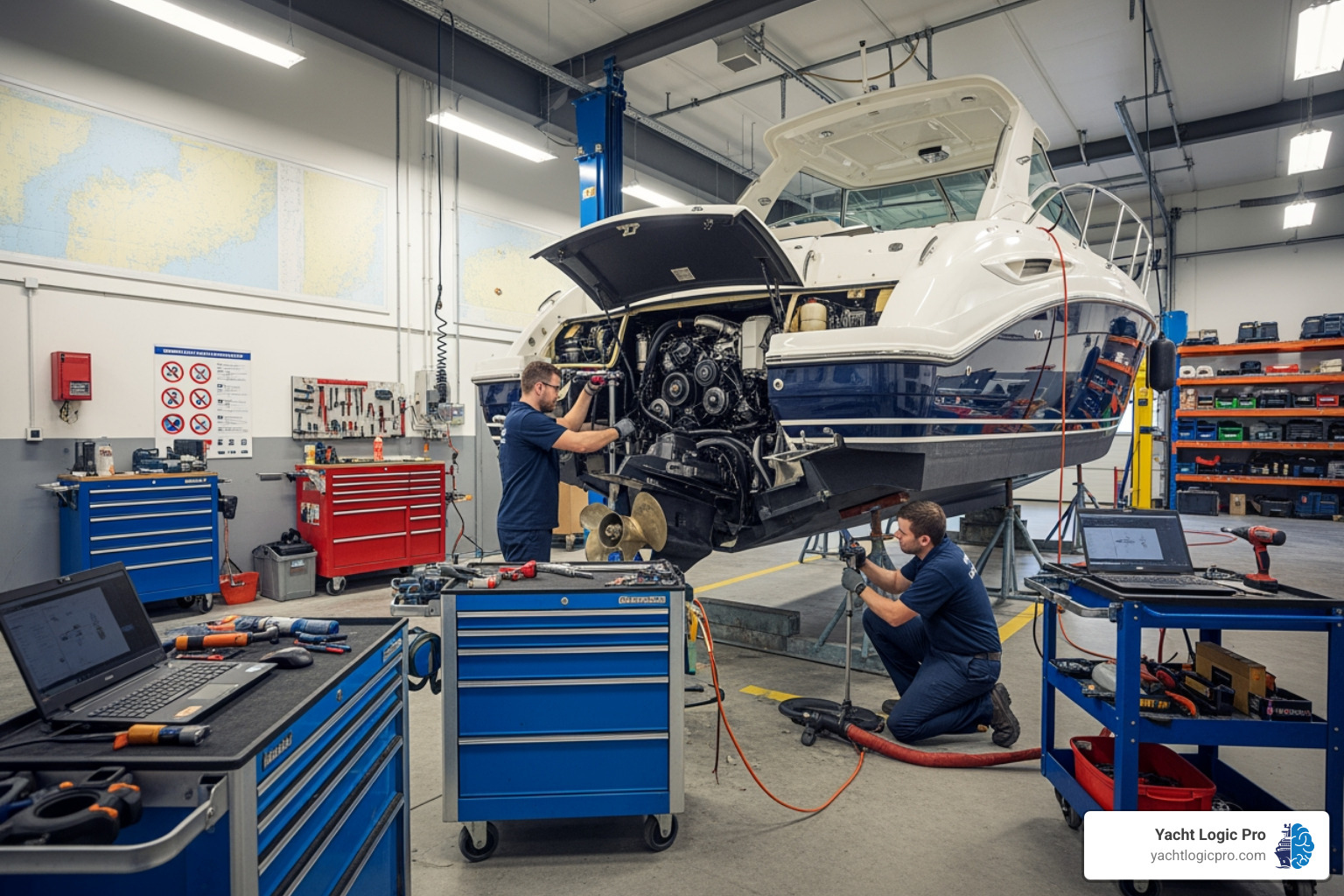
Why Professional Marine Service Is the Backbone of a Successful Marine Business
Professional marine service is comprehensive maintenance, repair, and management of vessels by certified technicians using specialized tools, documented processes, and modern operational systems. It includes mechanical systems, electrical work, hull repair, electronics installation, and preventive maintenance—all delivered through structured workflows that ensure accountability, quality, and profitability.
Key Components of Professional Marine Service:
- Mechanical & Electrical Systems – Engine service, generator maintenance, HVAC, electrical refits, ABYC compliance
- Hull & Structural Work – Fiberglass repair, painting, carpentry, teak refinishing, bottom painting
- Specialized Services – Electronics installation, rigging inspection, hydraulic systems, navigation upgrades
- Operational Infrastructure – Job scheduling, inventory tracking, technician management, digital service records
- Safety & Compliance – Certified technicians, factory training, environmental standards, insurance requirements
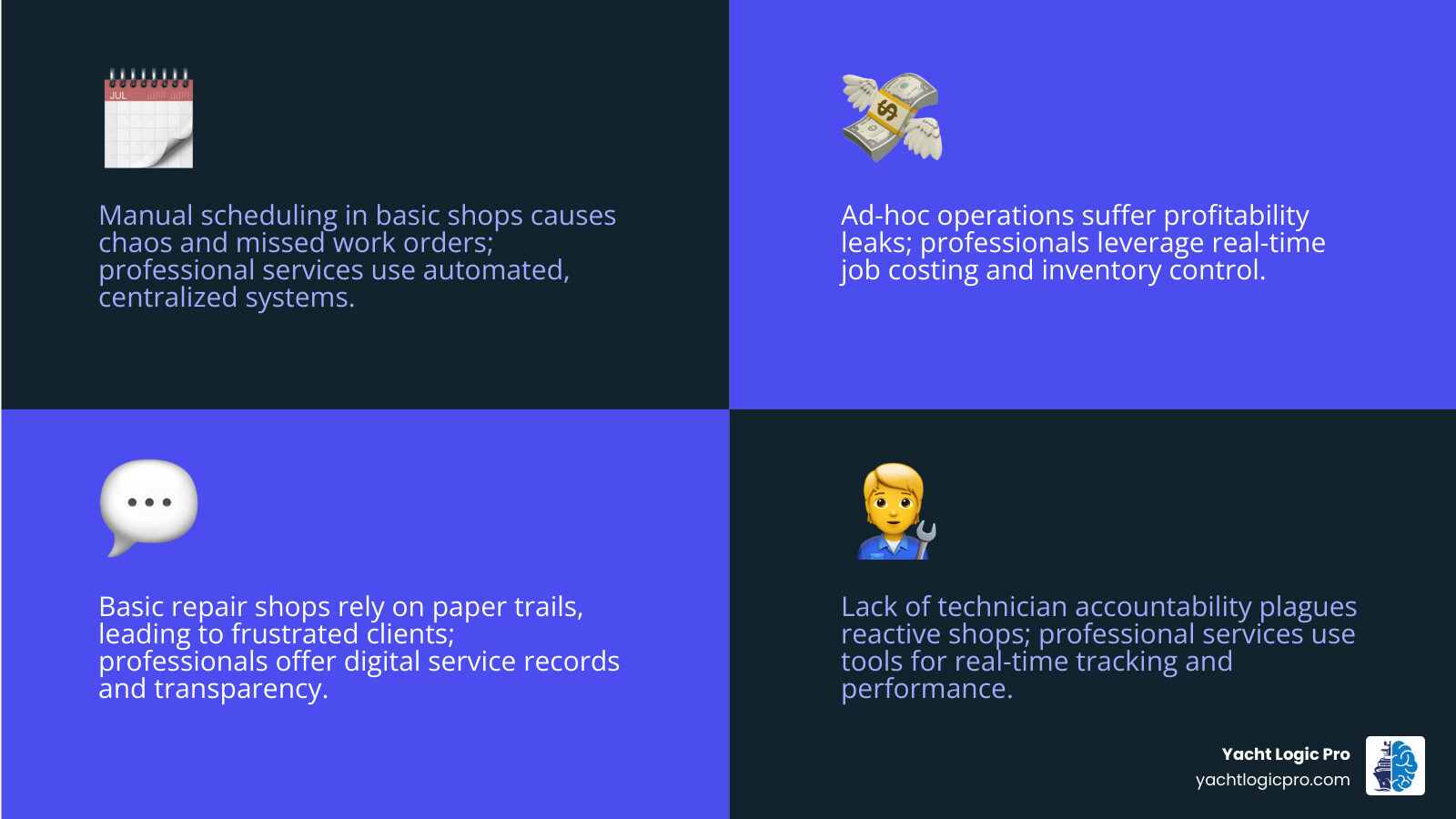
If you manage a marine service business, you already know the struggle: scheduling chaos, missed work orders, unbilled labor, lost parts, and frustrated clients. A technician arrives at the dock without the right parts. A high-value job sits unfinished because nobody tracked the hours. A customer calls asking for their service history, and you’re digging through paper files.
This isn’t a technical problem. It’s a systems problem.
The difference between a reactive repair shop and a professional marine service operation isn’t just wrench time—it’s the infrastructure behind it. It’s knowing which jobs are profitable. It’s having real-time visibility into technician schedules. It’s tracking every part, every hour, and every invoice without manual data entry.
Marine service companies with over 50 years of experience, like Marina Shipyard (family-owned since 1964), didn’t survive by accident. They built reputations on reliability, transparency, and operational consistency. But longevity alone isn’t enough anymore. The industry is shifting from clipboard-based operations to system-driven workflows that reduce errors, improve profitability, and scale without chaos.
I’m Kevin Kates, founder of Yacht Logic Pro, and I’ve spent years helping marine service businesses modernize their operations through strategic planning and software built specifically for professional marine service teams. The best operators I’ve worked with don’t just fix boats—they run tight, profitable businesses with clear processes and measurable outcomes.
Professional marine service vocab explained:
The Spectrum of a Modern Professional Marine Service Operation
When we talk about professional marine service, we’re discussing a vast and intricate ecosystem of expertise. It’s far more than just fixing what’s broken; it’s about anticipating needs, performing intricate diagnostics, and ensuring every component of a vessel, from a jet ski to a commercial yacht, operates flawlessly. Our goal is to keep boats on the water, not stuck in the yard.
A truly comprehensive professional marine service provider offers a wide array of services, catering to various vessel types and their unique demands. This requires not just skilled hands, but also a robust system to manage the complexity of diverse jobs, parts, and technician specializations.

Core Mechanical and Electrical Systems
The heart of any vessel lies in its mechanical and electrical systems. For us, this means offering meticulous care for everything that powers and controls a boat. This includes routine engine service, complex repowering projects, and maintenance for generators, ensuring a reliable power supply. We handle everything from the smallest outboard motor to large diesel inboards, including pod drives, transmissions, and critical shaft and propeller work.
For instance, companies like Boston Marine Services offer comprehensive services including mechanical systems for diesel inboards, outboards, and generators, ensuring vessels are running smoothly and ready for the season ahead. A look at comprehensive service offerings shows the depth of expertise required. Our technicians often service specific high-end engine and HVAC brands such as Yanmar, Caterpillar, Volvo, Mercury, Cummins, Yamaha, Marine Air Systems, and Cruisair, requiring specialized training and certification.
On the electrical side, we focus on ABYC compliance, which is crucial for safety and reliability. This involves everything from charging systems and electrical refits to advanced electronics and network installations. Whether it’s troubleshooting AC/DC systems, shore power, distribution panels, or lighting, our electrical work adheres to the highest industry standards.
Hull, Deck, and Structural Integrity
Beyond the engine room, a vessel’s structural integrity is paramount. This encompasses a range of services designed to protect, maintain, and improve the boat’s exterior. Fiberglass and composites work is a staple, from minor gelcoat repairs and cosmetic fixes to major structural fabrication. Painting and refinishing services, including Awl-Grip hull finishes and anti-foulant bottom paint, not only make a vessel look its best but also protect it from the harsh marine environment.
Carpentry and joinery, teak refinishing, and even specialized bottom blasting are all part of maintaining a vessel’s aesthetic and structural health. Pikes Bay Marina, for example, details an extensive list of hull and deck repairs, including gelcoat, fiberglass, painting, bottom painting, blasting, and detailing. See how service centers categorize offerings to understand the scope. These services are vital for preventing deterioration and preserving the vessel’s value.
Specialized and High-Tech Services
The modern vessel is a hub of advanced technology. This means our professional marine service extends into highly specialized areas like electronics and navigation installation, intricate AV/IT systems, and complex rigging inspection and service for sailboats. We install and troubleshoot state-of-the-art marine technologies, from replacing transducers and building NMEA networks to integrating GPS and upgrading stereo systems.
Hydraulic systems, which power everything from stabilizers and hatches to dinghy lifts and thrusters, also demand specialized technical skill for maintenance and repair. Our technicians are adept at working with cutting-edge equipment and ensuring these systems function seamlessly. The need for such specialized expertise means our technicians must constantly update their skills and use the latest digital tools to stay ahead. Digital Tools Every Marine Technician Should Be Using in 2025 highlights this evolving demand.
We handle diverse vessels, from recreational yachts and powerboats to commercial boats and even jet skis, each with its unique service requirements. For jet skis, this can mean specialized summerizing, winterizing, oil changes, impeller changes, and pump services. For larger commercial vessels, it involves more complex engine overhauls, regulatory compliance inspections, and advanced system diagnostics. Managing this variety effectively requires sophisticated scheduling, precise inventory management, and accessible service histories—all areas where a robust software solution becomes indispensable.
The Business Case: Professionalism, Profitability, and Vessel Longevity
Choosing professional marine service isn’t just about getting the job done; it’s a strategic decision that impacts a vessel’s longevity, performance, and ultimately, its value. For marine service businesses, it’s about establishing a reputation for excellence that drives profitability and customer satisfaction. The benefits of choosing professional services over DIY maintenance are clear: expertise, efficiency, and peace of mind. While DIY might seem cost-effective initially, it often leads to more expensive repairs down the line due to a lack of specialized tools, knowledge, or time.

Maximizing Uptime and Asset Value
One of the primary benefits of professional marine service is its focus on preventive maintenance schedules. This proactive approach is crucial for reducing costly unplanned repairs and breakdowns, ensuring vessels spend more time on the water and less time in the service bay. By adhering to a rigorous maintenance plan, we help maximize a vessel’s uptime, which is vital for both recreational enjoyment and commercial operations.
Regular, expert care also significantly improves a vessel’s resale value. A well-documented service history, easily accessible through digital records, proves meticulous maintenance and instills confidence in potential buyers. This can translate into substantial savings and higher returns for vessel owners. For marine businesses, offering this level of service positions us as a trusted partner, ensuring outstanding operational readiness and client satisfaction. We understand the hidden costs of manual tracking that can undermine these efforts. The Hidden Costs of Manual Yacht Maintenance Tracking are often far greater than the investment in professional service.
The True Cost: Job Costing vs. Long-Term Savings
Understanding the typical costs associated with professional marine service is essential, but it’s equally important to compare these to potential long-term savings. While professional services involve an upfront cost, they often prevent more significant expenses down the road. For example, a thorough mechanical inspection or regular engine tune-up can identify minor issues before they escalate into major, expensive failures. Pikes Bay Marina’s labor rates, for instance, range from $140/hr to $195/hr for emergency service, while haul and launch can be $12/linear foot. These figures reflect the specialized skill and equipment required.
For marine service businesses, accurate job costing is the bedrock of profitability. This involves carefully tracking technician hours, managing parts inventory, and ensuring every expense is accounted for. Without precise data, it’s easy for jobs to run over budget or for revenue to be lost due to inefficient processes. Our experience shows that the initial outlay for professional service is often offset by the peace of mind that comes with expert care, and the prevention of catastrophic failures. Data-driven insights are critical for this. Why Data-Driven Yacht Service is the Future of the Marine Industry emphasizes how this approach helps avoid costly comeback jobs and builds a reputation for quality.
Expertise and Liability
Professional marine service technicians possess specialized expertise that is honed through years of experience and continuous training. Many are factory-trained and certified for specific engine brands (like Mercury, Mercruiser, Yamaha, Yanmar, etc.), electrical systems, and marine technologies. For instance, many long-standing service centers boast over 50 years of experience and are certified dealers for major brands like Mercury, servicing multiple brands dating back decades. Boston Marine Services also highlights its decades of craftsmanship, and Pikes Bay Marine Service Center prides itself on factory-trained, certified technicians. This level of qualification ensures that complex repairs and installations are performed correctly, adhering to industry standards like ABYC compliance.
This expertise also significantly reduces operational liability for both the service provider and the vessel owner. When certified professionals perform work, the risk of errors that could lead to accidents or further damage is minimized. Furthermore, detailed service records from a professional provider can be invaluable for insurance claims or warranty purposes. For marine businesses, investing in staff training and using systems that track certifications ensures we meet and exceed industry standards, reinforcing our commitment to quality and safety. How Yacht Logic Pro Helps Marine Businesses Train New Staff Faster is a testament to the importance of skilled and knowledgeable teams.
The Digital Command Center: How Technology Lifts Professional Marine Service
In today’s marine industry, technology isn’t just a convenience; it’s a critical differentiator for professional marine service providers. The efficiency, accuracy, and scalability of our operations depend heavily on the digital tools we employ. We’ve seen how marine businesses struggle with the limitations of outdated, manual processes. The role of technology and modern equipment in professional marine services has evolved from simple diagnostic tools to comprehensive software platforms that manage every aspect of our business.
From Whiteboards to Workflow Automation
The chaos of manual scheduling is a familiar pain point for many marine service managers. Relying on whiteboards, spreadsheets, or even sticky notes for job assignments, technician availability, and project timelines inevitably leads to missed appointments, double bookings, and inefficient use of resources. This directly impacts profitability and client satisfaction. We understand that marine operators need solutions that streamline their daily operations. Why Most Marine Service Operations Fail at Scheduling and How to Fix It digs into these challenges.
Modern professional marine service leverages workflow automation to centralize work orders, dispatch technicians efficiently, and track job progress in real-time. This means less time chasing paper and more time delivering quality service. From the initial client call to the final invoice, every step of the service workflow is streamlined and managed digitally, eliminating bottlenecks and improving communication. From First Call to Final Invoice: Streamlining the Yacht Service Workflow is a prime example of how integrated systems transform operations.
The Power of Marine-Specific Software
While many generic field service management tools exist, they often fall short when applied to the unique demands of the marine industry. Marine-specific software is designed with the intricacies of vessel maintenance, diverse job types, and specialized inventory in mind. It accounts for factors like weather delays, mobile technician needs, and the specific parts required for various boat systems. Tech That Works at Sea: Why Marine-Specific Software Beats Generic Tools Every Time explains why a custom solution is superior.
Key features of powerful marine-specific software include:
- Job Scheduling: Intuitive drag-and-drop interfaces for efficient resource allocation and real-time visibility into technician availability.
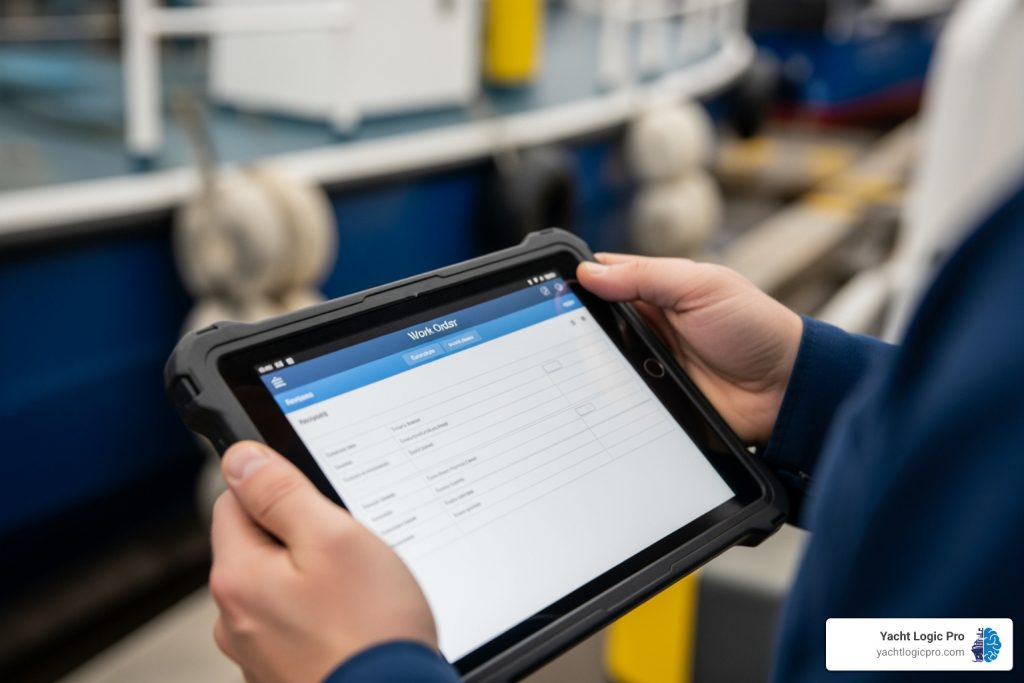
- Mobile Technician App: Empowers technicians with on-site access to work orders, vessel history, parts lists, and the ability to capture photos and digital signatures.
- Inventory Management: Tracks every part, its location, cost, and usage across multiple vessels and warehouses, minimizing loss and optimizing stock levels.
- Job Costing: Provides precise data on labor, parts, and overhead for every job, ensuring accurate invoicing and profitability analysis.
- Invoicing: Generates professional invoices quickly and accurately, often integrating with accounting software.
Choosing the right software is a critical business decision. What to Look For in Yacht Service Management Software: A Buyer’s Checklist offers guidance on selecting a platform that truly meets the needs of a professional marine service operation.
Connecting the Entire Team: From Dock to Dashboard
Effective communication is the lifeblood of any successful marine service business. With technicians spread across different docks, yards, or even out at sea, real-time communication and centralized data access are paramount. Modern marine service software facilitates this by providing a unified platform where everyone, from the service manager to the dockside technician, can access the information they need.
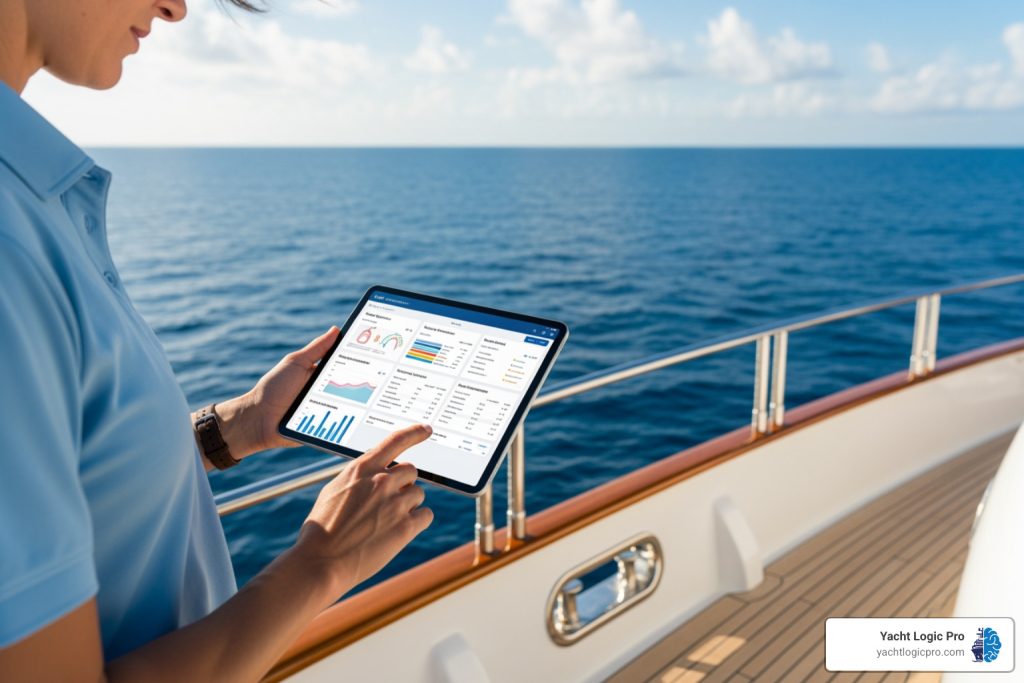
Our software ensures mobile access for technicians, allowing them to update job statuses, order parts, and communicate with the office directly from their tablets or smartphones. Service managers gain a comprehensive overview of all ongoing jobs, technician locations, and inventory levels through a centralized dashboard. This level of connectivity improves team collaboration, improves accountability, and ensures that critical information is never lost. From Dock to Dashboard: How Yacht Logic Pro Connects Your Entire Marine Team illustrates how this integration transforms operational efficiency, making us a truly professional marine service provider.
Building a Bulletproof Reputation: Client Trust and Retention
For professional marine service providers, our reputation is everything. It’s what drives repeat business, fosters client loyalty, and generates valuable referrals. In an industry built on trust, how we interact with clients, manage their expectations, and provide transparency in our work is just as important as the quality of the repairs themselves. Modern operational systems play a crucial role in building and maintaining this trust.
Transparency Through Digital Service Records
Today’s yacht clients expect digital convenience and transparency. They want to know the status of their service, access historical records, and understand the work being performed on their valuable assets. Your Yacht Clients Expect Digital: Is Your Service Business Ready? highlights this evolving expectation.
By providing detailed digital service histories, we build unparalleled trust with our clients. Imagine a client needing to sell their vessel; a comprehensive, accessible digital record of every maintenance task, repair, and upgrade is a powerful selling point. It demonstrates meticulous care and professionalism. This level of transparency not only satisfies clients but also creates a lasting relationship. How to Create Repeat Business with Better Yacht Service Records explains the strategic advantage of this approach.
Ensuring Quality and Customer Satisfaction
A hallmark of professional marine service is a high “first-time fix” rate. This means diagnosing and resolving issues correctly the first time, minimizing the need for callbacks and additional service visits. This efficiency saves both our clients and us time and money. Consistent communication is also key; keeping clients informed about the progress of their service, any unexpected issues, and estimated completion times manages expectations and reduces anxiety.
We strive to set clear expectations from the outset, providing detailed quotes and explaining the scope of work. Utilizing client feedback to continuously improve our operations is also vital. This commitment to quality and customer satisfaction is what turns one-time customers into long-term partners. For boatyards looking to grow, scaling without sacrificing quality is paramount. How Yacht Logic Pro Helps Boatyards Scale Without Sacrificing Quality by enabling consistent processes and quality control.
Meeting Modern Standards and Sustainability
A truly professional marine service provider also addresses environmental concerns and sustainability. This includes adhering to local, state, and federal environmental regulations, implementing responsible waste disposal protocols, and even participating in programs like the “Certified Clean Marina” initiative. Marina Shipyard, for example, proudly states its status as a Certified Clean Marine Member. These practices not only protect our precious marine environments but also serve as a strong trust signal for environmentally conscious clients.
While our software doesn’t directly manage environmental waste, it enables us to track parts usage, manage inventory more efficiently, and document compliance procedures, which indirectly supports sustainability efforts. For example, by optimizing routes for mobile technicians or minimizing unnecessary trips to retrieve parts, we reduce our carbon footprint. Finding a reliable, professional marine service provider committed to these standards is increasingly important for vessel owners. You can often find such committed providers through their local associations or by checking their online presence, for example, by searching for a reputable local yard.
Conclusion: The Future of Marine Service is System-Driven
The definition of a professional marine service has evolved. It’s no longer just about the technical skill of the individual mechanic, but about the operational systems that support and amplify that skill. While decades of craftsmanship, like those boasted by Boston Marine Services, remain invaluable, they must now be paired with modern efficiency. The marine service industry is changing, and the leaders are those who accept technological solutions to streamline their operations.
Efficiency, profitability, and client trust are no longer aspirational goals; they are built on a foundation of technology and process. Marine service businesses that accept digital tools for job scheduling, inventory management, technician tracking, and client communication will lead the industry. They will be the ones capable of scaling without chaos, maintaining high-quality service, and maximizing their team’s potential. If your team is ready to move beyond spreadsheets and manual tracking, a platform like Yacht Logic Pro provides the operational backbone to scale your business, manage your technicians, track your inventory, and ultimately, boost your profits by unifying operations and eliminating manual data entry.
See how a modern marine service platform can transform your operations.