
The Evolution of Maintenance: From Reactive to Intelligent
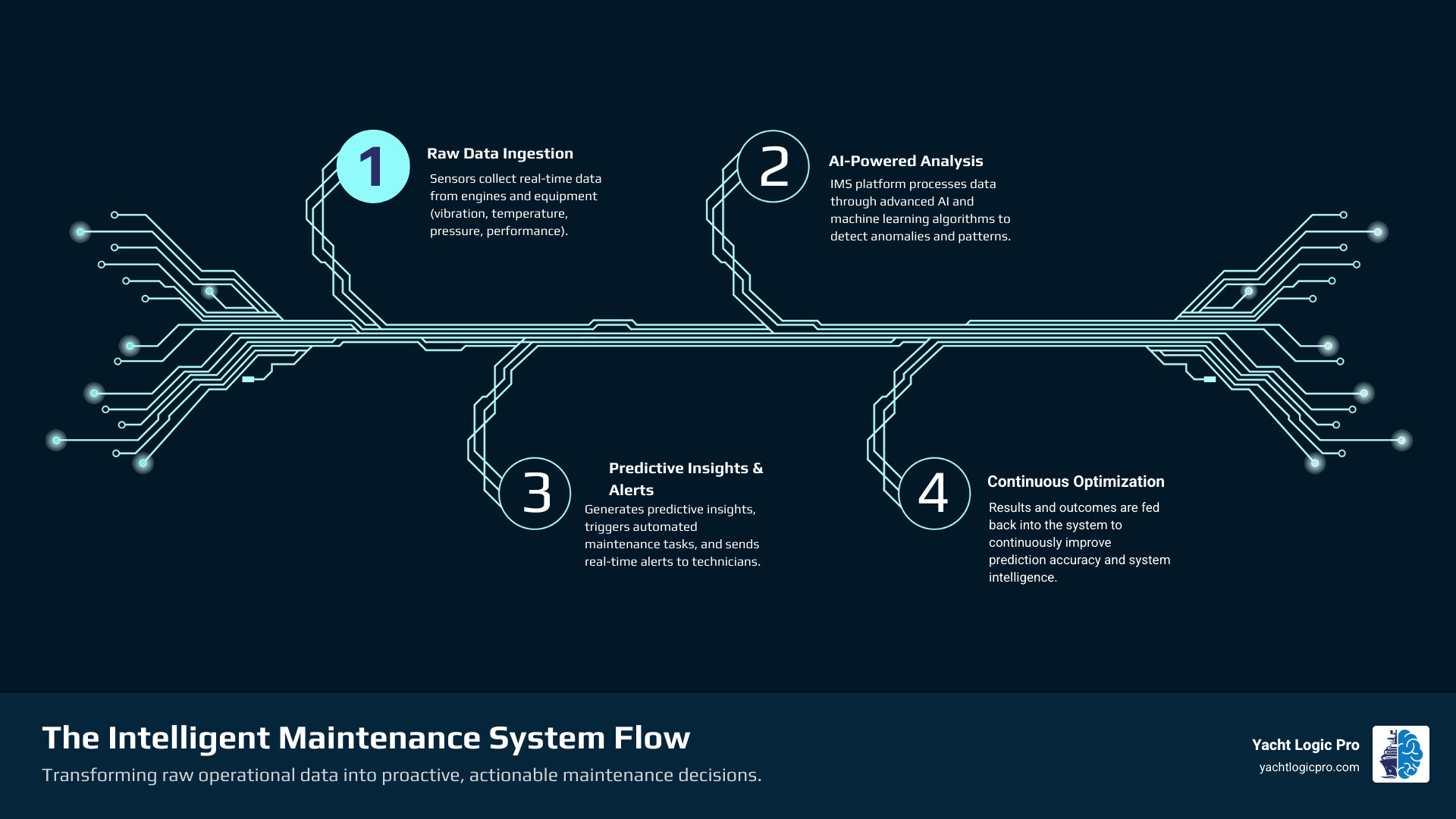
An Intelligent Maintenance System (IMS) is a data-driven platform that uses collected information from machinery—combined with AI, IoT sensors, and advanced analytics—to predict and prevent equipment failures before they occur. Rather than reacting to breakdowns or following rigid schedules, an IMS transforms raw operational data into actionable maintenance decisions that maximize uptime and reduce costs.
Key components of an IMS include:
- Data Collection: Real-time monitoring through sensors measuring vibration, temperature, pressure, and performance
- Data Analysis: AI and machine learning algorithms that identify patterns and predict failures
- Decision Support: Automated alerts and maintenance recommendations based on actual equipment condition
- Continuous Learning: Systems that improve predictions over time as more data is collected
The vision driving this technology is simple yet transformative: achieve near-zero breakdown performance. Traditional “fail and fix” approaches cost marine businesses thousands in emergency repairs, lost productivity, and damaged customer relationships. Even scheduled preventive maintenance often means unnecessary interventions or missed early warning signs.
Consider this: a worn ball screw in a CNC machine can shut down an entire production line. With manual tracking, that failure might go unnoticed until it’s catastrophic. An intelligent system would detect the subtle vibration changes weeks in advance, allowing you to schedule repairs during planned downtime.
For marine business owners struggling with fragmented information, manual data entry, and costly surprises, this represents a fundamental shift. You’re no longer guessing when to service an engine or hoping a critical pump doesn’t fail mid-job. The system tells you—with data—exactly what needs attention and when.
The world of maintenance has come a long way from the days of simply waiting for something to break before fixing it. For many years, the standard approach was often a frantic scramble to repair equipment after a catastrophic failure, a strategy we affectionately call “fail and fix.” As industries evolved, so too did our understanding of equipment longevity, leading to more structured but still somewhat rigid methods. Today, with the advent of the Intelligent Maintenance System, we’re witnessing a complete paradigm shift, moving us firmly into a “predict and prevent” era.
This change is driven by a vision to achieve near-zero breakdown performance. Imagine a world where your critical equipment rarely, if ever, experiences an unexpected failure. That’s the promise of intelligent maintenance. It’s about moving beyond assumptions and generic schedules to a truly data-driven, proactive stance.
| Maintenance Strategy | Key Characteristic | Cost Impact | Downtime Impact | Strategy Basis |
|---|---|---|---|---|
| Reactive (“Fail and Fix”) | Repairs after failure | High (emergency) | High (unplanned) | Failure |
| Preventive (Calendar-based) | Scheduled, time-based | Moderate | Low (planned) | Time/Usage |
| Predictive (Condition-based) | Repairs based on condition | Low to Moderate | Low (planned) | Condition monitoring |
| Intelligent Maintenance | AI-driven, proactive | Very Low | Very Low (optimized) | Data analysis, AI prediction |
Traditional vs. Smart Maintenance Approaches
Let’s face it, traditional maintenance often felt like a guessing game. Many companies still operate with fragmented information, relying on paper logs, disparate spreadsheets, or even just tribal knowledge passed down through generations of technicians. This often leads to manual data entry, which, as we all know, is ripe for errors and can be incredibly time-consuming.
The problem with these older methods is that they often result in unnecessary interventions. Imagine replacing a perfectly good part just because the calendar says it’s time, or worse, missing the subtle signs of impending failure because you’re not looking at the right data. This “maintenance by calendar” approach ignores the actual condition of your systems and can lead to both wasteful spending and unexpected downtime.
Smart maintenance, on the other hand, is about organizing maintenance work more intelligently. It uses comprehensive data from production to precisely determine when repairs or maintenance should be carried out. This means we’re continuously recording and evaluating the actual condition of machines using IoT sensors to proactively prevent breakdowns. This shift empowers us to make data-driven decisions that optimize resource allocation, extend equipment lifespan, and ultimately reduce operational costs. If you want to dive deeper into how data is revolutionizing marine services, check out our article on Why Data-Driven Yacht Service is the Future of the Marine Industry.
CMMS vs. Intelligent Maintenance Management Platforms (IMMP)
For years, Computerized Maintenance Management Systems (CMMS) were the gold standard. A CMMS automates and streamlines many activities, primarily serving as a digital record-keeping system for assets, work orders, inventory, and maintenance schedules. It brought much-needed order to the chaos of manual processes. However, as useful as CMMS platforms are, they primarily help us organize what happened and what needs to happen based on predefined rules. They are essentially sophisticated databases.
But the world has moved on. The rise of Industry 4.0 brought with it a demand for something more, something truly intelligent. This is where the Intelligent Maintenance Management Platform (IMMP) steps in. An IMMP is established as the latest technology for maintenance management, born out of the need for greater flexibility, intelligence, and connectivity.
The core difference? While a CMMS records information, an IMMP processes data, recognizes trends, and makes predictions and suggestions on its own. IMMPs are “living platforms” that constantly feed and feed back on the data they collect. They leverage Artificial Intelligence (AI) to analyze vast amounts of data, finding valuable optimization opportunities and delivering intelligent predictions. This capability transcends mere record-keeping; it offers proactive, actionable insights.
Think of it this way: a CMMS tells you when your yacht’s engine should have its next service based on hours logged. An IMMP, however, analyzes real-time vibration data, oil analysis results, and operating temperatures, then tells you that while the service is still two weeks away, a specific bearing is showing early signs of wear and should be inspected next week to prevent a larger issue. This kind of predictive power and AI-powered suggestions are what set IMMPs apart, making them the maintenance management system of the future. Understanding the nuances between various software solutions is crucial, and our guide on What to Look For in Yacht Service Management Software: A Buyer’s Checklist can provide further clarity.
The Core Architecture of an Intelligent Maintenance System
At its heart, an Intelligent Maintenance System is a sophisticated symphony of interconnected components, all working in harmony to collect, process, and interpret data, ultimately leading to smarter maintenance decisions. It’s far more than just a collection of sensors; it’s a complete ecosystem designed to give us a real-time pulse on our assets.
Data Collection and Change
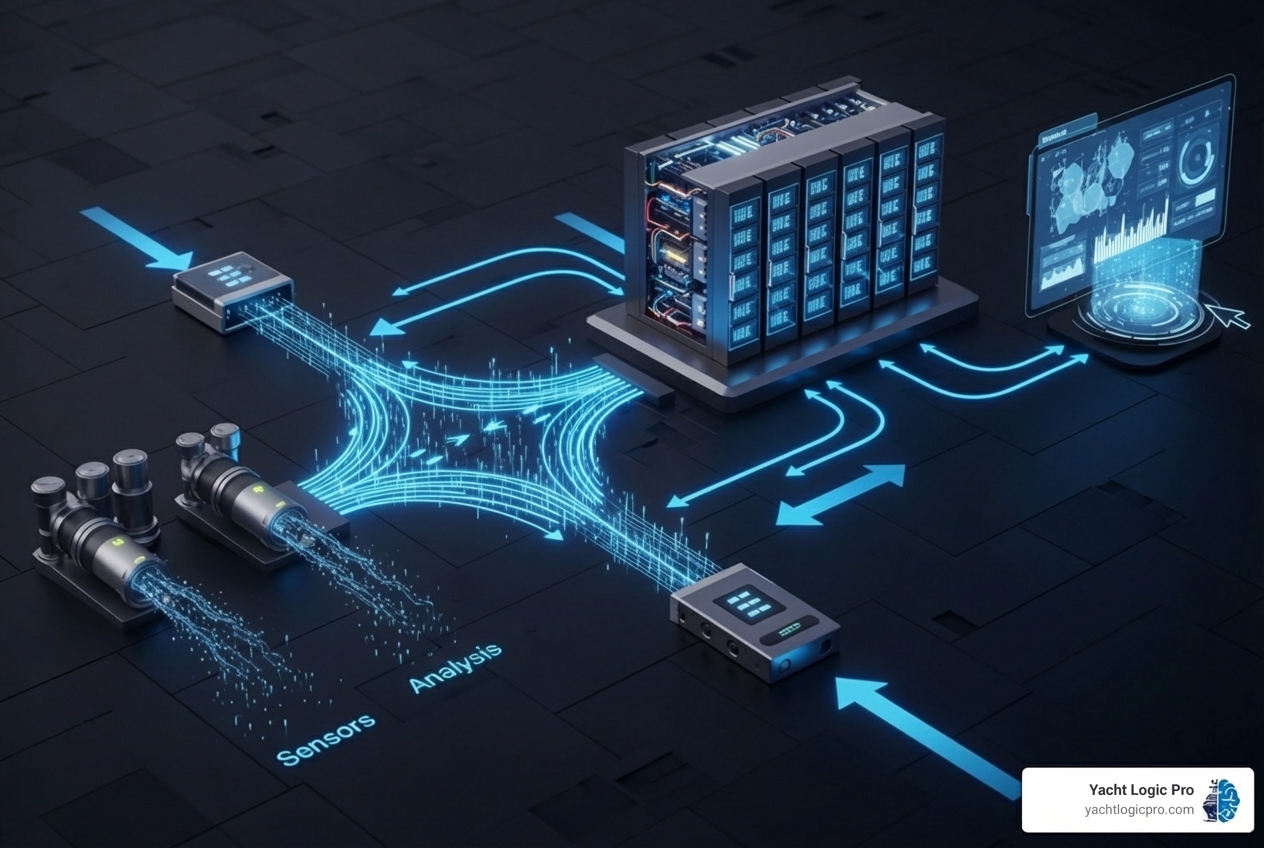
The foundation of any IMS is robust data collection. Without accurate and continuous data, even the most advanced AI is just guessing. This is where technologies like the Internet of Things (IoT) shine. High-precision smart sensors are deployed across machinery, continuously monitoring critical parameters. Think of them as the eyes and ears of our system, constantly gathering information about the health and performance of our equipment.
What kind of data are we talking about? A lot! This includes real-time data such as vibration analysis (detecting subtle shifts that indicate wear), temperature monitoring (identifying overheating components), pressure readings, acoustic emissions, and even electrical current fluctuations. Beyond real-time streams, historical data, including past maintenance records, operational hours, and environmental conditions, also plays a crucial role.
The sheer volume and variety of this data are immense. But raw data, in isolation, isn’t particularly useful. The magic happens in the change: changing data to information to knowledge. This involves aggregating, cleaning, and structuring the raw sensor outputs into meaningful metrics and trends that can then be analyzed for insights. It’s like turning a jumble of scattered puzzle pieces into a clear picture of your equipment’s health.
Diagnostics and Prognostics: The Decision-Making Engine
Once the data is collected and processed, the IMS moves into its most intelligent phases: diagnostics and prognostics. These are the twin engines that drive the system’s predictive power.
-
Diagnostics is about answering the question, “What is wrong?” It involves identifying the nature and location of a fault or anomaly once it has occurred. For example, if a sensor detects an abnormal vibration pattern, the diagnostic module would analyze this pattern against known fault signatures to determine if it’s a bearing failure, an imbalance, or something else. It helps us understand the root cause of a deviation.
-
Prognostics takes it a step further, answering, “When will it fail?” This is where the true “predict and prevent” capability comes to life. Prognostic algorithms use historical data, real-time condition monitoring, and advanced statistical models to estimate the Remaining Useful Life (RUL) of a component or system. This performance prediction allows us to anticipate failures weeks or even months in advance.
The development of intelligent prognostic algorithms is a key research element of IMS. These algorithms are designed to assess degradation and predict future performance with increasing accuracy. When a potential failure is identified, the system generates automated alerts, notifying maintenance teams before a minor issue escalates into a costly breakdown. This crucial maintenance decision-making, encompassing both diagnostics and prognostics, is considered the most important part of an Intelligent Predictive Maintenance (IPdM) system. You can explore more about these advanced techniques in this paper on Key Techniques in Intelligent Predictive Maintenance (IPdM).
The “Intelligence” Factor: AI and Enabling Technologies
The “intelligence” in an Intelligent Maintenance System isn’t just a fancy buzzword; it’s the tangible result of cutting-edge technologies working together, with Artificial Intelligence (AI) at the helm. AI, along with its powerful sub-fields like Machine Learning (ML) and Deep Learning, is what allows an IMS to move beyond simple data logging to truly understand, predict, and even recommend actions.

How AI Powers an Intelligent Maintenance System
AI is the brain behind the brawn of data collection. It’s not just about crunching numbers; it’s about recognizing patterns, even subtle ones that human eyes might miss in vast datasets. This capability is critical for:
- Automated Decision-Making: AI can analyze sensor data, historical maintenance records, and operational parameters to automatically determine the optimal time for maintenance interventions. This minimizes human error and ensures consistency.
- Identifying Complex Patterns: Machine Learning algorithms excel at anomaly detection. They can learn what “normal” operation looks like and flag any deviations, no matter how small. For instance, a slight increase in engine vibration might not immediately concern a technician, but an AI system, having processed millions of data points, could identify it as an early indicator of bearing wear.
- Minimizing Human Error: By automating analysis and decision support, AI reduces the reliance on subjective human interpretation, which can vary between technicians or shifts.
- Optimizing Maintenance Schedules: AI can not only predict when a failure might occur but also suggest the most efficient way to schedule the repair, considering factors like parts availability, technician workload, and operational impact.
- Processing Vast Data Sets: Modern equipment generates enormous amounts of data. AI and deep learning are uniquely suited to process these “big data” sets, extracting insights that would be impossible for humans to find manually. This integration of data from various sources into a unified view is essential for efficient operations, as we discuss in From Dock to Dashboard: How Yacht Logic Pro Connects Your Entire Marine Team.
Key Enabling Technologies
Beyond AI, several other technologies are indispensable for a fully functional Intelligent Maintenance System:
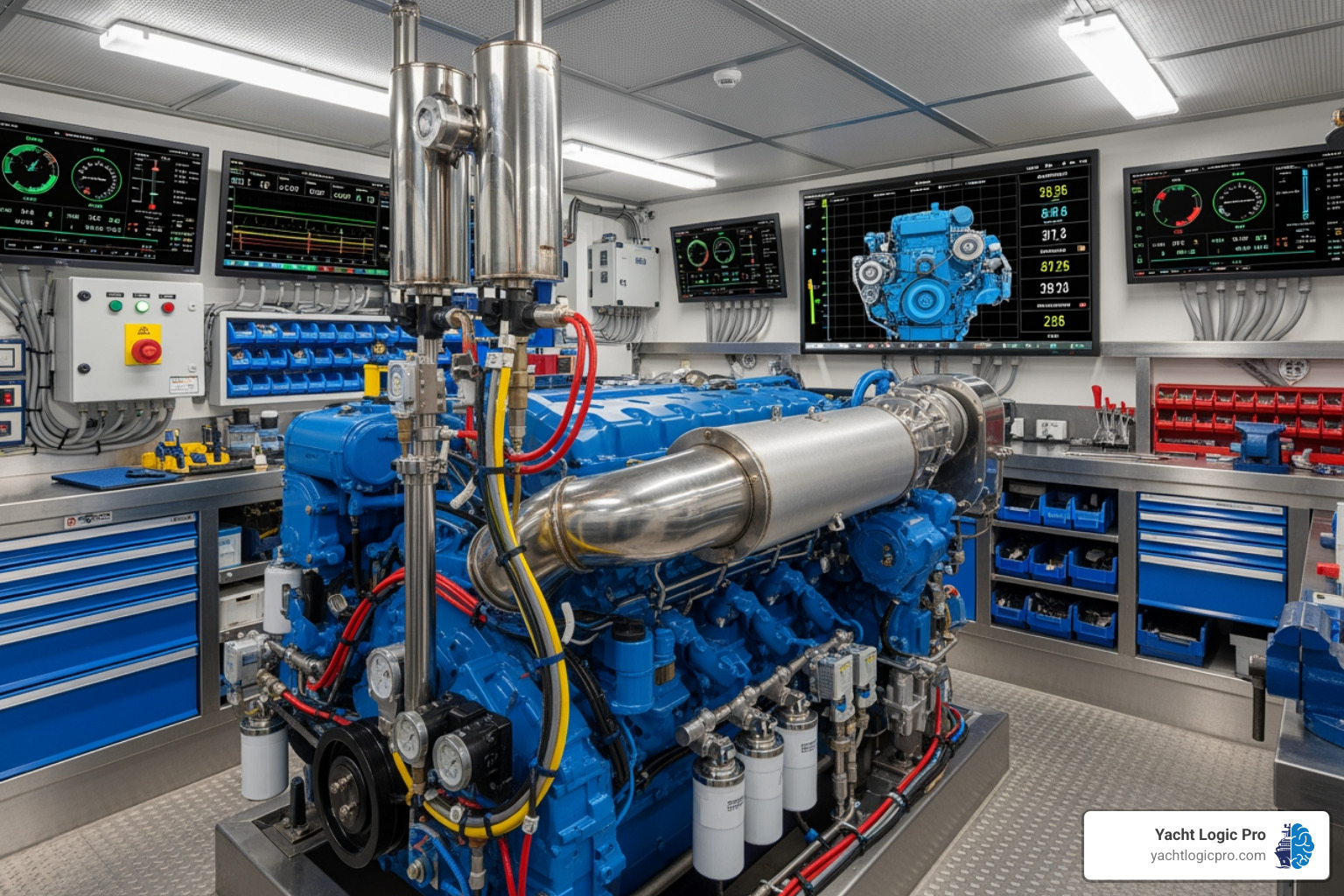
- IoT Sensors: These are the frontline data gatherers. Everything from accelerometers for vibration, thermocouples for temperature, pressure transducers, and even acoustic sensors contribute to a comprehensive picture of equipment health. High-precision smart sensors collect a huge amount of data that indicate the state of machines and their healthy or faulty operation.
- Cloud Computing: The sheer volume of data collected by IoT sensors requires robust storage and processing power. Cloud platforms provide the scalable infrastructure needed to store, analyze, and manage this “big data” efficiently and cost-effectively. They enable remote monitoring and global deployment, offering flexibility and scalability.
- Augmented Reality (AR): Imagine a technician wearing AR glasses and seeing real-time maintenance instructions overlaid directly onto the engine they’re working on, or having component specifications pop up as they look at a part. AR can increase accuracy and efficiency while reducing the learning curve for new technicians.
- Collaborative Robots (Cobots): These robots work alongside human technicians, performing dangerous, difficult, or dull tasks. This frees up human workers to focus on higher-level problem-solving, decision-making, and more complex repairs.
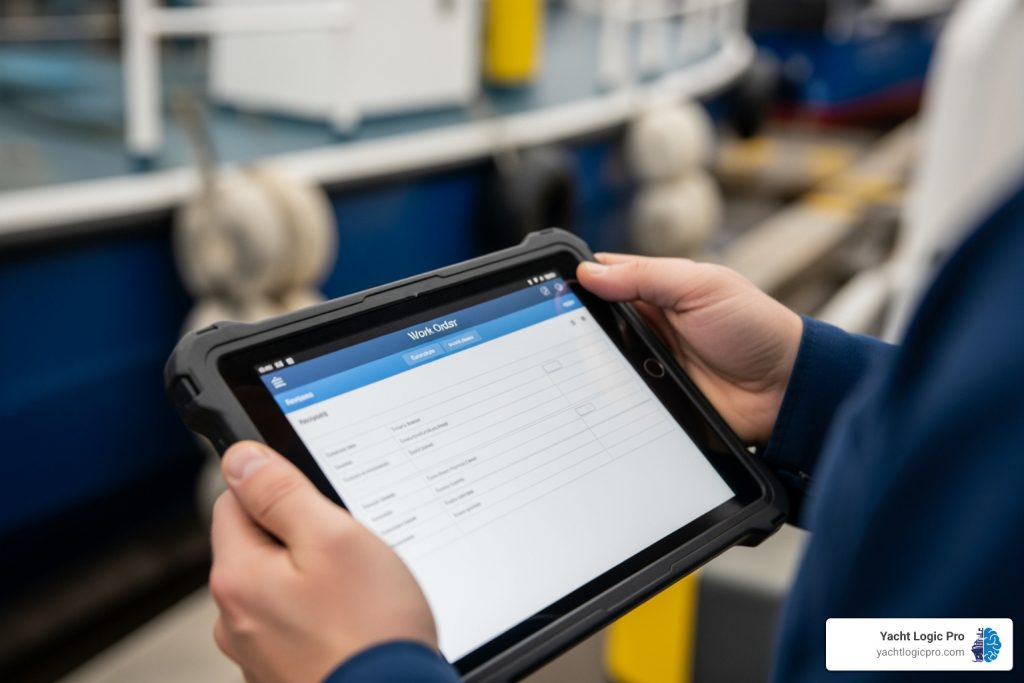
- Mobile Support: Technicians need access to data and instructions on the go. Mobile applications for smartphones and tablets provide this flexibility, allowing them to log issues, access manuals, and receive alerts directly from the field.
These technologies collectively form the backbone of modern maintenance, empowering us to make smarter, faster, and more effective decisions. For a deeper dive into the essential tools for today’s marine professionals, take a look at Digital Tools Every Marine Technician Should Be Using in 2025.
Open uping Value: Benefits and Real-World Applications
Implementing an Intelligent Maintenance System isn’t just about adopting new technology; it’s about open uping significant value for businesses across various industries. The shift from reactive to proactive maintenance fundamentally transforms operations, leading to tangible improvements in efficiency, cost savings, and overall business resilience. Efficiency and cost reduction typically go hand in hand, and smart maintenance is no exception.
Key Benefits of an Intelligent Maintenance System
The advantages of embracing an IMS are compelling, impacting multiple facets of an organization:
- Lower Operational Costs: By predicting failures, we can avoid costly emergency repairs, overtime wages, and expedited shipping for parts. Facilities can reduce or eliminate emergency maintenance and parts orders, achieving much greater control over costs and time allotment.
- Reduced Unplanned Downtime: This is perhaps the most significant benefit. Unplanned downtime can be incredibly expensive, halting production and impacting delivery schedules. An IMS vastly reduces or even eliminates unplanned downtime, increasing overall equipment effectiveness (OEE) and ensuring equipment provides value for a greater time.
- Optimized Spare Parts Inventory: Smart maintenance systems provide clearer insights into which equipment will need attention in the near future. This allows for just-in-time ordering and more accurate inventory management, reducing the capital tied up in spare parts and avoiding stockouts. We explore the financial impact of traditional methods in The Hidden Costs of Manual Yacht Maintenance Tracking.
- Extended Equipment Lifespan: By ensuring that maintenance is performed precisely when needed, based on actual condition rather than arbitrary schedules, we can prevent minor issues from escalating. This proactive care extends the operational life of valuable assets.
- Improved Product Quality: Well-maintained equipment operates more consistently and within optimal parameters, leading to higher quality outputs and fewer defects. This is particularly critical in manufacturing and other precision-dependent industries.
- Increased Safety: Predicting equipment failure before it happens inherently improves safety by reducing the risk of catastrophic breakdowns that could endanger personnel.
- Greater Transparency and Data-Driven Decision Making: An IMS provides a steady flow of real-time performance data, enabling managers and technicians to make informed, effective decisions about maintenance, personnel allotment, and equipment usage. This transparency leads to better traceability and accountability.
Common Applications and Use Cases
The versatility of Intelligent Maintenance Systems means they are being adopted across a wide array of sectors:
- Manufacturing: From automotive plants to food processing facilities, IMS is crucial for maintaining complex machinery like CNC machines, conveyor belts, and robotic arms. It helps prevent production line halts and ensures consistent product quality.
- Marine Operations: In the marine industry, where equipment reliability is paramount for safety and schedule adherence, IMS is a game-changer. This includes everything from propulsion systems and generators on large vessels to critical components on yachts. Remote monitoring enables operators to observe and analyze data in a centralized location, making remote maintenance possible, even offshore. Our own solutions are built on these intelligent principles, automating maintenance and managing marine operations with precision.
- Energy Management: Power plants, wind farms, and solar installations use IMS to monitor turbines, generators, and other infrastructure, ensuring continuous energy supply and optimizing maintenance for remote assets.
- HVAC Systems: Large commercial and industrial HVAC systems benefit from IMS by predicting component failures, optimizing energy consumption, and ensuring comfortable and safe environments.
- Transportation: Airlines, railways, and trucking companies leverage IMS for predictive maintenance on engines, braking systems, and other critical components, enhancing safety and operational efficiency.
- Remote Monitoring: A common thread across all these applications is the ability to remotely monitor and control assets. This is particularly valuable for geographically dispersed equipment or for marine assets that operate far from shore.
The Future of Maintenance: Trends and Getting Started
The journey towards fully integrated, self-optimizing maintenance systems is ongoing. As technology continues its relentless march forward, the capabilities of the Intelligent Maintenance System will only grow, promising even greater efficiency and resilience for businesses. The research in Intelligent Maintenance Systems is growing rapidly, pushing the boundaries of what’s possible.
Future Trends
What can we expect to see on the horizon for IMS?
- Continuous Model Improvement: AI models aren’t static; they learn and improve over time. Future IMS will feature even more sophisticated feedback loops, allowing AI algorithms to refine their predictions and recommendations continuously based on new data and maintenance outcomes.
- Digital Twins: The creation of virtual replicas of physical assets (digital twins) will become more commonplace. These twins can simulate real-world conditions, test maintenance scenarios, and predict asset behavior with incredible accuracy, further enhancing prognostic capabilities.
- Broader System Integration: IMS will become even more deeply intertwined with other enterprise systems, such as Enterprise Resource Planning (ERP) for financial management and Supply Chain Management (SCM) for automated parts ordering. This hyper-connectivity will create a seamless operational ecosystem.
- Increased Automation: We’ll see more automated maintenance tasks, potentially even self-healing systems that can make minor adjustments or repairs autonomously. This increased automation will free human technicians for more complex problem-solving and strategic planning.
- Human-AI Collaboration: The future isn’t about replacing humans but augmenting their capabilities. Advanced interfaces, AI-powered diagnostic assistants, and personalized training modules will empower technicians with unprecedented levels of insight and support. For a deeper dive into the development and trends shaping this field, this review provides excellent context: A Review on Development and Trend of Intelligent Maintenance System | Scientific.Net .
Getting Started with Smart Maintenance
Embracing smart maintenance might seem daunting, but the benefits are too significant to ignore. The future of manufacturing and service industries is here, in the form of Industry 4.0, the smart factory, and smart maintenance. Here’s how we recommend getting started:
- Start with Critical Assets: Don’t try to implement an IMS across your entire operation overnight. Identify your most critical assets—those whose failure would cause the most disruption or cost—and begin there.
- Define Clear Goals: What do you want to achieve? Reduce downtime by X%? Cut maintenance costs by Y%? Clear, measurable goals will guide your implementation and help demonstrate ROI.
- Choose a Scalable Platform: Look for a platform that can grow with your needs, integrating new sensors and systems as you expand. Flexibility and adaptability are key.
- Train Your Team: Technology is only as good as the people who use it. Invest in training your technicians and managers on the new system, emphasizing how it empowers them rather than replaces them.
- For Specialized Industries like Marine Services: Platforms like Yacht Logic Pro provide an all-in-one solution built on these intelligent principles. Our AI-powered software automates maintenance, manages technicians, tracks inventory, and syncs finances, unifying operations and eliminating manual data entry to save time and boost profits. We’re here to help you get ahead in the digital future of marine service, as explored in The Future of Marine Service is Digital: Here’s How to Get Ahead in 2025.
Frequently Asked Questions about Intelligent Maintenance Systems
What is the main goal of an intelligent maintenance system?
The primary goal is to move from reactive “fail and fix” or scheduled preventive maintenance to a proactive “predict and prevent” strategy. It uses real-time data and AI to predict equipment failures before they happen, maximizing uptime and reducing costs.
What types of data does an IMS use?
An IMS uses a wide range of data, including real-time sensor data (vibration, temperature, pressure), historical maintenance records, operational parameters, and even environmental data to build a comprehensive picture of asset health.
Is an intelligent maintenance system only for large factories?
No. While pioneered in large-scale manufacturing, the principles and technologies of IMS are scalable. With the rise of affordable IoT sensors and cloud-based software, businesses of all sizes, including specialized sectors like marine services, can implement intelligent maintenance strategies.
Conclusion: Accept the Future of Maintenance
Moving beyond traditional break-fix models is no longer a choice but a competitive necessity. An Intelligent Maintenance System leverages the power of data, AI, and IoT to create a more resilient, efficient, and profitable operation. By predicting failures, optimizing resources, and providing deep operational insights, IMS empowers businesses to take control of their maintenance and open up new levels of performance. Learn how to implement these principles in your marine business.