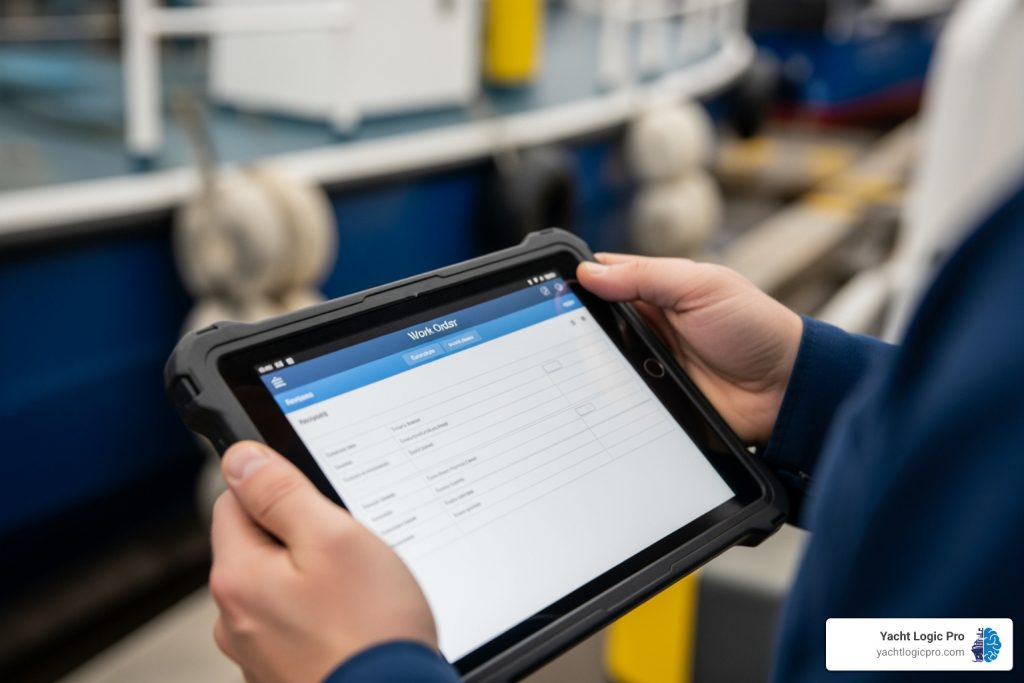


From Storeroom Chaos to Total Asset Visibility
A marine inventory system is a specialized software platform designed to track, manage, and optimize spare parts, consumables, and equipment across vessels and shoreside facilities. It replaces manual methods like spreadsheets and clipboards with automated tracking, real-time visibility, and integrated workflows.
What a marine inventory system helps you manage:
- Spare parts – Track location, quantity, supplier details, and expiration dates
- Consumables – Monitor usage rates and automate reordering
- Equipment – Catalog installed and uninstalled items by system or location
- Multi-location stock – Synchronize inventory across vessels, warehouses, and yards
- Procurement – Generate purchase orders and track supplier pricing
- Compliance – Maintain serial number traceability for recalls and safety audits
What is the true cost of not knowing what’s in your own storeroom? It’s the exorbitant price of an emergency air-freighted part. It’s the operational delay while a vessel waits for a critical spare. It’s the capital wasted on components that will never be used.
The marine industry experienced a surge in boat sales in 2020—over 12% when predictions expected just 2%—and that growth continues to drive demand for parts and service. Yet many marine businesses still rely on spreadsheets, handwritten logs, and tribal knowledge to manage inventory. This chaos leads to double-ordering, stockouts during critical repairs, and lost revenue from unbilled parts.
Modern marine inventory systems eliminate this uncertainty. They provide a live, accurate view of your entire fleet’s inventory, whether shoreside or onboard. They automate consumption tracking when technicians complete jobs. They alert you when stock drops below minimum levels and generate draft purchase orders automatically. They integrate with your maintenance schedules, accounting software, and procurement workflows to create a unified operational ecosystem.
The maritime industry has trusted specialized inventory solutions for decades, and technology continues to evolve. Cloud-based platforms now offer mobile access, offline functionality, barcode scanning, and real-time synchronization across global operations. Even the U.S. Navy has adopted advanced systems using RFID and IoT sensors to achieve total asset visibility across bases and vessels.
I’m Kevin Kates, founder of Yacht Logic Pro, and throughout my career in yacht management and maritime operations, I’ve seen how the right marine inventory system transforms businesses from reactive firefighting to proactive planning. In this guide, I’ll walk you through exactly how these systems work, what features matter most, and how they integrate with the rest of your marine business to open up measurable cost savings and operational efficiency.
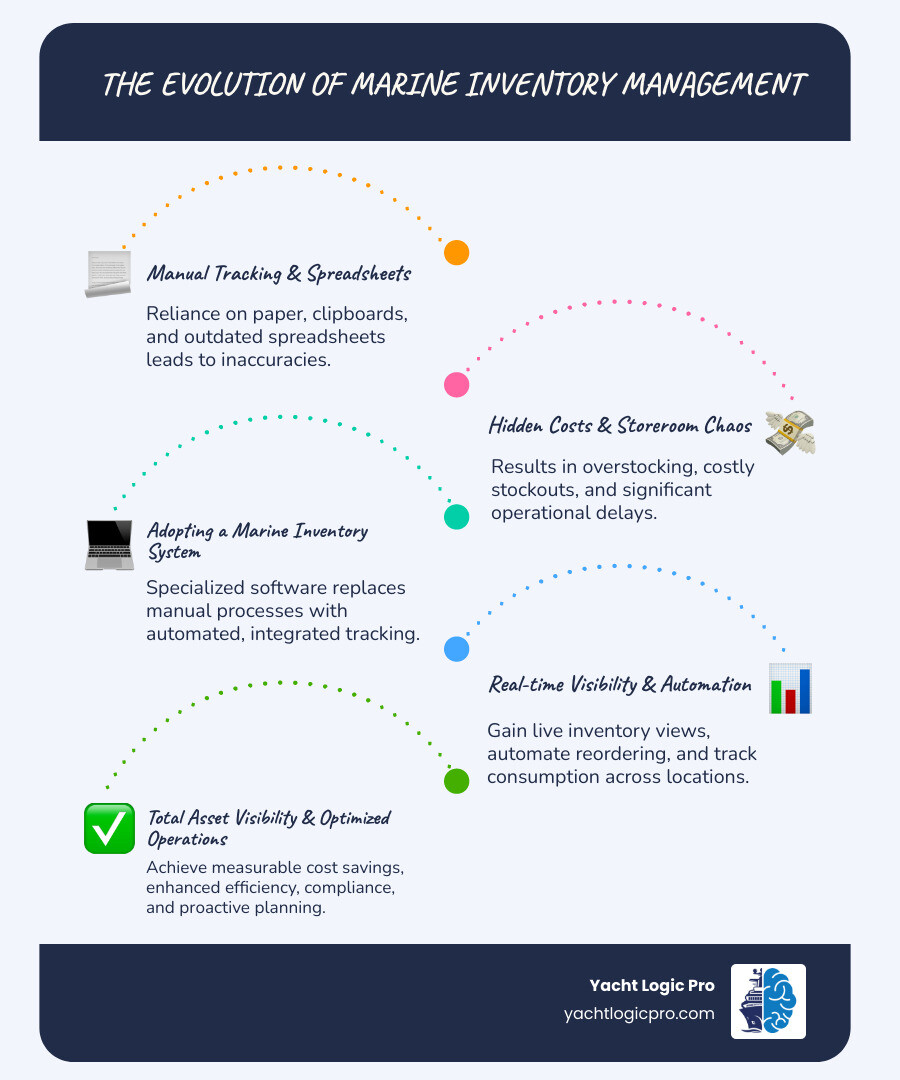
The Core of Marine Inventory Management
Imagine trying to keep track of every nut, bolt, engine part, and cleaning supply across multiple vessels and a busy workshop, all with a clipboard and a trusty pen. Sounds like a recipe for a headache, right? That’s the daily reality for many marine businesses, leading to what we affectionately call “storeroom chaos.” The fundamental challenge in marine inventory management is balancing the need to have critical parts on hand with the desire to avoid tying up capital in excess stock.
The true cost of not knowing what’s in your inventory isn’t just a minor inconvenience; it’s a significant drain on your bottom line. Overstocking means capital is sitting idly on shelves, depreciating, and taking up valuable space. Conversely, stockout emergencies lead to costly delays, disgruntled clients, and the exorbitant price of emergency air-freighted parts. These scenarios highlight why a robust marine inventory system isn’t a luxury, but a necessity.
A dedicated marine inventory system provides the crucial functionalities needed to steer these complexities. It helps us manage spare parts, consumables, and equipment with precision, giving us confidence in our stock levels and locations. It’s about moving from reactive scrambling to proactive planning, ensuring our operations run smoothly and profitably. This data-driven approach is truly the future of marine service, as we explore further in our article, Why Data-Driven Yacht Service is the Future of the Marine Industry.
Managing Onboard vs. Shoreside Stock
One of the unique aspects of marine inventory management is dealing with items stored in multiple locations: on vessels (which might be anywhere in the world!) and in shoreside warehouses or service centers. A comprehensive marine inventory system excels here, offering global visibility with centralized control. It allows us to manage the complete inventory life cycle per vessel and across our entire fleet, providing a unified view of stock levels across all locations.
For instance, we can track exactly where an inventory item is located on a specific boat, down to the sub-location. This level of detail ensures that when a technician needs a part, they know precisely where to find it, whether it’s in the engine room or a deck locker. Simultaneously, shoreside warehouse management features help us optimize storage, improve accuracy, and streamline fulfillment for items that support multiple vessels or larger repair projects. Real-time synchronization between these locations is key, ensuring that stock movements on a vessel are instantly reflected in the central system, and vice versa. This holistic view is invaluable for a marine service manager, as detailed in A Day in the Life of a Marine Service Manager Using Yacht Logic Pro.
Tracking Parts, Consumables, and Equipment
A specialized marine inventory system allows us to catalog virtually anything: spare parts, consumables, provisions, tools, and more. For each item, we can record vital information such as make, model, serial numbers, warranty details, acquisition date, and cost. This granular detail is essential for effective management.
Crucially, these systems handle parts from different manufacturers or with multiple supplier part numbers. Instead of creating duplicates, the system uses a unique internal stock number for each component, allowing us to link various supplier details, manufacturer information, and even photos to that single item. This prevents confusion and streamlines procurement.
For consumables like cleaning supplies or fuel additives, the system monitors usage rates and expiration dates, triggering timely alerts for items nearing their use-by date or requiring regular attention. For critical spares, we can set higher minimum stock levels and more urgent re-order alerts, ensuring they are always available when needed. Tool inventory management helps us keep track of valuable assets, ensuring they are properly allocated and maintained. Leveraging these digital tools is becoming standard practice for marine technicians, as we discuss in Digital Tools Every Marine Technician Should Be Using in 2025.
Why Ditch the Spreadsheet? The Tangible Benefits of a Dedicated Marine Inventory System
We’ve all been there – a spreadsheet that started simple, grew into a monstrous, error-prone beast, and eventually became more of a hindrance than a help. In the marine industry, relying on clipboards and generic spreadsheets for inventory management inevitably leads to mass chaos. A dedicated marine inventory system, however, offers a treasure trove of benefits that directly impact our profitability, efficiency, and even safety.
One of the most significant advantages is cost reduction. By optimizing inventory levels and preventing oversupply, we avoid unnecessary expenses and wasted capital on components that will never be used. These systems have been shown to reduce operating costs, although the average percentage can vary greatly depending on the initial state of operations. This leads to substantial operational efficiency, streamlining everything from ordering to tracking.
With precise inventory data, we experience reduced downtime. Knowing exactly what spare parts we have available, whether shoreside or onboard, allows us to properly prepare for maintenance tasks and avoid delays while waiting for critical components. This proactive approach also contributes to improved safety by ensuring that essential equipment and safety gear are always available and properly maintained. Finally, the rich data and analytics provided by these systems enable data-driven decision making, changing guesswork into informed strategy. This is why marine-specific software consistently beats generic tools, a topic we dig into in Tech That Works at Sea: Why Marine-Specific Software Beats Generic Tools Every Time.
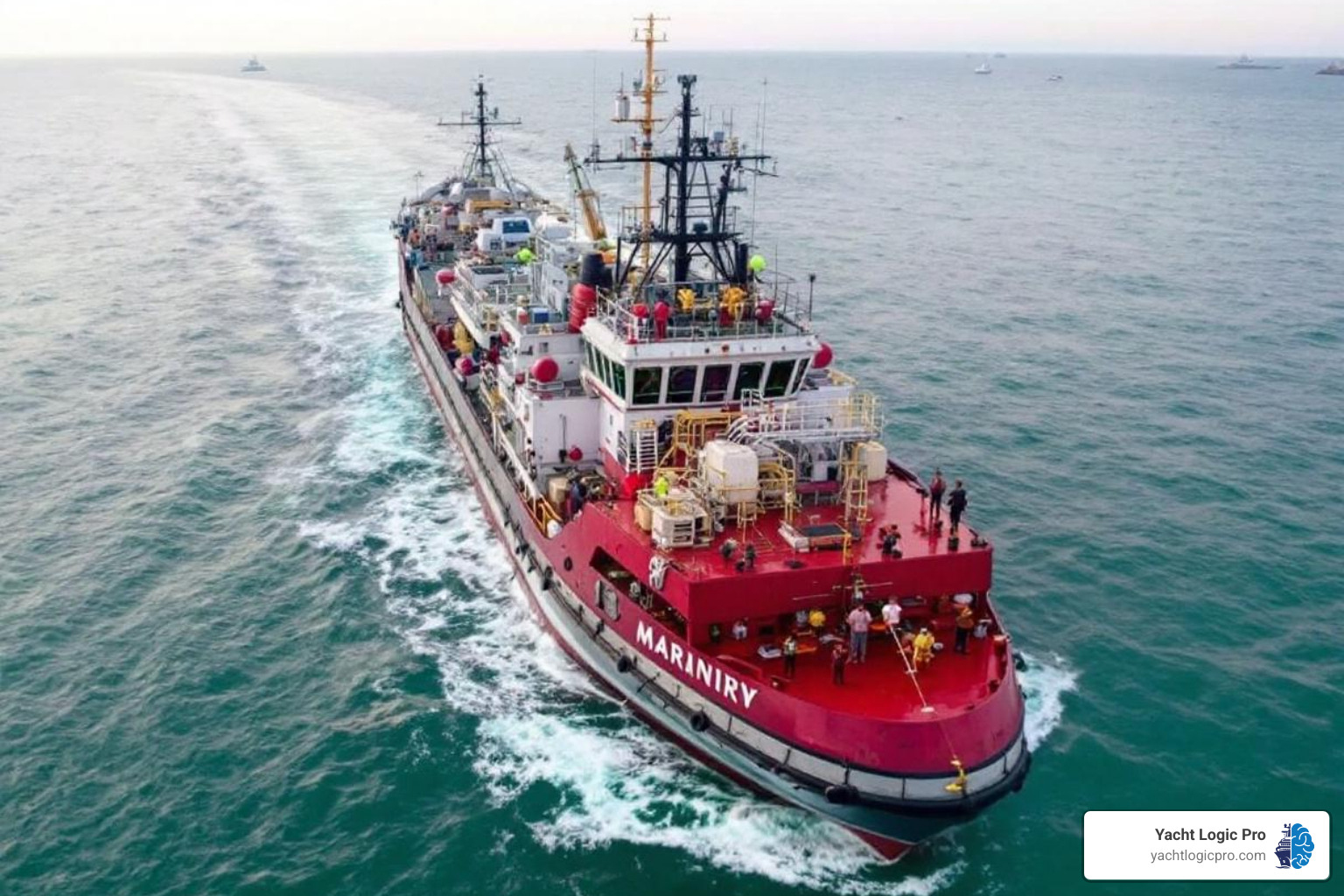
Accurate Forecasting and Procurement
One of the most powerful features of a marine inventory system is its ability to facilitate accurate stock forecasting and prevent overstocking or shortages. This is achieved through several intelligent mechanisms:
- Min/Max Stock Levels: We can set intelligent minimum and maximum order quantities for each item. When stock drops below the minimum, the system automatically triggers alerts and even generates automated repurchase suggestions or draft requisitions. This ensures we maintain optimal inventory levels without excess or shortages.
- Demand Forecasting: Advanced systems use historical usage data and planned maintenance schedules to forecast future demand. This helps us ensure the right spare parts are available precisely when and where they’re needed, minimizing the risk of stockouts for critical items.
- Purchase Order Creation and Supplier Management: Seamless integration with procurement modules means we can generate purchase orders directly from the system. It can track parts details and specifications, manage supplier information, and even integrate with accounts payable for streamlined ordering and receiving. This connectivity is vital for efficient operations and can prevent common scheduling pitfalls, as explored in Why Most Marine Service Operations Fail at Scheduling and How to Fix It.
The Advantages of Cloud-Based Solutions
The shift to cloud-based solutions has revolutionized how marine businesses manage their inventory. Gone are the days of worrying about server maintenance, software updates, or limited access. Cloud-based marine inventory systems offer a host of compelling advantages:
- Global Access: We can access inventory and equipment information from anywhere in the world, at any time. This means real-time monitoring and management for ship managers and operators, whether they are shoreside or at sea.
- Real-Time Data Synchronization: All inventory data is updated and synchronized in real-time across all locations and devices. This ensures everyone is working with the most current information, eliminating discrepancies and improving coordination.
- Lower IT Overhead: Cloud-based software eliminates the need for expensive on-premise servers and the associated IT infrastructure and maintenance costs. This frees up resources and reduces technical headaches.
- Scalability for Growing Fleets: As our business grows, a cloud solution can easily scale to support expanding fleets and multiple warehouse locations without significant additional investment in hardware or software licenses.
- Automatic Backups and Improved Security: Reputable cloud providers offer robust data backup and recovery protocols, often with multi-region replication. Furthermore, they implement advanced security measures like encryption (at rest and in transit) and multi-factor authentication (MFA), often exceeding what individual businesses can achieve on their own. This makes data more secure and resilient.
These benefits collectively pave the way for a more agile, efficient, and future-ready marine business, aligning with the insights shared in The Future of Marine Service is Digital: Here’s How to Get Ahead in 2025.
Key Features and Modern Technology
When we talk about a modern marine inventory system, we’re not just talking about a digital ledger. We’re discussing a dynamic, interconnected platform that leverages cutting-edge technology to provide unparalleled visibility and control. Knowing what features to look for is crucial for any marine business seeking to optimize its operations, as outlined in What to Look For in Yacht Service Management Software: A Buyer’s Checklist.
The Role of Modern Tech in a marine inventory system
Modern technology is changing marine inventory management from a tedious chore into a streamlined, accurate process. Here are some of the key innovations:
- Mobile Access: Crews and warehouse staff can update and monitor stock levels from anywhere using mobile devices. This means real-time data entry for receiving, transfers, and cycle counts, improving reporting speed and accuracy.
- Offline Functionality: Crucially for marine environments, many modern systems offer identical functionality both online and offline. This means work can continue seamlessly even in areas with intermittent or no internet connectivity, with data synchronizing once a connection is re-established.
- Barcode & QR Code Scanning: This technology eliminates manual data entry errors. Technicians can scan barcodes or QR codes on parts to quickly update inventory, track usage, or locate items. This is particularly useful for digital stock-taking and managing parts details.
- RFID Technology: Radio Frequency Identification (RFID) takes asset tracking to another level. As demonstrated by the U.S. Navy’s NADACS system, RFID tags allow for rapid, accurate inventory collection and total asset visibility across vast areas. This includes tracking item locations, quantities, and even equipment location, use, and condition via IoT sensor information. The Navy’s initiative showcases how emerging technologies, including passive RFID and advanced cloud solutions, are being applied to accelerate inventory management, as described in NAVSUP Applies Tech to Accelerate Inventory Management.
Here’s a quick look at how these technologies are changing marine inventory:
- Mobile apps for on-the-go updates
- Automated data capture via scanning
- Real-time location tracking of assets
- Remote monitoring of equipment conditions
- Seamless data synchronization regardless of connectivity
Enhancing Safety and Compliance with a marine inventory system
Beyond efficiency, a sophisticated marine inventory system plays a critical role in enhancing safety and ensuring compliance with maritime regulations. This is especially vital in an industry where component failure can have serious consequences.
- Serial Number Traceability: For marine parts suppliers, serial number traceability is paramount. It allows us to track products from manufacturer to fulfilled customer, providing end-to-end visibility throughout the supply chain. This is crucial for safeguarding against product recalls. In the unfortunate event of a recall, we can quickly identify affected items, their locations, and who received them, dramatically mitigating risks.
- Warranty Tracking: The system can store warranty details for each component, ensuring we don’t miss out on claims or inadvertently void warranties.
- IHM & MED Documentation: For commercial vessels, managing Inventory of Hazardous Materials (IHM) and Marine Equipment Directive (MED) documentation is a complex but mandatory task. A good inventory system can help manage these documents, linking them directly to the relevant parts and equipment.
- Compliance Reporting: By maintaining accurate records of maintenance, certifications, and inspections, these systems help us ensure compliance with international maritime regulations and industry standards. This also improves our audit readiness, making regulatory checks much smoother.
The ability to track every detail and ensure compliance not only protects our operations but also improves the safety of our crew and assets. This level of meticulous management also supports faster training for new staff by providing clear, documented procedures and accessible information, as we discuss in How Yacht Logic Pro Helps Marine Businesses Train New Staff Faster.
Creating a Unified Marine Business Ecosystem
In today’s interconnected world, isolated software solutions are a thing of the past. A truly effective marine inventory system doesn’t just manage parts; it acts as a central hub, integrating seamlessly with other business operations. This creates a unified marine business ecosystem, breaking down data silos and streamlining workflows across the entire organization. When all our systems talk to each other, we open up unprecedented levels of efficiency and insight, allowing boatyards to scale without sacrificing quality, as highlighted in How Yacht Logic Pro Helps Boatyards Scale Without Sacrificing Quality.
Connecting with Maintenance and Operations
The synergy between inventory and maintenance is particularly powerful. A marine inventory system should be tightly integrated with our Planned Maintenance Systems (PMS) and work order management:
- Planned Maintenance Systems (PMS) Integration: This allows for accurate stock forecasting based on scheduled maintenance tasks. The system can predict which parts will be needed for upcoming jobs, ensuring they are ordered and available in advance.
- Work Order Integration: When a technician completes a job and marks a part as used within a work order, the inventory system automatically updates consumption. This automated consumption tracking is a game-changer, eliminating manual adjustments and providing real-time accuracy of stock levels.
- Technician Scheduling: By linking inventory availability to maintenance schedules, we can better plan and assign tasks to technicians, ensuring they have the necessary parts before they even start a job. This proactive approach minimizes delays and maximizes productivity, echoing the focus of The Top 7 Features to Look For in Marine-Specific Scheduling Software.
Integrating with Business and Financial Software
For a holistic view of our marine business, the inventory system needs to communicate effectively with other critical software:
- ERP Integration: For larger operations, integration with Enterprise Resource Planning (ERP) systems ensures that inventory data flows seamlessly into broader business processes, from supply chain management to human resources.
- Accounting Software Sync (QuickBooks, Xero): Bi-directional integration with accounting software like QuickBooks or Xero is crucial. This means that parts costs, sales, and purchases are automatically reflected in our financial records, simplifying bookkeeping and providing accurate financial reporting. This is a common feature in many marine business management platforms, which often integrate with popular accounting tools.
- CRM Connectivity: While often focused on sales, Customer Relationship Management (CRM) can benefit from inventory data, especially for businesses selling boats or larger equipment. Knowing what’s in stock can directly impact sales conversations and lead management.
- Sales Management: For businesses that sell marine parts, the inventory system integrates with sales management tools. This can include features like flexible pricing strategies, customer tiered pricing, and integration with eCommerce platforms for online sales, ensuring inventory is accurately tracked from warehouse to customer. Streamlining this workflow from first call to final invoice is essential for efficiency, as explored in From First Call to Final Invoice: Streamlining the Yacht Service Workflow.
Frequently Asked Questions about Marine Inventory Systems
We often hear similar questions from marine businesses considering the switch to a dedicated inventory system. Below are clear, straightforward answers to some of the most common ones.
How does a system handle parts with multiple supplier numbers?
Marine parts frequently come with different manufacturer codes, supplier numbers, or naming conventions. Modern marine inventory systems are built to manage this complexity. They typically assign a unique internal stock number to each component. Under this single internal item record, you can link multiple supplier part numbers, manufacturer details, photos, specifications, and even alternative or superseded parts. This approach prevents duplicate records, keeps data consistent, and makes procurement easier because staff can reliably find the correct part regardless of which vendor they are ordering from.
Can the system track high-value components sent ashore for repair?
Yes. This capability is essential for managing expensive, rotable components such as turbochargers, gearboxes, stabilizers, and engines that are periodically sent ashore for service. Advanced marine inventory systems provide an “off-vessel asset” or equivalent status. When a component is landed for repair, its status is updated but it remains part of the fleet’s asset base. The system lets you record its current location (for example, a named repair facility), attach related service orders and documentation, track reconditioning costs, and then update its status and location when it returns to service. This maintains both financial and operational visibility while the asset is away from the vessel.
How difficult is the initial setup and data entry?
The initial stock-take and data entry for any new inventory platform require planning and focused effort, especially if you are migrating from paper logs or fragmented spreadsheets. However, modern software providers typically support this process with a dedicated onboarding team, clear workflows for physical counts, and import tools that can bulk-load existing data from spreadsheets or legacy systems. Structured templates, standardized naming conventions, and barcode or QR code labeling can all be implemented during this phase to set you up for long-term accuracy. While it is a one-time investment of time and resources, the ongoing benefits of having clean, digital inventory data are substantial and long-lasting.
Conclusion: Charting a Course for a More Profitable Future
The journey from manual inventory tracking to a sophisticated marine inventory system is transformative. We’ve explored how these systems move us from storeroom chaos to total asset visibility, providing the core functionalities needed to manage spare parts, consumables, and equipment across both onboard and shoreside locations. We’ve seen the tangible benefits, from significant cost reduction and improved operational efficiency to improved safety and data-driven decision-making.
By leveraging modern technologies like mobile access, barcode scanning, RFID, and seamless integration with maintenance, procurement, and financial software, these systems create a unified marine business ecosystem. They empower us to achieve accurate forecasting, ensure compliance, and maintain end-to-end traceability, ultimately protecting our investments and reputation.
In an industry experiencing growth and evolving demands, embracing a dedicated marine inventory system isn’t just about keeping up; it’s about getting ahead. It’s about building a leaner, more reliable, and ultimately more profitable marine business. With AI-powered solutions like Yacht Logic Pro, we unify maintenance, inventory, and finance into a single platform, eliminating guesswork and driving growth by automating tasks and providing real-time insights.
Ready to take command of your inventory and chart a course for a more profitable future? Explore our full range of features and find how we can help transform your marine operations.